






- AllProduct Category
-
Quartz Sand
Fiber Powder
Ceramic Powder
Glass Powder
Oxides
Modified Powder
Borate Glass Powder
Sealing Glass Powder
Dental Glass Powder
Product Showcase





详情描述
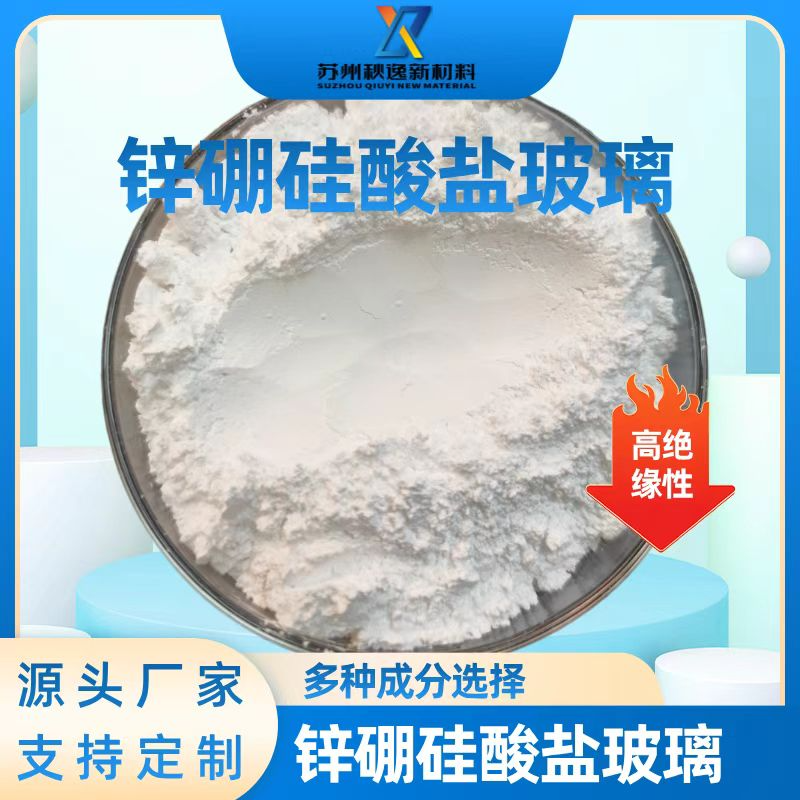
· DensityTypically around 2.4 - 2.8 g/cm³, the specific value may vary slightly depending on the precise composition of the glass powder and the manufacturing process.
· Particle size distribution: Can be adjusted according to different preparation methods and application requirements. The common particle size range is typically a few to several tens of micrometers, for example, D50 (particle size when the cumulative particle size distribution reaches 50%) is usually around 10-30μm.
Refractive IndexTypically, it ranges between 1.5 and 1.6, which is a significant parameter for its application in the optical field.
· Coefficient of thermal expansionTypically ranges between (80 - 120)×10⁻⁷/°C, higher than that of ordinary silicate glass. This is due to the addition of elements like strontium, boron, and aluminum, which allow for better matching and sealing with certain metals.
Specific Surface AreaThe specific surface area is typically between 1 - 10 m²/g. The size of the specific surface area affects the reactivity of the glass powder and its dispersion performance in the composite material.
Chemical CompositionPrimarily composed of strontium oxide (SrO), boron oxide (B₂O₃), aluminum oxide (Al₂O₃), and silicon dioxide (SiO₂), the ratios of these components vary depending on the specific glass formula. For instance, in common formulations, SiO₂ content may range from 40% to 60%, B₂O₃ from 10% to 20%, Al₂O₃ from 5% to 15%, and SrO from 10% to 30%.
Chemical StabilityExcellent chemical stability; alkali and acid resistance is superior to common silicate glass. Its corrosion rate is relatively low in general acidic and alkaline environments, but qingHydrofluoric AcidIn highly corrosive acids, chemical reactions still occur, leading to corrosion.
SolubilityVery low solubility in water; almost insoluble. However, it can partially dissolve or react in certain solvents or fluxes under specific conditions.
- Electronic PackagingDue to its good thermal expansion coefficient matching with certain metals, it can be used for encapsulating electronic components, effectively protecting them from external environmental influences while ensuring the stability of the encapsulation structure under varying temperatures, thereby enhancing the reliability and service life of electronic devices.
- Glass and ceramic preparationIt is a key raw material for preparing high-performance glass ceramics. After adding this glass powder and undergoing a specific heat treatment process, the crystal phase composition and microstructure of the glass ceramic can be precisely controlled, resulting in glass ceramic materials with excellent mechanical, thermal, and optical properties. These materials are widely used in aerospace, automotive manufacturing, and the electronics industry.
- Paints and coatingsAdding to coatings enhances hardness, wear resistance, and corrosion resistance. The resulting coating offers excellent density and adhesion, suitable for protective coatings on surfaces of metals, ceramics, and other materials, improving their service life and decorative properties. It is widely used in industries such as construction, machinery manufacturing, and shipbuilding.
- Dental MaterialsDue to its good biocompatibility and suitable physical and chemical properties, it can be used to manufacture dental restoration materials such as crowns and bridges. It combines well with human tooth tissue, offering excellent aesthetics and mechanical properties, fulfilling the functional and aesthetic requirements of dental restoration.
- Optics fieldIn certain optical devices, such as lenses and prisms, their specific refractive indices and optical properties can be utilized to adjust light paths and enhance image quality. Additionally, they are used in the production of fiber预制 rods for optical communication, playing a crucial role in the transmission and processing of light signals.


