
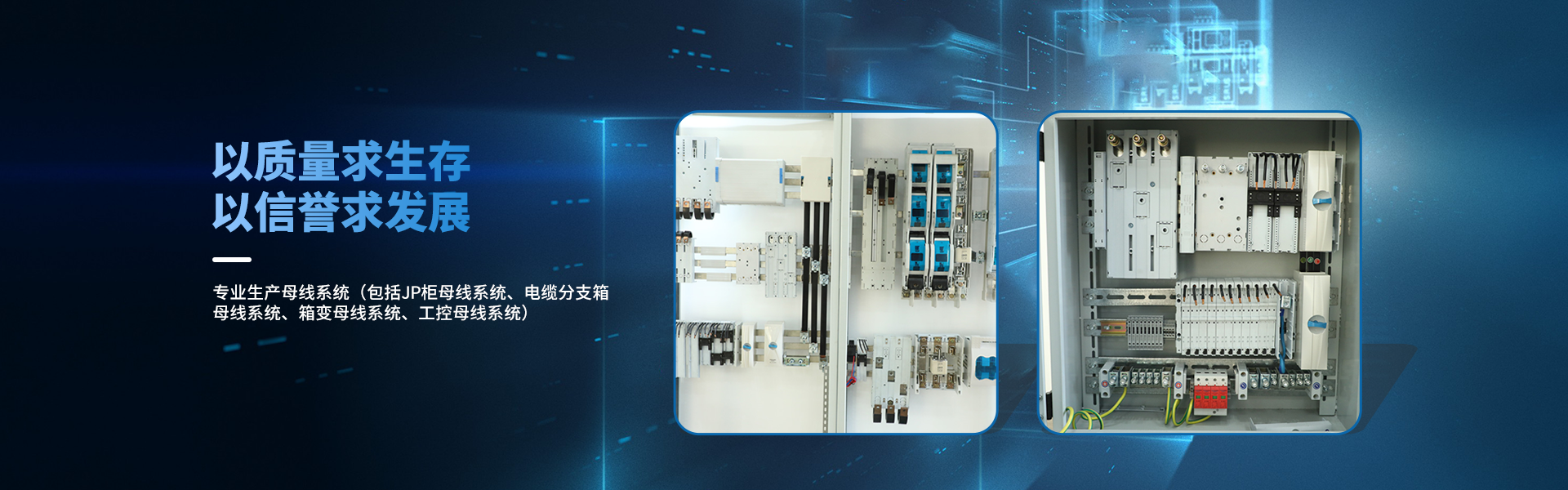
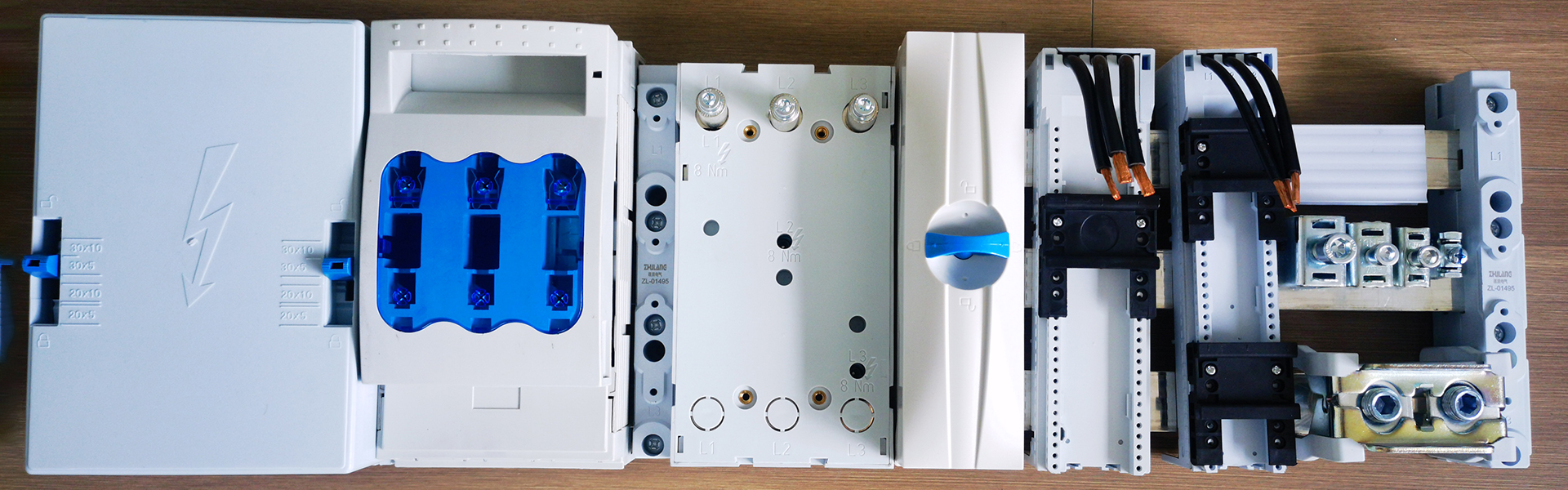
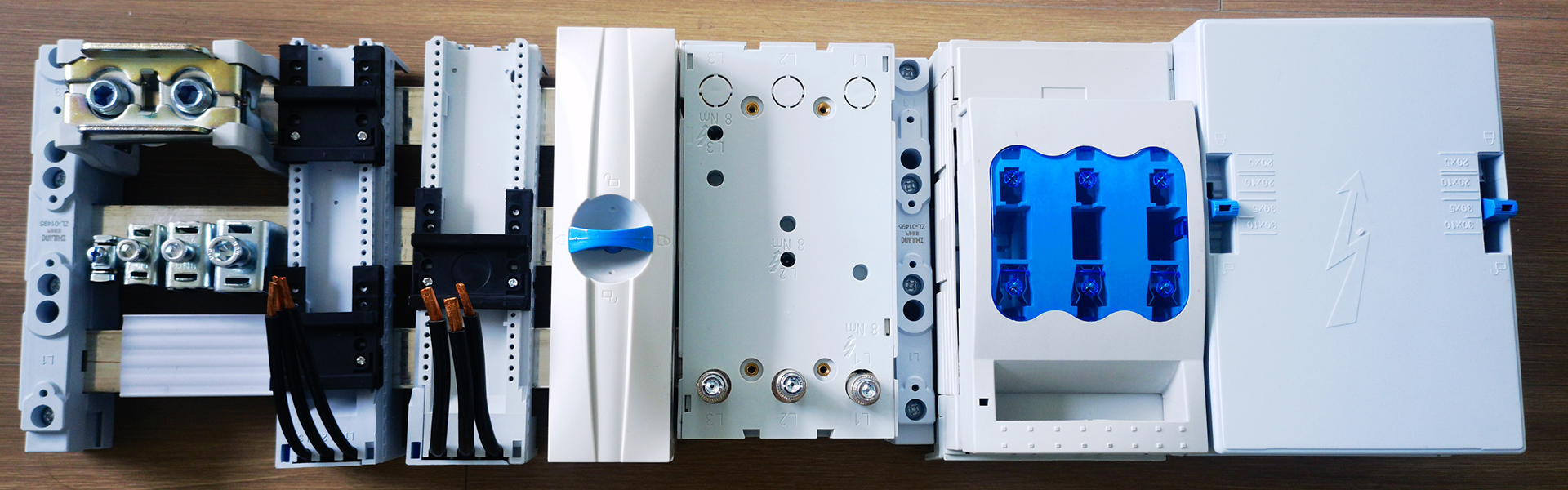
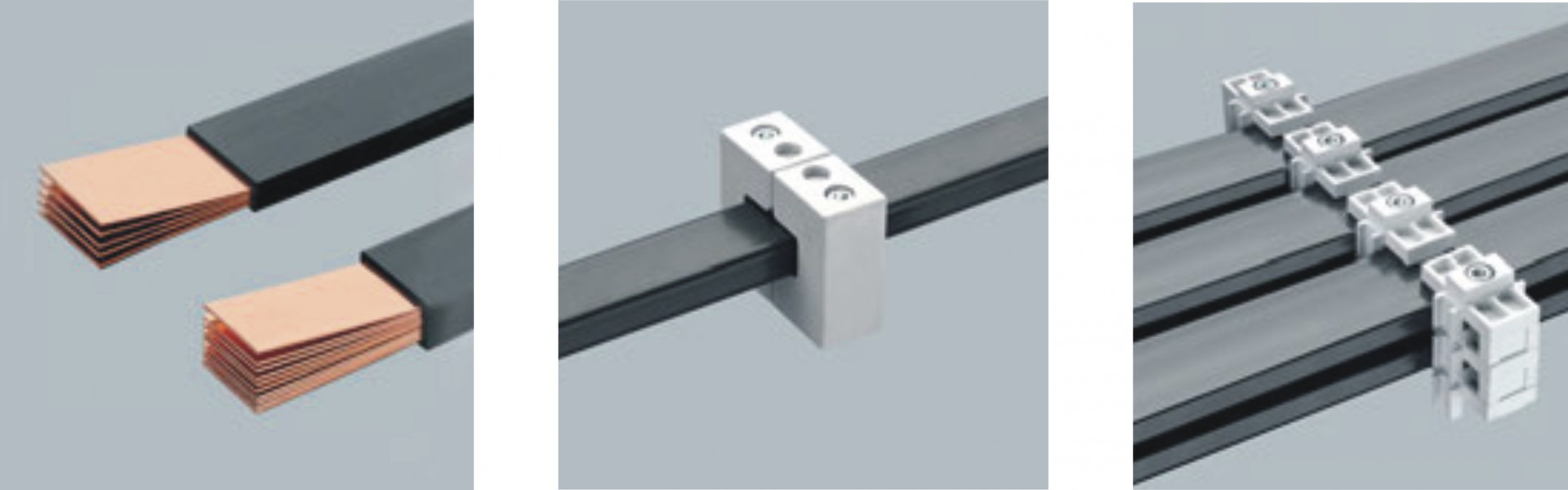



The busbar system refers to the application of professional electrical equipment installation technology, connecting busbars through busbar transition devices, thereby creating a busbar system within the power supply system.
Busway refers to the connections of various distribution equipment with working voltages in substation, as well as the connections between transformers and other electrical equipment with the corresponding distribution equipment. The key is to use bare wire or stranded wire in square or circular cross-sections, commonly known as busway.
What are the busbar slot wiring methods used in the busbar system? What are the advantages of each wiring method? Here is a summary as follows.
Single Bus Bar Channel - Single Bus Bar. Single Bus Bar Channel segmented, Single Bus Bar with bypass, Single Bus Bar Channel with bypass.
Feature: Single Bus Bar Slot Wiring: Single bus bar wiring offers advantages such as simplicity, clearness, minimal machinery, low investment, easy operation, and ease of renovation. However, it lacks stability and operational flexibility. In the event of a fault or maintenance of the bus bar slot or high-voltage bus bar isolating switch, the entire switch power of the bus bar slot must be disconnected.
2. Double busbar channels - double busbars. Segmented double busbar channels. Double busbars with bypass, double busbar channels with bypass.
Features: Double busbar slot wiring offers advantages such as reliable power distribution, convenient maintenance, flexible production scheduling, or easy reconstruction. However, this type of wiring is commonly used in many machines (especially high-voltage disconnectors), resulting in complex power distribution equipment and poor rationality; as operational equipment, high-voltage disconnectors are prone to operation errors and are not suitable for automation; particularly when a busbar system fails, it is necessary to quickly disconnect a large number of power supplies and circuits, which is not permitted and is especially critical for large and medium-sized power stations and sub-stations.
3. Three Bus Bar Channels - Three Bus Bars. Segmented three bus bar channels. Segmented three bus bars with bypass.
Features: The distribution system boasts high reliability and user-friendly operation, but the project investment is increased, with slightly weaker cost-effectiveness. When applying bypass circuit breakers in urban squares, the actual operation is complicated, increasing the chances of operational errors. At the same time, due to the installation of bypass circuit breakers, the corresponding maintenance and automation technology becomes more complex.
4.3/2 wiring, 3/2 busway sections.
5.4/3 wiring.
3/2, 4/3 Terminal Characteristics: The distribution system boasts high reliability and operational flexibility. All busway faults or maintenance can be handled without power interruption; except for the connection circuit breaker faults, which may cause temporary power outages, all other circuit breaker faults or maintenance can be managed without cutting off the power supply. Even if two busways fail simultaneously (or one is under maintenance while the other fails), the output power can still be transported. However, the terminal equipment is extensive, particularly circuit breakers and voltage transformers, resulting in a significant investment. The secondary operation wiring and microcomputer protection are also complex.
6. Busway to transformer to diesel generator module wiring.
Features: Easy wiring, fewer switch cabinets, convenient use, easy to expand, reduced short-circuit capacity on the low-voltage side of the generator set and main transformer.
7. Bridge Connections. Internal bridge connection, external bridge connection, double-deck bridge connection.
Features: The actual operation of the route (transformer) is convenient. In case of a fault in the route (transformer), only the circuit breaker on the faulty side is bypassed, while the rest of the power circuits remain normal. However, the investment and removal of the route are more complex; two modules lose communication when the power circuit is maintained or a fault occurs; at the same time, when the circuit breaker on the route side is maintained or a fault occurs, the route power is cut off.
8. Angled wiring (or looped). Triangle wiring, quadrangle wiring, heptagon wiring.
Features: Few angular machinery equipment, low project investment, high flexibility and stability in operation. Typically, it is a two-way connection, and maintenance of the circuit breakers does not harm the closing operation. Due to the absence of busbars, any other part of the connection experiencing a fault has minimal impact on power operation. The key drawback is the limited number of power circuits, as the ringed wiring must be operated in an open-loop gain when circuit breakers are being maintained. In such cases, if another power circuit fails, it can lead to the shutdown of two power circuits, expanding the scope of the power outage. Additionally, the maintenance of the wiring connections is complex, with frequent actual operations involving the switching of primary and secondary circuits.
