
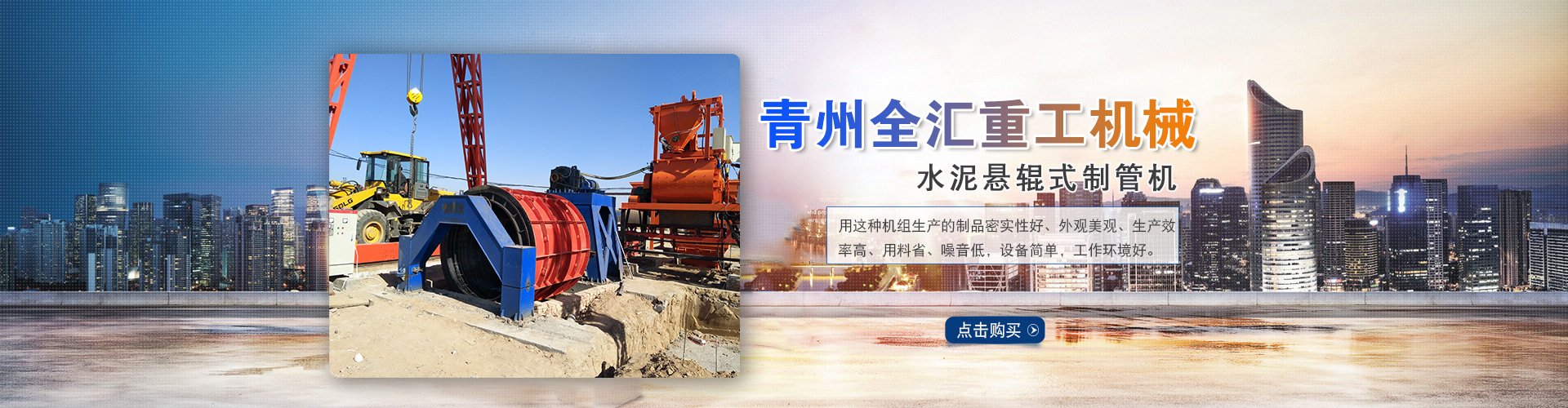
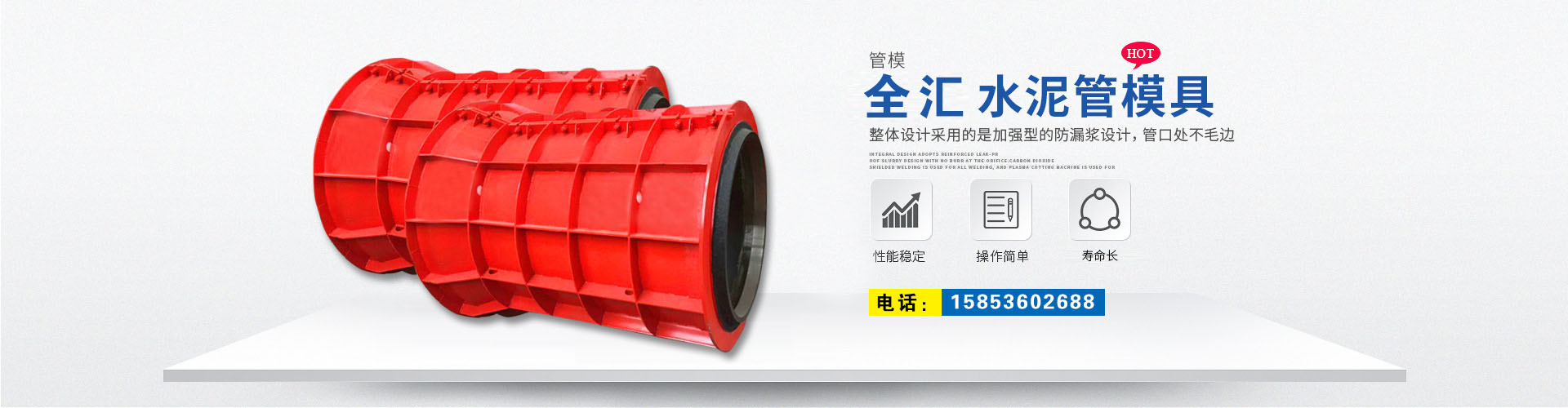


Cement pipe manufacturing equipment requires pressurization during production and use to ensure higher quality cement pipes. How exactly should this be done? Below is a detailed introduction.
It's well-known that pressure is applied during the production of concrete pipe with the cement pipe making equipment. Why is this necessary? It's because pressure makes the cement in the concrete pipes stronger. This ensures the quality of the concrete pipes. Below, we'll introduce the methods for applying pressure to concrete pipes.
A method for pressurizing cement pipe-making equipment includes a single-sided, one-time impact approach, where the brick material is compressed from one side in the press brick machine, formed in one impact. Another method is the double-sided segmented pressurization, which involves a segmented pressurization process.
The first segment is lighter, the second heavier, and the third applies both sides to complete the entire molding process. There are rest periods between each segment to clean the air. The purpose of brick molding is to process the loose mixture into the required standard brick blanks. The quality of the bricks largely depends on the quality of the brick blanks. The output value of the cement pipe-making equipment determines the factory's output, thus, brick molding is a crucial process in the production of cement bricks.
Unadulterated cement bricks, when subjected to single-sided, one-time impact compression, the ultimate molding pressure only requires six to eight pascals. When using double-sided, segmented compression, the ultimate molding pressure reaches ten to twelve pascals. Along with the advancement of the ultimate molding pressure, the brick blank density improves, the equipment volume density of the cement pipe manufacturing increases, and the product quality is correspondingly enhanced.
