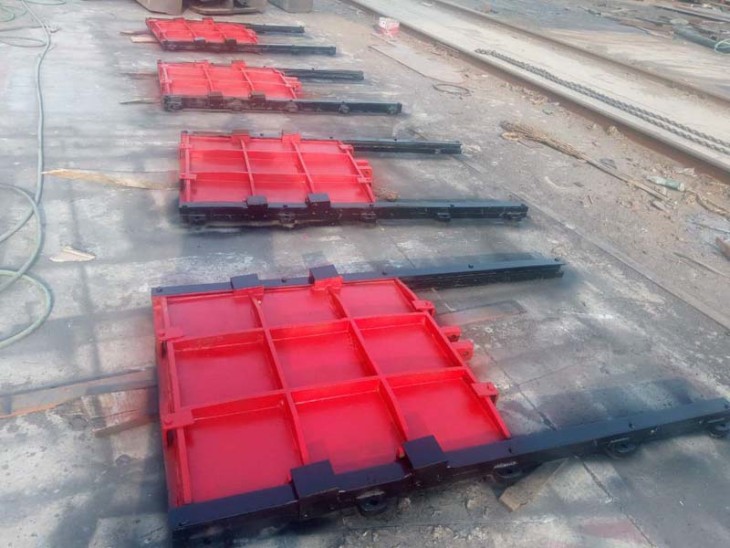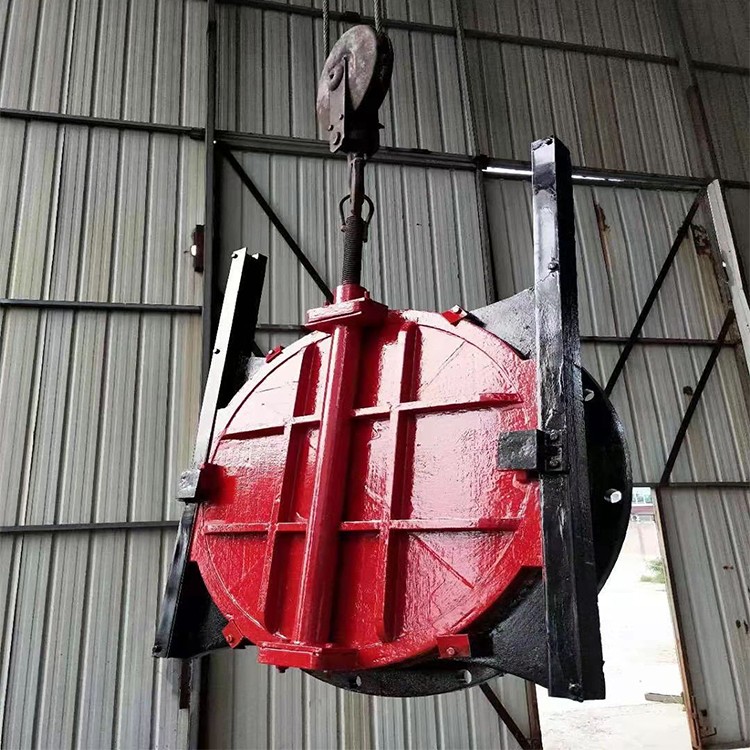



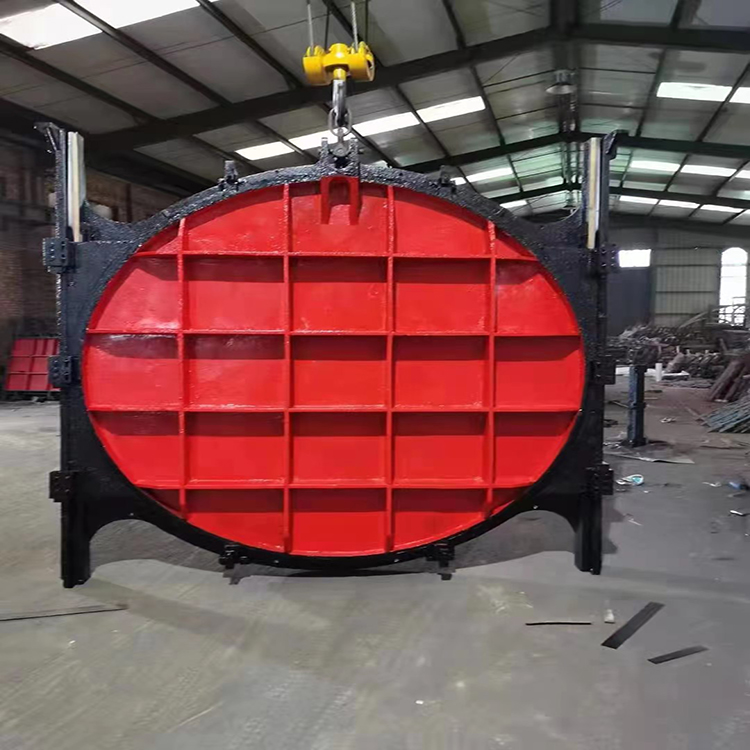
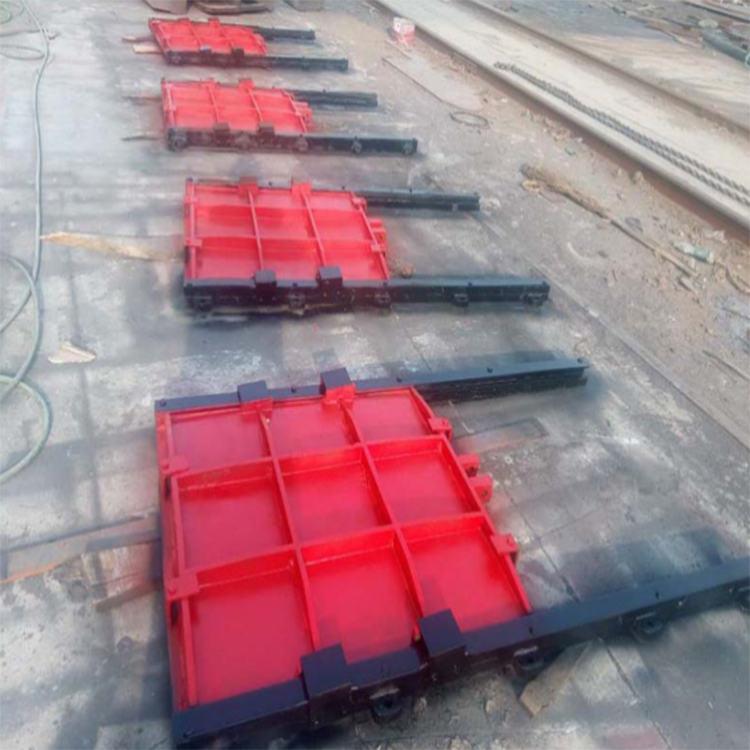
Wrought iron镶铜gate designs are typically custom made to meet customer requirements and come in various sizes. The general design approach involves using an empirical method, followed by strength and stiffness verification. Design calculations are usually simplified by treating the planar system as a simply supported beam.
Utilizing ANSYS software, a three-dimensional finite element model was established for the cast iron sluice gate body. A comparison was made between the traditional calculation methods for cast iron copper-lined sluice gates and the three-dimensional finite element method. The results indicate that three-dimensional finite element calculations can accurately reflect the gate body's stress and deformation conditions. This provides a theoretical basis for the structural design of general sluice gates and for the further parametric and serialized design of cast iron copper-lined sluice gates.
A detailed explanation of the traditional calculation method for cast iron镶copper sluice gate bodies is provided. A three-dimensional finite element model of the cast iron镶copper sluice gate body is established, and its mesh is divided. The structural displacement and stress are obtained, and a comparison of two computational methods is made. The results show that three-dimensional finite element calculation can accurately reflect the force and deformation of the gate body, which provides a theoretical basis for the structural design of general sluice gates and further parameterization and serialization design of cast iron镶copper sluice gates.