
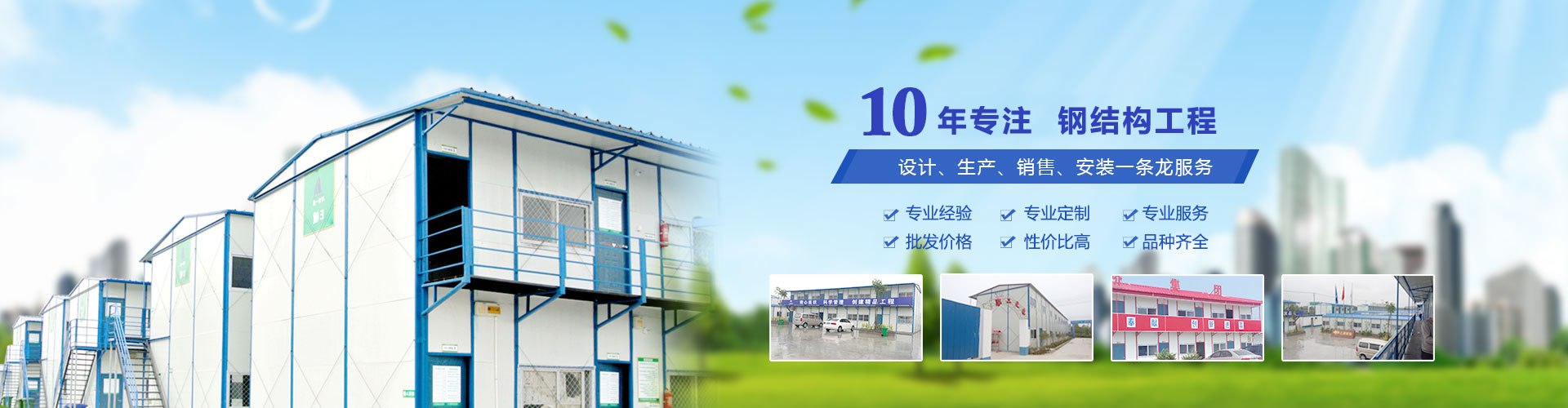
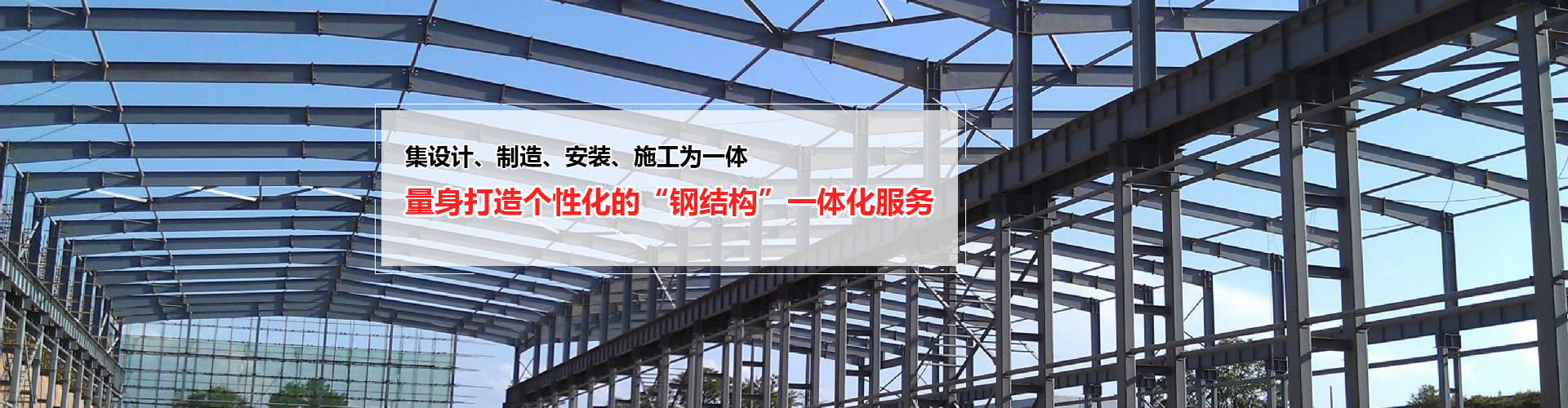

Steel structures are engineering structures made by welding, bolting, or riveting steel sections and plates. Compared to other constructions, they offer advantages in terms of use, design, construction, and comprehensive economy, with the benefits of low cost and easy mobility.
Advantages Point
Steel structural homes or factories can better meet the requirements of flexible partitioning of large open spaces in buildings compared to traditional constructions. By reducing the cross-sectional area of columns and using lightweight wall panels, the utilization rate of the area can be improved, with the effective usable area in the interior increasing by approximately 6%.
The wall uses lightweight, energy-saving standardized C-section steel, square steel, and sandwich panels, offering excellent energy-saving performance, thermal insulation, and seismic resistance.
Utilizing steel structural systems in residential buildings maximizes the benefits of steel's excellent elongation properties and strong plastic deformation capabilities, offering superior seismic and wind resistance. This significantly enhances the safety and reliability of residential structures. Particularly in the face of earthquakes and typhoons, steel structures can prevent catastrophic damage to buildings.
The total weight of the building is light; the steel structure residential system has a light self-weight, approximately half that of concrete structures, which can significantly reduce the cost of the foundation.
Construction speed is rapid, reducing the project timeline by at least one-third compared to traditional residential systems. A 1,000-square-meter building can be completed in just 20 days with a team of five workers.
Environmental benefits are significant. Steel structure residential construction greatly reduces the use of sand, stone, and lime. The materials primarily used are green, recyclable, or biodegradable. When the building is demolished, most materials can be reused or biodegrade, avoiding waste.
The spacious design offers flexibility and richness, allowing for multiple partitioning options within the indoor space to cater to various user needs.
Meets the requirements of residential industrialization and sustainable development. Steel structures are suitable for large-scale production in factories, featuring high industrialization, and can integrate advanced finished products such as energy-saving, waterproofing, heat insulation, doors, and windows into a complete set for application. This integrates design, production, and construction, enhancing the level of the construction industry.
