

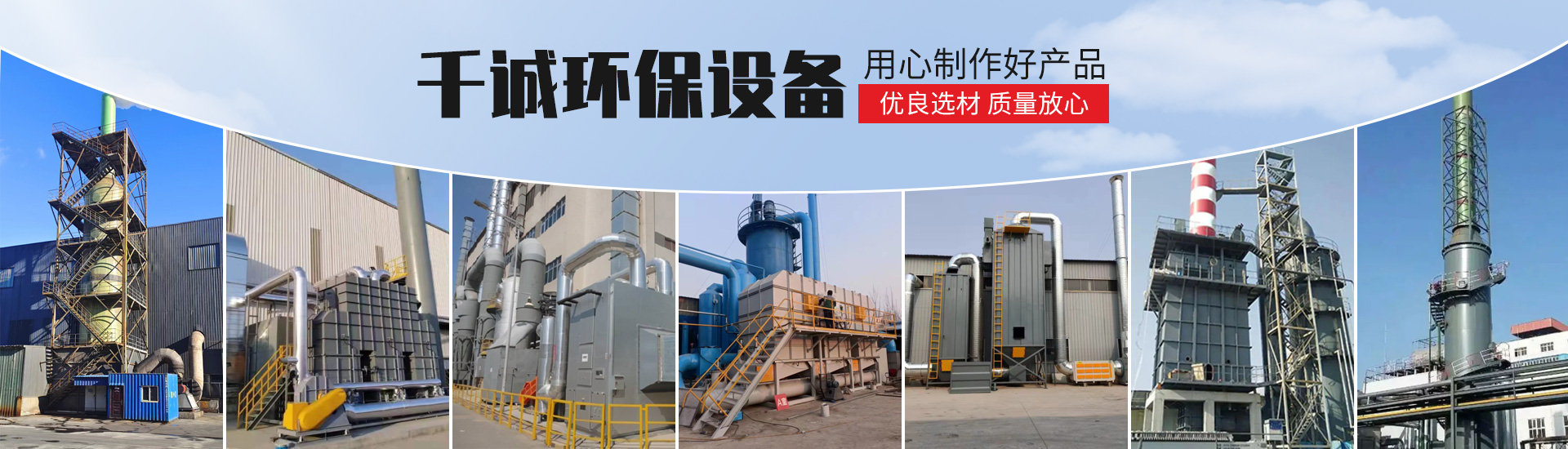

The RTO regenerative thermal oxidizer operates by heating the useful waste gases, then directly oxidizing and decomposing them into carbon dioxide and water at high temperatures. This process treats the waste gas pollutants and recovers the heat generated during decomposition, thereby saving fuel consumption for heating the waste gases.
Application Range of RTO Regenerative Thermal Oxidizer:
Petroleum, chemical, plastic, rubber, printing, agricultural, shoe manufacturing, and power cable production industries containing useful components such as benzene derivatives, phenols, aldehydes, ketones, ethers, and esters. The concentration of useful waste gases ranges between 100PPM and 20,000PPM.
Features of the RTO Regenerative Thermal Oxidizer:
The flexibility in handling useful waste gas flow is significant (nominal flow rate 20%~120%).
The system can adapt to the variations and fluctuations in the composition and concentration of VOCs in the waste gas.
The company can nearly handle all waste gases containing useful compounds with high air volume and low concentration.
Under appropriate exhaust gas concentration conditions, self-heating operation is achieved without the need for additional fuel.
Five, insensitive to a small amount of dust and solid particles carried in exhaust gas.
Six: Low maintenance workload, stable operation.
The entire unit has low pressure loss and a good service life.
Eight, useful sediment can be periodically cleaned, and heat storage bodies can be replaced.
Nine, the thermal rate is quite good among all thermal combustion purification methods.
Key Design Factors of the RTO Regenerative Thermal Oxidizer
For the RTO system, the aim of its optimized design is to enhance the removal efficiency of VOCs and the heat-up rate. The main factors affecting the removal efficiency of VOCs are the "3Ts": oxidation temperature (temperature), residence time (Time), and turbulence level. The factors influencing the heat-up rate include airflow velocity, the volume of the heat storage medium, and its geometric structure.
To prevent stable accidents in RTO regenerative thermal oxidizers and minimize loss from such incidents, it is crucial to prioritize stability during the design phase of RTO regenerative thermal oxidizers. Common measures include:
One: Strictly control the concentration of hazardous substances entering the RTO to maintain a stable level, which is an important measure for explosion prevention.
Understanding the client's process thoroughly, identifying the characteristics of waste gas emissions during the process, and potential unexpected factors.
Three, add necessary equipment such as concentration monitors at the exhaust inlet and required branch inlets; for high-concentration exhaust, install dilution air valves at the RTO inlet; add a buffer tank at the exhaust inlet, ensuring the tank's volume is properly designed; increase interlock control among concentration monitors, dilution air valves, and RTO fans to respond correctly to emergencies; install flame arrestors at the RTO inlet to prevent backfire; add explosion relief panels at the RTO combustion chamber, buffer tank, and pipe bends; and set up fire protection facilities near the RTO regenerative thermal oxidizer.
The RTO oven purification treatment system is a highly integrated man-machine equipment. Although it has a fairly high degree of automation, it requires dedicated personnel for maintenance and management. Prior to an explosion, the concentration of substances in the RTO oven often increases rapidly. If there is an on-site staff member, the system can issue an early warning and take necessary measures to prevent accidents. Additionally, an online TVOC concentration monitoring system is installed at the exhaust of each RTO system, providing the company with the necessary data support for management.
Five, Standardize the design of the exhaust hood and fan selection, and simultaneously, plan the waste gas collection pipeline comprehensively. Form a collection and treatment system from branch pipes to main pipes to treatment units to the main exhaust outlet, ensuring the effectiveness of waste gas collection. When designing the collection and pretreatment systems for flammable and explosive waste gases, it is more beneficial to prioritize system stability over excessive strength, even if it means using equipment and materials with lower strength.
During the debugging of the RTO furnace, it is essential to perform no-load debugging first. Once the no-load debugging is stable, gradually introduce low-concentration waste gases, such as those collected from the company's wastewater pond cover and workshop air exchange. Finally, gradually introduce high-concentration waste gases. Meanwhile, monitor the discharge flow and concentration of the waste gases to be introduced, with a focus on peak-time concentrations. The useful concentration at a single exhaust point should be controlled within 1000ppm, and it should not exceed 5000ppm under any circumstances.
Due to significant fluctuations in the exhaust gas concentration in the excellent chemical industry, it is necessary to mix, buffer, and pre-treat various concentrations of useful exhaust gases. It is recommended that enterprises use PP packed towers for the pre-treatment of useful exhaust gases. However, as PP packed towers are not highly robust and can easily explode in the event of an accident, it is crucial to ensure system stability to the maximum extent.
