

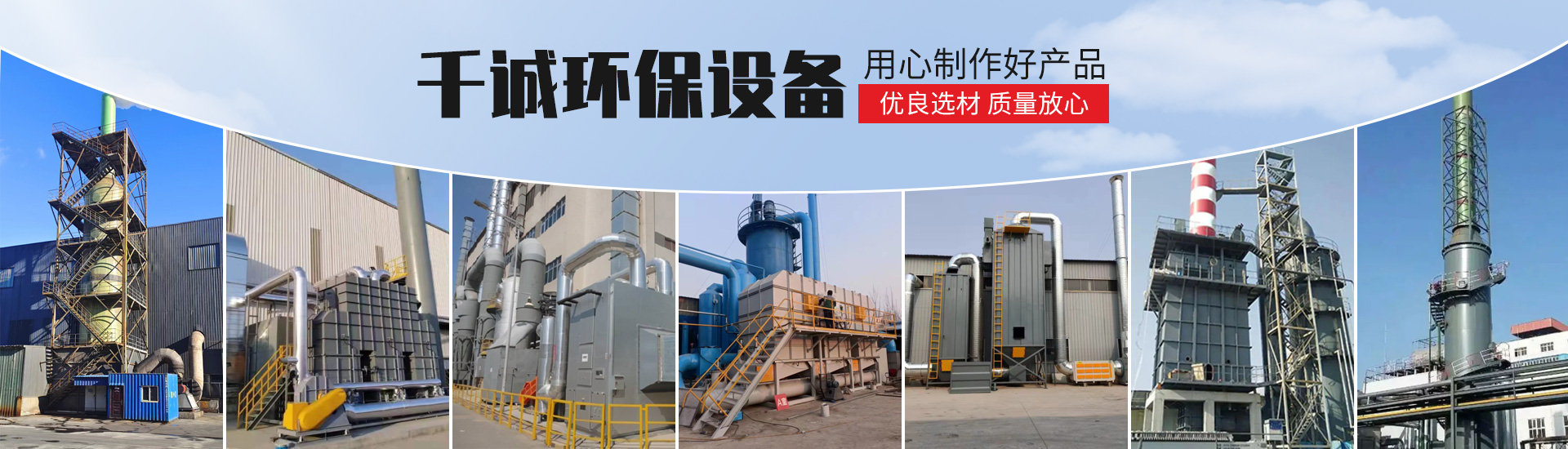

RTO Regenerative Thermal Oxidizer Normal Application and Treatment Equipment
The RTO regenerative thermal oxidizer features low resistance and low energy consumption. It boasts sufficient mechanical strength and erosion resistance. Its structure is simple, making it easy to manufacture and maintain. The VOC waste gas equipment is not multifunctional, but specifically designed for waste gas treatment. Therefore, some waste gases contain particles, halogenated gases, heavy metals, and other compounds that interfere with, and even damage, the treatment effectiveness of VOC waste gas equipment. Hence, it is necessary to fully purify and remove these compounds before they enter the VOC waste gas equipment, providing an ideal environment for RTO waste gas treatment.
When delving into combustion technologies, the new catalytic combustion technique can directly oxidize and decompose certain substances in exhaust gases during equipment operation. After oxidation and decomposition, the resulting gases are heated through the direct equipment system, which can then be used to preheat incoming exhaust, thereby saving energy consumption and facilitating waste gas treatment. This technology is now widely applied in various industries, simplifying the process of waste gas management. In an era where environmental protection is a top priority, the application of this catalytic combustion technology ensures no secondary pollution. Simply put, it achieves oxidation and decomposition of substances through catalysts, and such novel combustion techniques are among the common methods employed by large enterprises.
The primary purpose of insulating the pipelines and equipment of the RTO regenerative thermal oxidizer is to reduce heat loss during the transportation of the heat medium. Therefore, it is crucial to ensure that the heat medium maintains a corresponding temperature on the surface of the pipelines and equipment to avoid condensation or exposure to high temperatures. Catalytic combustion, due to its low ignition temperature, is an ideal method for treating pollutants through catalytic reactions (without open flame), offering advantages such as a wide range of applicability, simple structure, good purification speed, energy efficiency, and no secondary pollution. It has been widely applied.
How to Properly Apply the RTO Regenerative Thermal Oxidizer? Ensure the following points:
Under the premise of collection rate, minimize the exhaust air volume as much as possible. This not only improves the exhaust concentration and the unit thermal value of waste gas but also reduces air volume and energy consumption. At the same time, consider recovering the heat from the exhaust gas.
2. Catalytic combustion is generally suitable for gaseous substances with low airflow, good concentration, and high temperatures, and the exhaust gas must not contain factors such as sulfur, lead, mercury, arsenic, and halogens that can poison the catalyst.
3. Waste gases typically belong to the flammable and explosive category. Although they can be utilized to recover some of the heat generated by the combustion of recyclable materials, thereby reducing energy consumption, their concentration must be controlled within the explosive limits during processing. In cases where energy consumption is within an acceptable range, small air volumes generally employ a simple tube-in-tube direct heat exchange for heat recovery.
4. The commonly used catalysts in waste gas treatment are typically honeycomb palladium metal catalysts and platinum metal catalysts. The catalytic combustion methods include electric heating and gas heating, with combustion types ranging from direct catalytic combustion to regenerative catalytic combustion.
5. Catalytic combustion must be conducted under specific temperature conditions. For low-temperature gases, heating is required; the larger the air volume, the greater the energy consumption and operating costs.
The body of the RTO regenerative thermal oxidizer is a ceramic fiber coated with an adsorbent, typically activated carbon or hydrophobic zeolite, shaped into a honeycomb-like circular wheel, which is then divided into two zones: the adsorption treatment area and the cyclic desorption area. However, to enhance the wheel's adsorption capacity, a cooling zone is sometimes designed between the two areas. Generally, with a large adsorption area, the desorption area and cooling area are two small processing areas of equal size.
After combustion or oxidation of VOCs, the clean air temperature reaches up to 500-700°C. The thermal energy of this air is recovered through a heat exchanger. Simultaneously, the temperature of the clean air is reduced and then directed to the desorption zone of the wheel for desorption; if the temperature is too high, the wheel may ignite, so the temperature entering the wheel should not be too high.
The RTO regenerative thermal oxidizer utilizes a three-step continuous temperature swing adsorption-desorption process: adsorption, desorption, and concentration. It converts low-concentration, large-volume waste gases into high-concentration, small-volume gases. The unit's features are suitable for treating large volumes of low-concentration waste gases containing various valuable components. Through the rotation of the wheel, the desorption process and the wheel's circulation can be simultaneously completed on the wheel. Waste gases entering the concentration wheel are adsorbed and purified in the wheel's adsorption zone at room temperature and then directly released into the atmosphere. Subsequently, due to the rotation of the wheel, they enter the desorption zone, where the wheel with adsorbed valuable substances is desorbed. The valuable substances adsorbed on the wheel are separated, desorbed, and enter the subsequent treatment system, operating in this cycle.
The core of the RTO regenerative thermal oxidizer is a rotating drum filled with adsorbents, which is divided into three sections: the adsorption zone, the circulation zone, and the cooling zone. Waste gases are introduced into the adsorption zone by a blower, where they adsorb useful pollutants and are then discharged after purification. The adsorbent then rotates to the regeneration zone. During contact with high-temperature air, volatile useful compounds are desorbed, leaving with the circulating air, and the adsorbent is recovered. The recovered adsorbent is cooled in the cooling zone and then rotates back to the adsorption zone for re-adsorption. As the drum rotates, the adsorbent is cyclically adsorbed, desorbed, and cooled to purify the waste gases.
RTO Regenerative Thermal Oxidizer Post-Treatment Unit
Used for exhaust treatment, particularly suitable for applications with high air volume and low concentration, including printing, large-scale spray painting workshops, furniture, semiconductor, and liquid crystal LED industries, among other production sites.
