
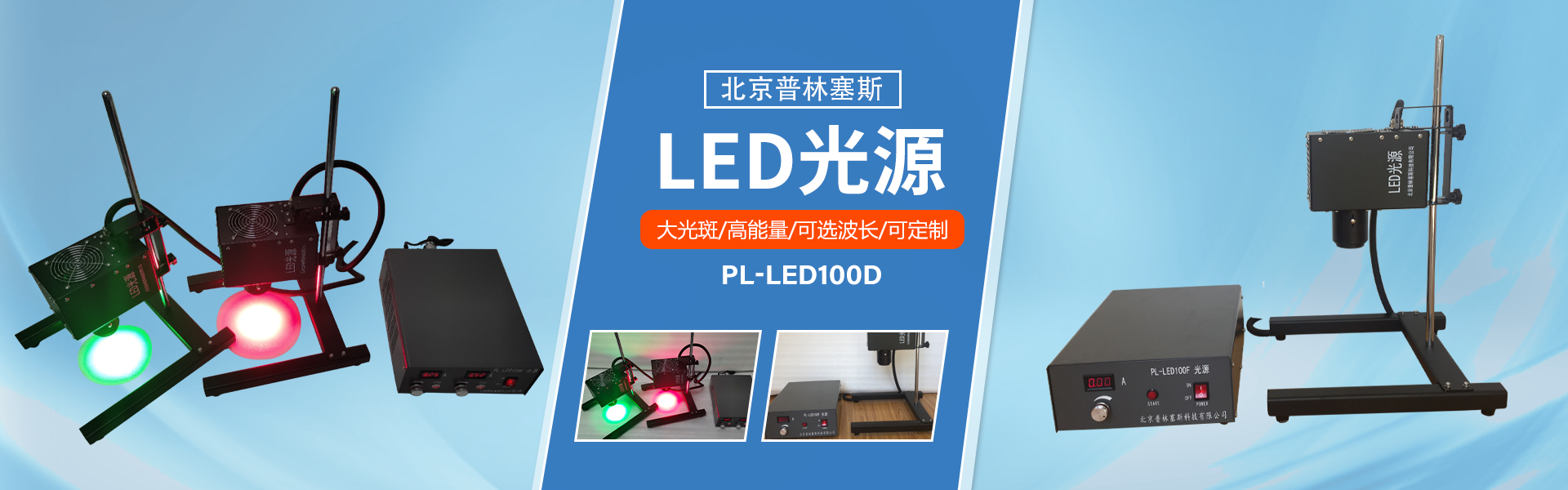
Currently, the application of photocatalytic xenon light sources is a transitional phase in the development of digital imaging technology. From the perspective of light sources, xenon lamps or other white light bulbs are not suitable for current digital imaging technology, while pure-color LEDs or laser light sources are ideal for digital imaging. In the projection field, LED light sources have been widely favored and applied to replace white light bulbs/tubes, but they have been largely replaced. LED power and brightness are significantly lower than the requirements for large-screen projection, and laser light sources, as the light sources for large-screen projectors, can provide a more ideal color performance.
A Xenon lamp is an electric light source that emits light through xenon gas discharge. Due to the inert gas xenon being the discharge material within the lamp, the difference between the excitation potential and the ionization potential is minimal. The energy distribution of the Xenon lamp's radiation spectrum is close to that of the sun, with a color temperature of approximately 60,000K. The spectral distribution of the continuous spectrum portion of the Xenon lamp is almost independent of the light input power, and the distribution of spectral energy remains nearly constant throughout its lifespan. Xenon lamps have good electrical parameter consistency and are less affected by external conditions. Once ignited, they can achieve stable light output almost instantly; they can also be reignited immediately after being turned off. Xenon lamps have low efficiency and a small potential gradient.
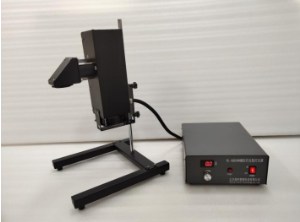
The system is divided into point light sources and parallel light sources, featuring a professional heat dissipation system, a stable power supply, and lighting and operation equipment for experiments. Point light sources are typically connected to fiber optics to simulate the narrow and dark experimental equipment of solar energy. Parallel light sources are usually a single light point, which can be adjusted according to the experimental requirements.
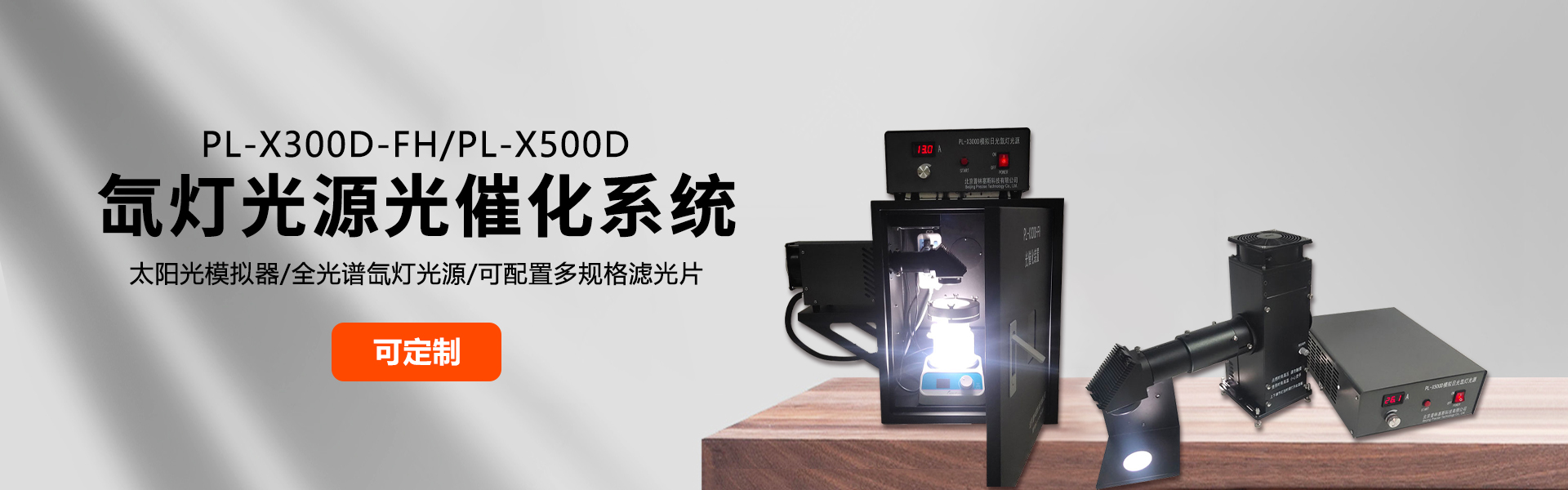
The light source is specifically designed for solar cells; a 350W high-pressure short-arc spherical xenon lamp is installed within the light source, forming an arc discharge under the stimulation of high-frequency and high-voltage. The high-pressure short-arc spherical xenon lamp is a small point light source with strong radiation, spanning from ultraviolet to near-infrared spectrum. It can be observed that the color of the light in this area is very similar to sunlight, with high energy density and stable output. The photo-catalytic xenon light source is not only used for research on solar cells but also for testing in various fields such as photoelectric response devices, surface photovoltage spectroscopy, biophotonics, photocatalysis, and surface defect analysis.
Based on the structure of the light bulb, photocatalytic xenon light sources can be divided into the following three categories:
We offer: Long-arc Xenon Lamps, Short-arc Xenon Lamps, and Spherical Xenon Lamps.
Long Arc Xenon Lamps: Generally using tubular xenon lamp tubes, placed inside a reactor and employing peripheral diffused illumination, commonly referred to as internal illumination sources. These sources are of full-spectrum illumination, cannot add filters, yet are cost-effective, suitable for preliminary research in optical chemistry.
Short Arc Xenon Lamps: Generally, spherical xenon lamps are used, with parallel beams of light passing through the outlet. The light output can be adjusted with different filters to obtain ultraviolet, visible, or monochromatic light in the visible spectrum. The outlet can be rotated 360 degrees to adjust the angle. Photochemical reactors are typically placed under the xenon lamp for experiments, with light shining externally onto the reaction liquid, hence the light source is also referred to as an external light source.
Spherical Xenon Lamps: Require high-precision optical path design. Generally, light is collected and focused into a point source through a rearview mirror, then outputted as parallel light via an optical lens assembly, ensuring high uniformity of the parallel light output. Suitable for photovoltaic, solar cell, and photobiological experiments. Typically used with monochromatic instruments to form an adjustable monochromatic light source.