
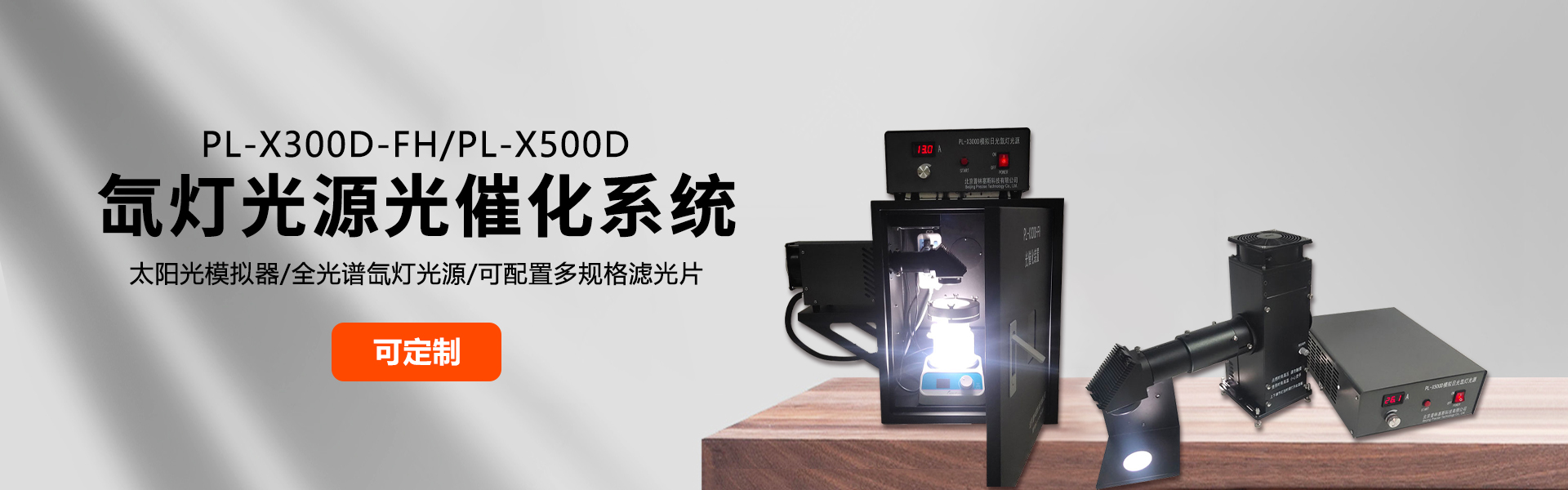

Xenon, being the heavier element among the inert gases with a higher atomic number, also features a larger atomic radius. In arc discharge, the energy lost during elastic collisions between electrons and the gas is inversely proportional to the atomic weight, which means that compared to other inert gases, xenon experiences less energy loss during arc discharge, resulting in higher luminous efficiency. Additionally, with a lower ionization potential, the voltage drop near the electrodes during discharge is minimized, thereby extending the electrode's lifespan. Due to the characteristics of the xenon atom's structure, the spectral output of long-arc xenon lamps is very close to sunlight. The power of fluorescent lamps is limited, generally ranging from 5 to 100 watts. However, the power of xenon lamps can range from 10,000 watts to several hundred thousand watts. Xenon lamps operate at high temperatures, requiring forced cooling, either by air or water cooling, as natural cooling is insufficient. Neon lamps have a higher luminous efficiency, around 24 to 37 lumens per watt, while water-cooled xenon lamps can achieve up to 60 lumens per watt, with an average lifespan of 3,000 hours. A 50,000-watt xenon lamp emits light equivalent to 1,000 100-watt fluorescent lamps or 90 400-watt high-pressure mercury lamps. It is suitable for large-area lighting in places like squares, parks, sports stadiums, large construction sites, open-pit mines, airports, and can also be used as a light source for film photography, color photolithography, copying, and more. Its light, similar to sunlight, makes it useful for fabric color inspection, aging tests for drugs and plastics, plant cultivation, photochemical applications, and as a source of artificial aging and sunlight simulation.
