
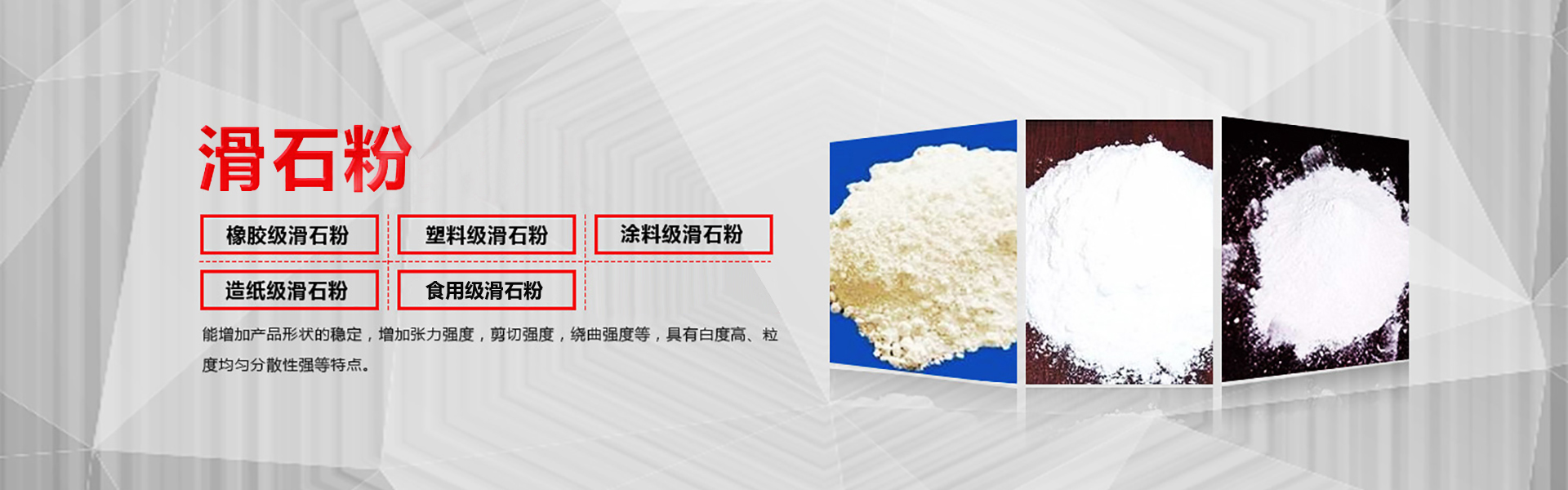
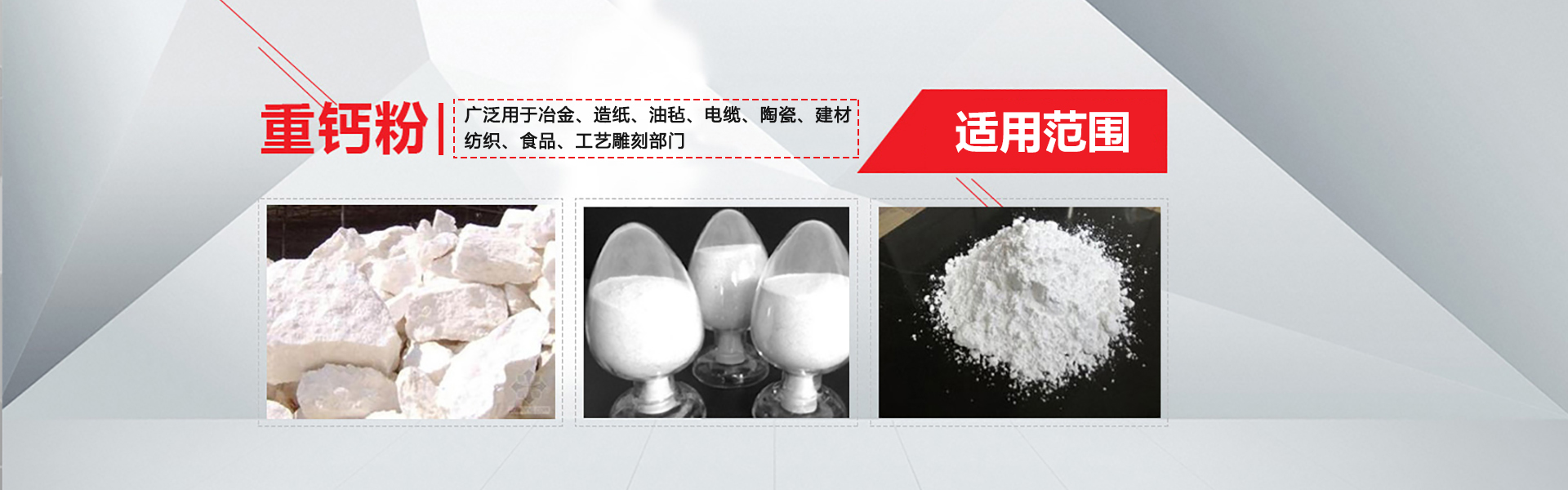

As a mineral material for energy conservation and emission reduction, and environmental protection, it is widely used in industries such as papermaking, plastics, rubber, paints, adhesives, sealants, and building materials due to its special physical and chemical properties, low cost, abundant raw materials, and non-toxicity. Known as calcitic calcium carbonate, it is made from crushed natural carbonate minerals such as calcite, marble, and limestone, also known as ground calcium carbonate, and is a commonly used powdered inorganic filler. So, what are the differences between the ground calcium carbonate powder obtained from calcite, marble, and limestone? Calcite has the chemical molecular formula CaCO3, with a theoretical chemical composition of: CaO 56.03%, CO2 43.97%, belongs to the trigonal crystal system, is colorless or white, and can sometimes be stained with elements like iron, manganese, and copper to appear pale yellow, pale red, purple, brown, etc. Natural marble, also known as onyx, is a recrystallized limestone, primarily composed of CaCO3. Limestone softens under high temperature and pressure, and re-crystallizes into marble when the contained minerals change. The main components are calcium and dolomite, with a wide variety of colors, usually with distinct patterns, and abundant mineral grains. The Mohs hardness ranges from 3 to 5, usually in a cubic shape. Limestone is primarily composed of CaCO3, presented as calcite particles with a complex crystal form, often appearing as trapezoidal or rhombic, pale gray or blue-gray, with a Mohs hardness of 3~4 and a density of 2.5~2.8g/cm3. The main component of all three is CaCO3, with calcite having a slightly higher calcium content than marble and limestone, with good calcite containing over 99% calcium. China has abundant resources of calcite, marble, and limestone, especially calcite, which is common in natural calcium carbonate. Moreover, China is one of the five largest producers of high-quality calcite in the world, with a relatively concentrated distribution mainly in Guangxi, Jiangxi, and Hunan; natural marble resources are widespread across the country, but the main component of artificial marble is no longer calcium carbonate, and the two should not be confused. Calcite, marble, and limestone ores are directly ground into heavy calcium carbonate fillers, so a high purity and whiteness of the ore is required, with the content of calcium oxide almost approaching the theoretical value. Therefore, not all limestone and marble can be used as raw materials for heavy calcium carbonate, and it is particularly important to note that only high-calcium limestone can be used for heavy calcium production. In terms of processing technology: Firstly, calcite is generally not subject to mechanical ore processing in industry, only simple washing and hand selection; for limestone, only simple washing is usually required, without the need for complex ore purification processes. In comparison, marble comes in a rich palette of colors and types, making its ore processing more complex than that of calcite and limestone. Secondly, calcite has a lower Mohs hardness of 3, compared to marble and limestone, so the processing efficiency of calcite with the same power crushing equipment is higher than that of marble and limestone. Thirdly, ultra-fine calcite crushing technology mainly includes dry and wet methods. The dry process is generally used for producing products with d97≥3~5μm, while the wet process is generally used for producing products with d97≤3~5μm (d90≤2μm); limestone is generally processed using dry crushing methods.
News Center Co., Ltd.
