
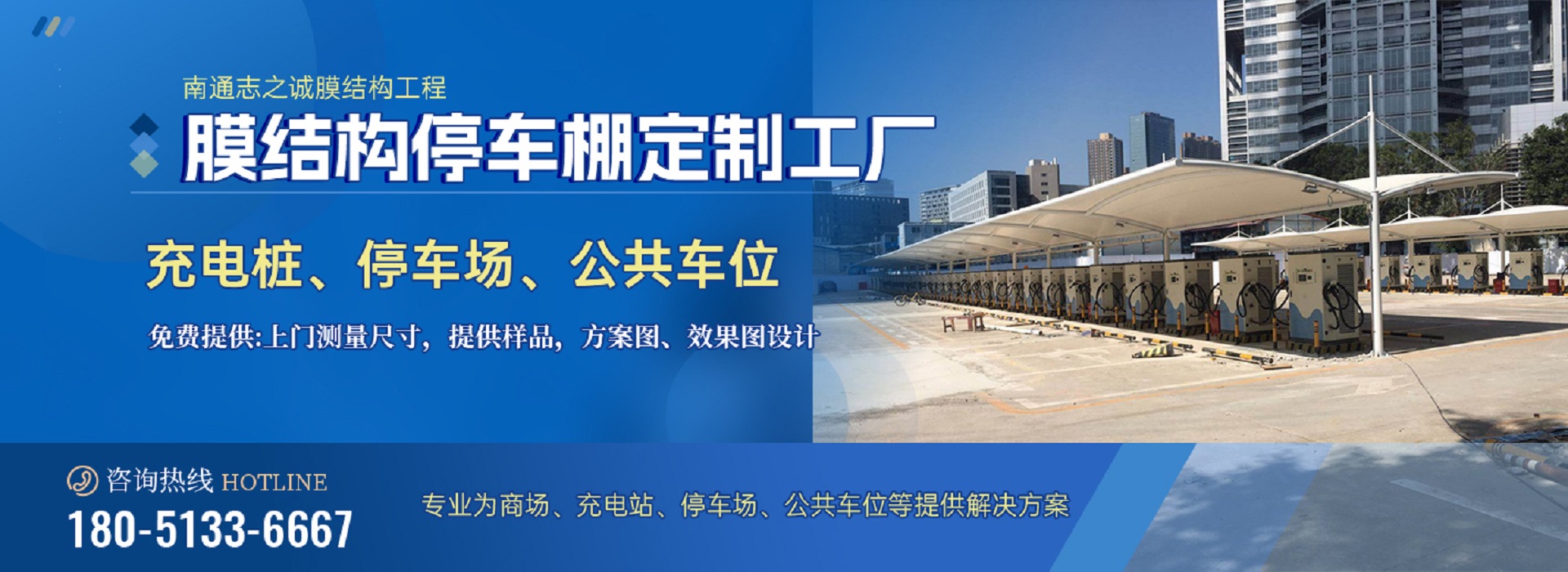
The main differences between membrane structure parking canopies and ordinary parking canopies are reflected in the following aspects:
Design and Shape: The membrane structure carport offers greater flexibility in design, allowing for a wide variety of shapes, sizes, and heights tailored to customer needs, in contrast to the potentially limited shapes and sizes of conventional carports.
Material: The membrane structure carport is lighter and stronger, offering a balance between lightness and sturdiness with excellent wind and seismic resistance. Ordinary carports may be constructed with heavy-duty steel pipes, resulting in a heavier weight.
Installation: The installation of the membrane structure carport is simple and convenient, requiring no complex construction processes such as welding or cutting, allowing for the quick assembly of the canopy. The installation process for a standard carport may be relatively more complicated.
4. Cost: The cost of membrane structure carports is relatively low due to their simple installation process, lack of complex procedures, and savings on labor costs. The cost of a standard carport may be higher.
5. Durability: Membrane structures for parking canopies are more durable, with membrane materials having lifespans of 5 years, 10-15 years, or even long-lasting materials. In contrast, the structural surfaces of ordinary canopies may have coatings, which could have a shorter lifespan.
6. Transparency: The membrane structure parking canopy offers superior transparency, reflecting light and eliminating glare, widely diffusing it into other spaces. The transparency of a regular canopy may not be as good as that of the membrane structure canopy.
7. Safety Factor: Membrane structure parking shelters have a higher safety factor due to the light weight of their components, ensuring a safe construction process without the risk of collapse or other safety accidents. The construction of standard parking sheds may present safety hazards.
In summary, membrane structure carports differ from standard ones in terms of form, material, installation, cost, durability, light transmission, and safety coefficients. Selection and use should be based on specific circumstances.
