
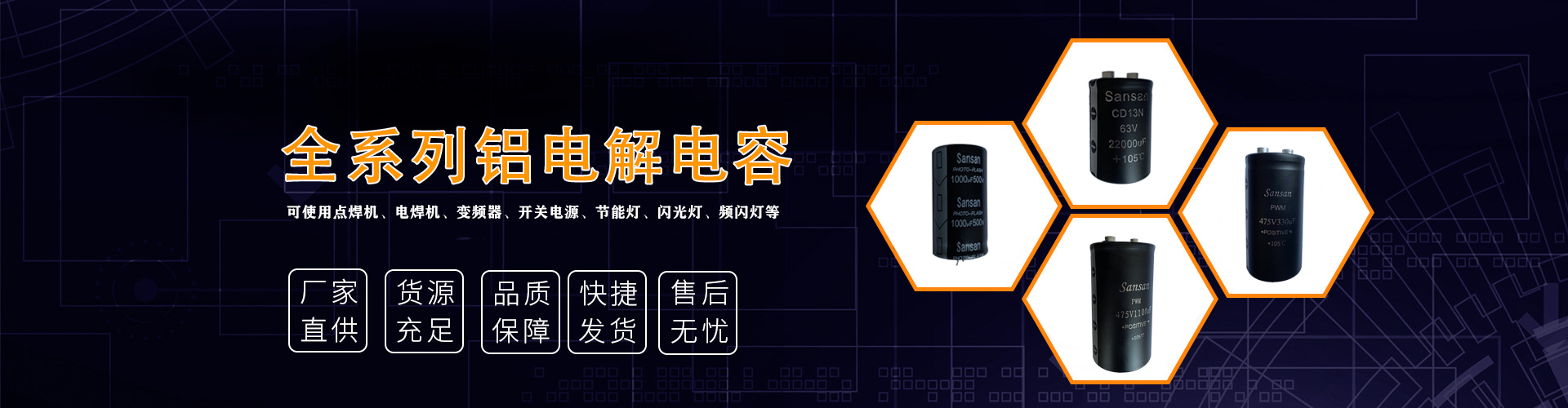






The full name of a solid capacitor is Solid Aluminum Electrolytic Capacitor. It differs significantly from a standard capacitor (i.e., liquid aluminum electrolytic capacitor) due to the use of different dielectric materials. The dielectric material for liquid aluminum electrolytic capacitors is the electrolyte of lithium batteries, while for solid capacitors, it is conductive fiber material.
During the leading phase of electronic computers, you've all heard about the instability of computers, even capacitor破裂. This is because, on one hand, the main control chip, after long-term use, overheating leads to thermal deformation of the lithium battery electrolyte, causing capacitors to be missing, and even exceeding the solubility point, leading to expansion and rupture! On the other hand, if the main control chip is not powered on for a long time, the lithium battery electrolyte is prone to undergo a chemical reaction with aluminum oxide, causing operation or power source explosion. However, using solid electrolyte capacitors eliminates any issues and risks.
Due to the use of conductive fiber material as dielectric material in solid-state capacitors, this material is less prone to reaction with aluminum oxide and is not likely to explode upon electrical activation. Furthermore, being a solid product, it is naturally not susceptible to cracking due to thermal deformation.
Different from the surface mount electrolytic capacitors used in solid-state capacitors.
Solid-state capacitors offer eco-friendliness, low characteristic impedance, high stability across temperature ranges, excellent thermal stability, and high reliability. They are a large product category within the current electrolytic capacitor market. Due to their superior characteristics compared to liquid aluminum electrolytic capacitors, solid-state capacitors have a thermal resistance of up to 260 degrees Celsius, excellent conductivity, working frequency characteristics, and a long service life. They are suitable for low-voltage, high working AC applications and are crucial for data information products such as slim DVDs, projectors, industrial control mainboards, and more.
In fact, surface mount electrolytic capacitors are essentially the same as the electrolytic capacitors explained earlier. The only difference between them is the packaging type, that is, the welding process. Whether it's in the software of a mobile phone or the process of making surface mount assemblies, the capacitors themselves are mounted on the PCB board. The basic classification method is capacitors used in the SMT surface mount assembly process, with a black and gray plastic base.
