

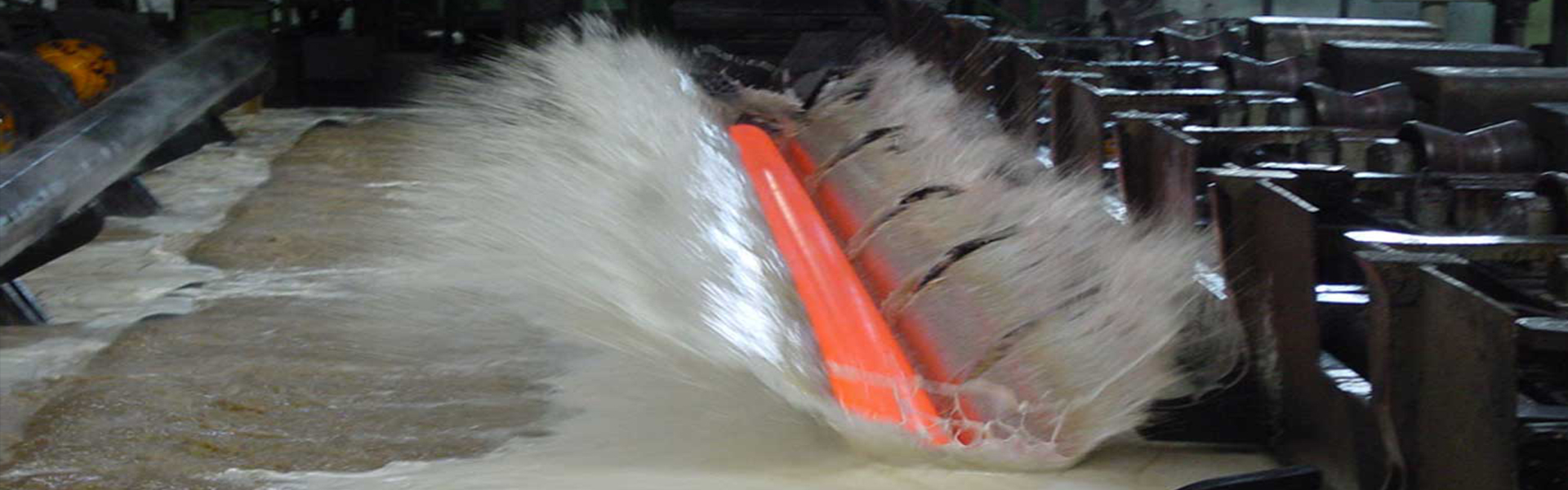





What is Heat Treatment Quenching
Heat treatment is a metal heat processing technique that involves heating, holding, and cooling materials in the solid state to achieve the desired microstructure and properties.
Quenching is a heat treatment process. Heat treatment quenching involves heating steel and other workpieces above the critical temperature, holding them at this temperature for a certain period, and then cooling them at a rate faster than the critical cooling speed to achieve an uneven microstructure primarily consisting of martensite (bainite or maintaining a single-phase austenite can also be obtained depending on requirements).
What types of heat treatment quenching are there?
Classification of Heat Treatment Processes
The metal heat treatment process can generally be divided into three major categories: overall heat treatment, surface heat treatment, and chemical heat treatment. Overall heat treatment involves heating the workpiece as a whole and then cooling it at an appropriate rate to achieve the desired microstructure, thereby altering its overall mechanical properties. The overall heat treatment of steel and iron primarily includes four basic processes: annealing, normalizing, quenching, and tempering.
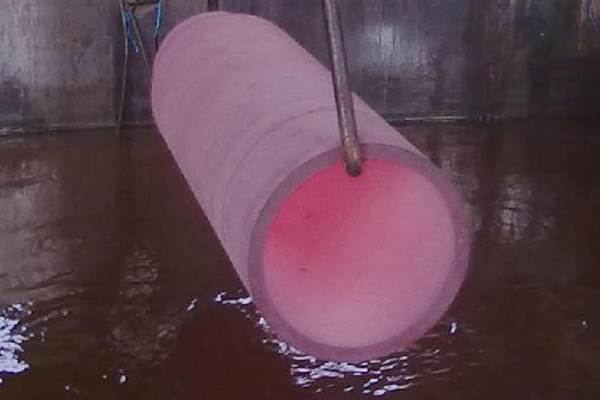
What are the methods of heat treatment?
Annealing -- It involves heating the workpiece to an appropriate temperature and maintaining it for different durations based on the material and workpiece size, followed by a slow cooling process. The objective is to achieve or approach a balanced state of the internal metal structure, resulting in excellent process and performance characteristics, or preparing the structure for further hardening.
Normalizing——It is a heat treatment process in which the workpiece is heated to an appropriate temperature and held for a certain period of time, then cooled in the air to obtain a pearlitic-type microstructure. The effect of normalizing is similar to that of annealing, but the resulting microstructure is finer. It is commonly used to improve the machinability of materials and is sometimes used as the final heat treatment for parts with lower requirements. It is applicable to medium and low carbon steels.
Quenching is a heat treatment process where the steel workpiece is austenitized and then cooled at an appropriate rate, causing the workpiece to undergo a transformation to unstable structures like martensite across its cross-section. Quenched steel becomes harder but also more brittle, and is suitable for medium to high carbon steels.
Austenitizing——A heat treatment process in which the quenched steel workpiece is heated to a temperature below the critical point AC1 for a certain period of time to reduce brittleness, followed by cooling using a suitable method to achieve the desired microstructure and properties.
Annealing, normalizing, quenching, and tempering are the "four fires" in overall heat treatment. Quenching and tempering are closely related and often used together, being indispensable.
"The 'Four Fires' evolve into different heat treatment processes depending on the heating temperature and cooling methods. The process of tempering at 450-650℃ after quenching to achieve certain strength and toughness is known as 'tempering'."
Surface Heat Treatment——It is a metal heat treatment process that involves heating only the surface of the workpiece to harden it, thereby altering the mechanical properties of the surface.
To heat only the surface of the workpiece without excessive heat entering the interior, the heat source must possess high energy density, meaning it imparts a greater amount of thermal energy per unit area of the workpiece, allowing the surface or a localized area to reach high temperatures in a short or instantaneous manner. The primary methods of surface heat treatment include flame hardening and induction heating treatment. Common heat sources include oxygen-acetylene flames, induction currents, lasers, and electron beams.
Chemical Heat Treatment is a metal heat treatment process that alters the surface chemical composition, structure, and properties of a workpiece. Unlike surface heat treatment, which changes the surface chemical composition of a workpiece, chemical heat treatment involves placing the workpiece in a medium (gas, liquid, or solid) containing carbon, nitrogen, or other alloying elements and heating it for an extended period to allow carbon, nitrogen, boron, and chromium to diffuse into the surface. After the elements have diffused, additional heat treatment processes such as quenching and tempering may be performed. The primary methods of chemical heat treatment include carbon diffusion, nitrogen diffusion, and metal diffusion.
Supplemental Technique Two for Heat Treatment Process
Annealing: A heat treatment process for metal materials, involving heating them to an appropriate temperature, holding for a certain period, and then cooling them slowly. Common annealing processes include recrystallization annealing, stress relief annealing, spheroidizing annealing, and full annealing. The purpose of annealing: primarily to reduce the hardness of metal materials, enhance their plasticity, facilitate cutting or pressure processing, reduce residual stress, improve the uniformity of structure and composition, or prepare the microstructure for subsequent heat treatment.
2. Normalizing: A heat treatment process in which steel or steel parts are heated to or above the upper critical temperature of steel, held at 30-50℃ for an appropriate duration, and then cooled in still air. The purpose of normalizing: Primarily to enhance the mechanical properties of low-carbon steel, improve machinability, refine grain structure, eliminate structural defects, and prepare the microstructure for subsequent heat treatments.
3. Quenching: A heat treatment process in which steel parts are heated above Ac3 or Ac1 (the lower critical temperature of steel) to a certain temperature, held for a period of time, and then cooled at an appropriate rate to achieve martensite (or bainite) microstructure. Common quenching methods include salt bath quenching, martensite partitioning quenching, bainite isothermal quenching, surface quenching, and local quenching, among others. The purpose of quenching is to obtain the required martensite structure in steel parts, improve the hardness, strength, and wear resistance of the workpiece, and prepare the microstructure for subsequent heat treatment.
4. Tempering: A heat treatment process in which steel parts, after being quenched and hardened, are reheated to a temperature below Ac1, held at this temperature for a certain period, and then cooled to room temperature. Common tempering processes include low-temperature tempering, medium-temperature tempering, high-temperature tempering, and multiple tempering. The purpose of tempering: primarily to relieve the stresses generated during the quenching process, providing the steel parts with high hardness and wear resistance, as well as the required ductility and toughness.
5. Quench and temper: a composite heat treatment process for steel or steel components, involving quenching and high-temperature tempering. Steel used for quench and temper treatment is known as quenched and tempered steel. It generally refers to medium carbon structural steel and medium carbon alloy structural steel.
6. Carburization: Carburization is the process of infusing carbon atoms into the surface layer of steel. It allows low-carbon steel workpieces to achieve a surface layer similar to high-carbon steel. After quenching and low-temperature tempering, the surface layer of the workpiece becomes highly hard and wear-resistant, while the central part retains the toughness and plasticity of the low-carbon steel.
