
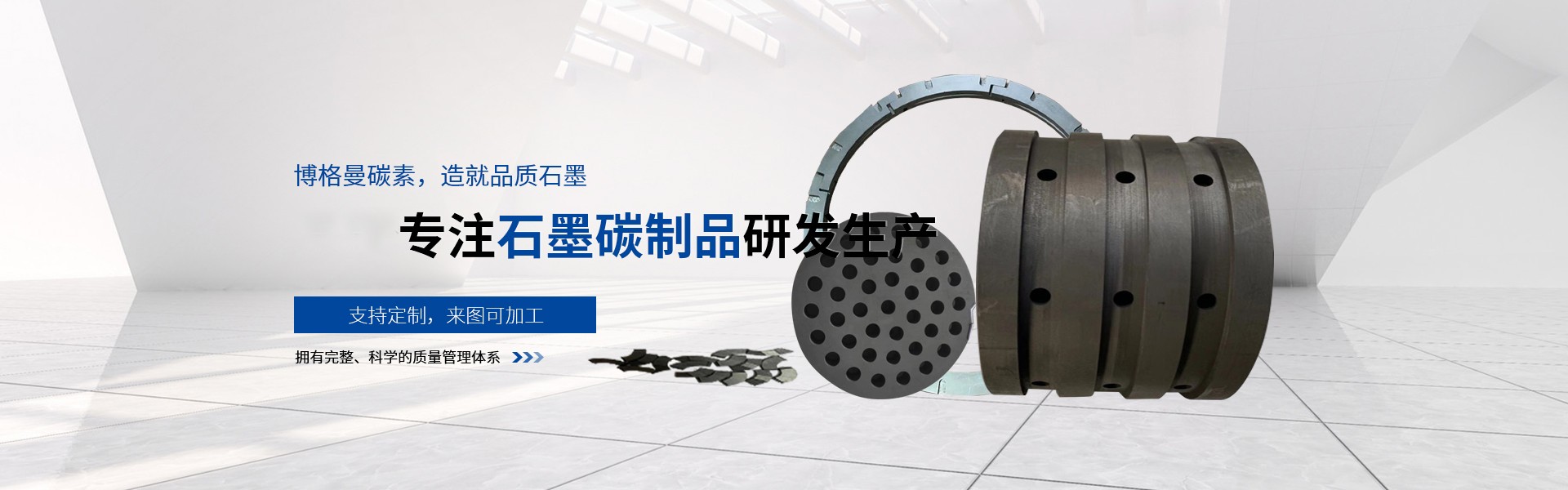
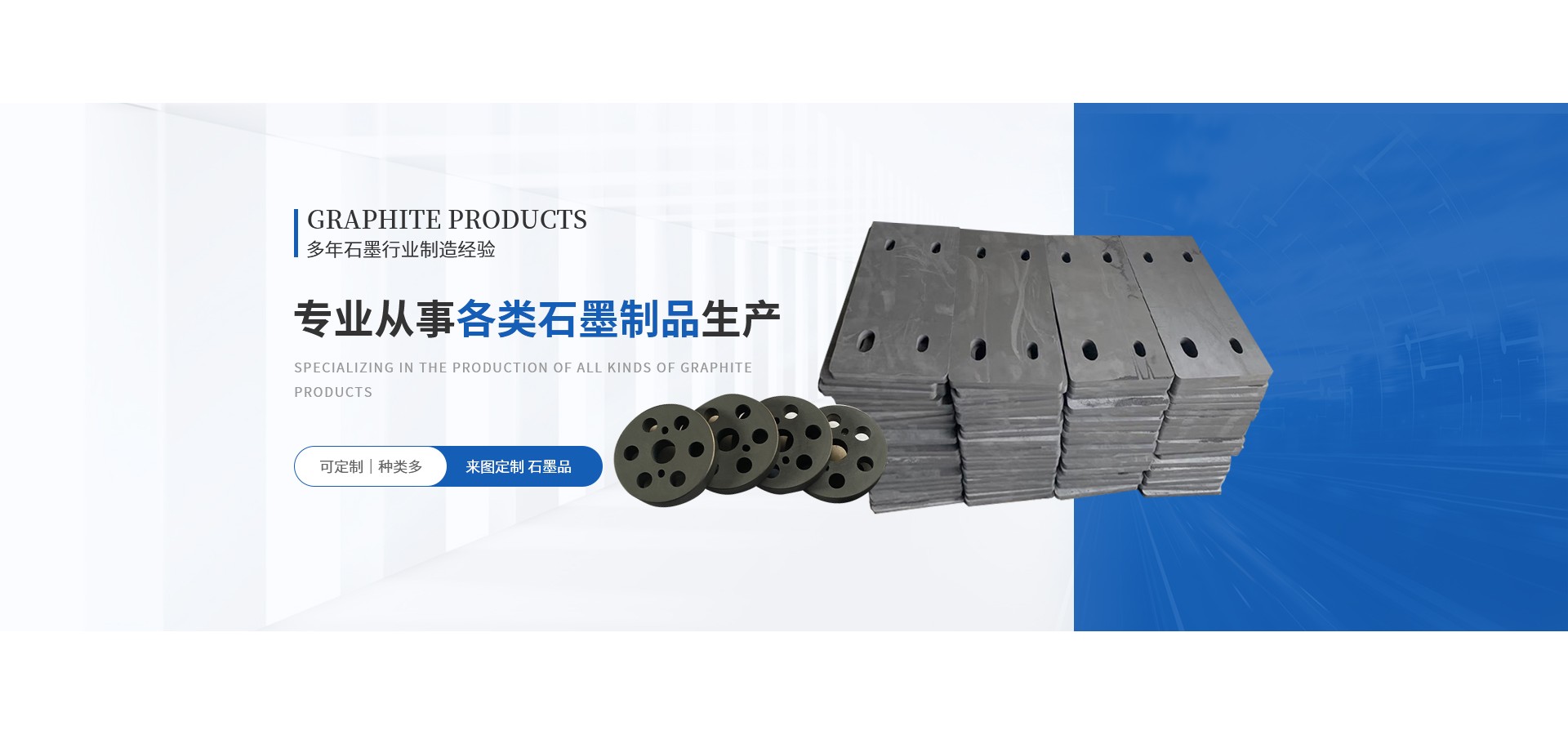
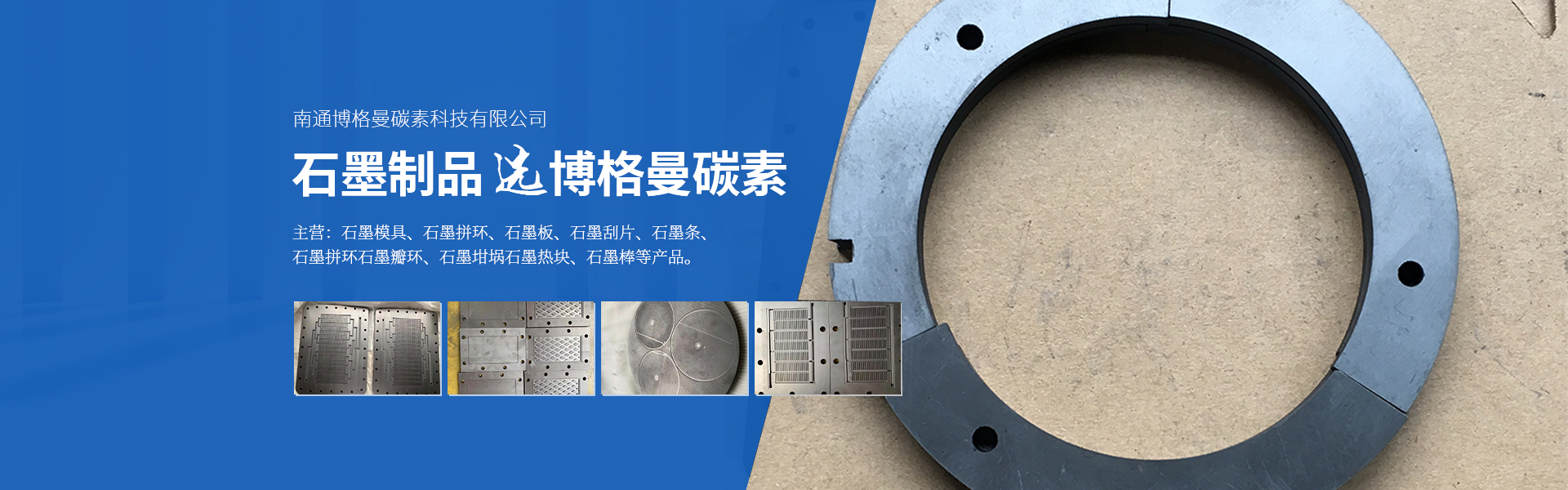

Graphite Molds for Continuous and Semi-Continuous Casting of Non-Ferrous Metals
In recent years, advanced production methods such as the direct continuous (or semi-continuous) manufacturing of rods or pipes from molten metal states are being promoted both domestically and internationally. In China, this method has already been adopted in copper, copper alloys, aluminum, and aluminum alloys. Artificial graphite is considered a suitable material for molds used in the continuous or semi-continuous casting of non-ferrous metals. Production practice has proven that the use of graphite molds, due to their excellent thermal conductivity (which determines the solidification speed of metals or alloys) and self-lubricating properties, not only improves casting speed but also allows for direct processing of the casting due to its precise dimensions, smooth surface, and uniform crystalline structure. This not only significantly enhances yield and reduces waste, but also leads to a substantial improvement in product quality.
Pressure Die Casting Molds
Artificial graphite materials have been successfully used in the pressure casting of non-ferrous metals. For instance, castings made of zinc and copper alloys using molds produced from artificial graphite materials are already being used for automotive parts and other applications.
Graphite molds for centrifugal casting
Graphite molds have been successfully applied in centrifugal casting. In the United States, artificial graphite molds with wall thicknesses of over 25mm are used for centrifugal casting of bronze sleeve tubes. To prevent burnout of the artificial graphite molds, certain antioxidant measures can be taken. After casting a certain number of castings, if surface burnout is detected inside the mold, the inner hole size of the mold can be expanded for casting larger diameter sleeve tubes.
• Hot Press Molding
The artificial graphite hot-pressed mold for the pressure sintering of hard alloy exhibits the following characteristics: Firstly, when the pressing temperature is raised to 1350-1450 degrees, the required unit pressure can be reduced to 67-100 kgf/cm² (which is one-tenth of the cold pressing pressure); secondly, the pressure application and heating are performed in a single process, allowing for the production of a dense sintered body after a short sintering period.
• Molding Dies for Glass Formation
Due to its chemical stability, resistance to being wetted by molten glass, non-altering of glass composition, excellent resistance to thermal shock, and minimal size change with temperature, graphite material has become an indispensable mold material in glass manufacturing in recent years. It can be used to produce molds for glass tubes, bent tubes, funnels, and other various non-standard glass bottles.
• Glass Molding Molds
Due to its chemical stability, resistance to being wetted by molten glass, and its ability to not alter the glass composition, as well as its excellent resistance to thermal shock and minimal size change with temperature, graphite materials have become an indispensable mold material in glass manufacturing in recent years. They can be used to produce molds for glass tubes, bends, funnels, and various other shaped glass bottles.
