


- AllProduct Category
-
Astronomical Dome Series
Large Astronomical Telescope Series
Celestial Display Series
Astronomical Show Series
Astronomy Classroom Series
Ancient Astronomical Instrument Series
Astronomy Educational Interactive Products




详情描述
Terminal Configuration and Performance Description
Optical section main technical parameters
One, telescope tube
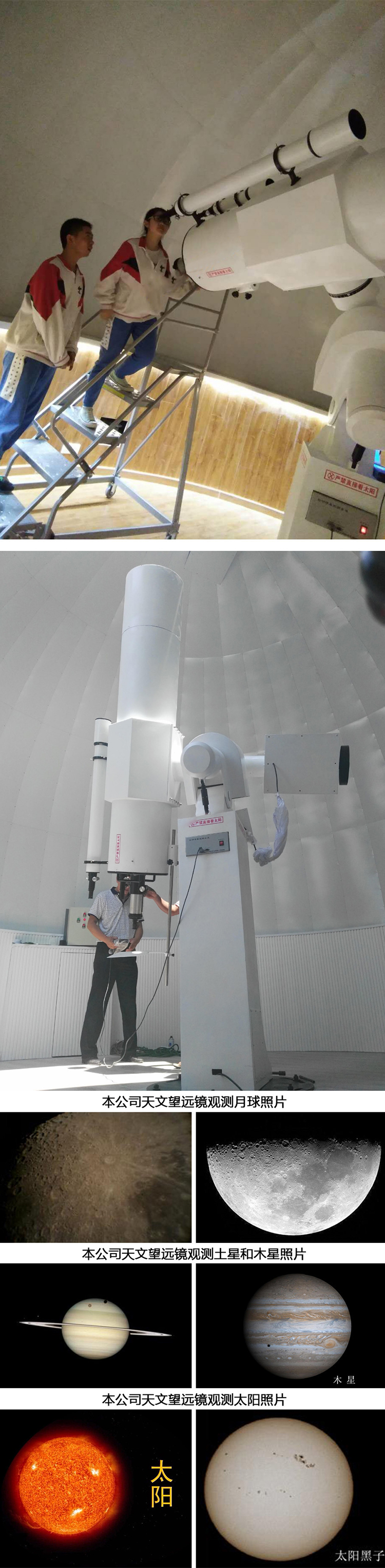
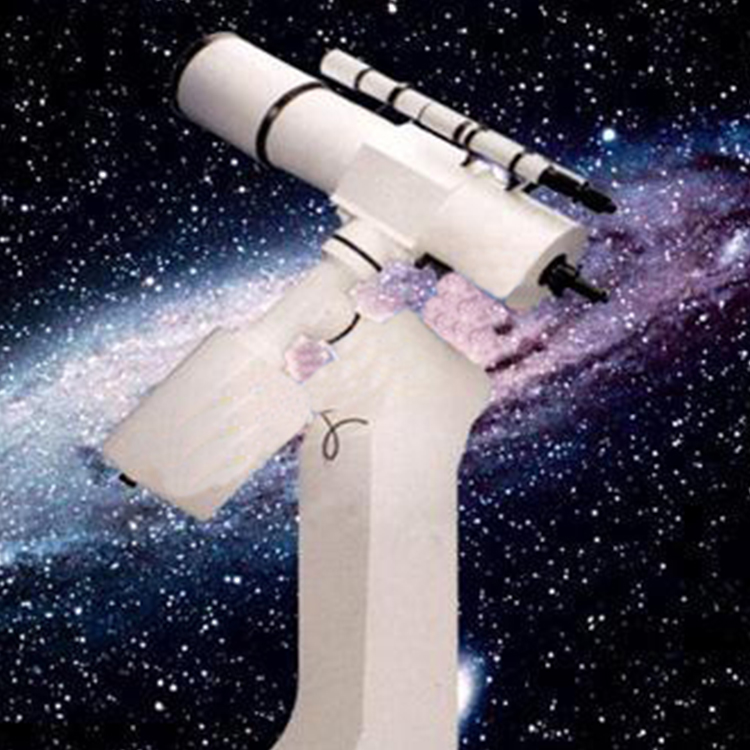
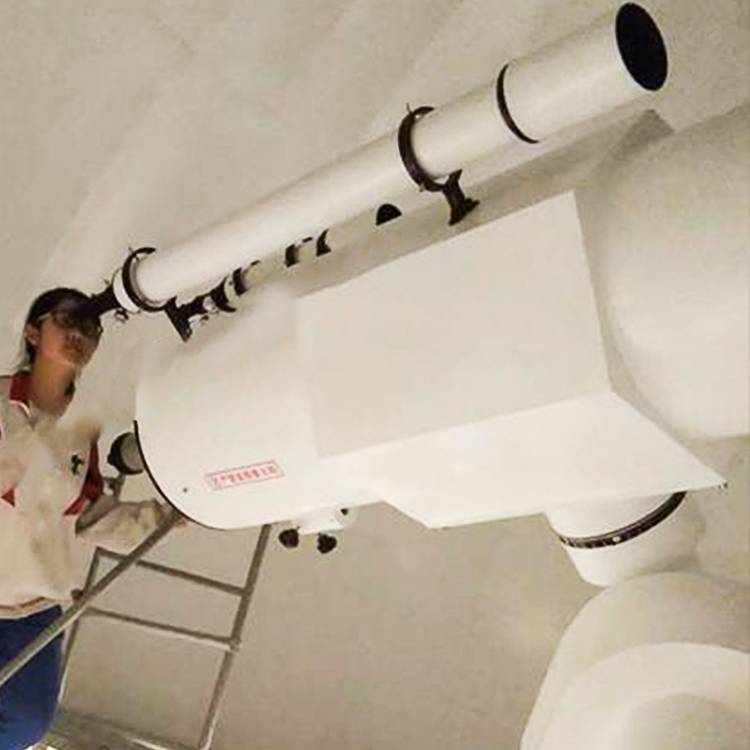
The astronomical telescope is mainly composed of three systems: the main mirror, the guide telescope, and the star-finding telescope. The optical axes of the three systems are parallel to each other.
1. Primary Optical System: High-resolution Achromatic Refractive Optical System
Objective lens
Effective Bore Size:Φ410 mm
Effective Focal Length: 5000 millimeters
Resolution: 0.32 arcseconds
Maximum Magnification: 3,750x
Extinction Magnitude: 18th magnitude star
(2) Eyepieces: Five sets (Advanced PL Eyepieces)

(3) Attachment:
Solar Light Filters: Used for visual and photographic observations of the sun.
Solar Projection System: Used for projecting and observing the sun, as well as depicting sunspots.
2. Guide Star Telescope: Apochromatic High-Resolution Refractive Optical System
Objective lens
Effective Bore Size:Φ100 Baomai
Effective Focal Length: 1200 meters
Resolution: 1.16 arcseconds
Maximum Magnification: 1000x
(1) Eyepieces: (Five sets of eyepieces are interchangeable with the main telescope eyepieces)
Wide-angle eyepiece: f=40mm (equipped with aiming crosshair)
(2) Attachment:
Solar Light Filters: Used for visual and photographic observations of the sun.
3. Starfinder Telescope: Apochromatic High-Resolution Refractive Optical System
Objective lens
Effective Bore Size:Φ80mm
Equivalent Focal Length: 500mm
Resolution: 1.45 arcseconds
Maximum Magnification: 100x
(2) Eyepieces: (These eyepieces are compatible with the five groups of eyepieces of the main scope)
Wide-Angle Eyepiece: f=40mm (equipped with aiming crosshair)
(3) Attachment:
Solar Light Filters: Used for visual and photographic observations of the sun.
Main Technical Parameters of the Mechanical Part
Rack
1. Rack: Equipped with advanced German equatorial mount system, the pedestal and equatorial mount can be disassembled separately, facilitating transportation and installation tuning.
2. Equatorial Mount Dynamic Range:
Equatorial Axis: 0h-24h Declination Axis: ±90
The observed azimuth angle points to a scale with reading indicators.
Section 3: Electric Control Drive System
The equatorial mount's right ascension and declination axes are controlled by a dual-motor dual-servo computer single board program.
(1) The driving speed in the right ascension direction during tracking observation is:
Tracking Speed (Constant Motion) = 15'/minute
(2) The control of the polar axis and the declination axis features three speed settings: rapid search, slow fine adjustment, and micro-motion fine adjustment.
Quick Search: ±(30°-60°)/minute
Slow motion fine adjustment: ±(1°- 3°)/minute
Fine Adjustment: Earth (1)-3 pieces/minute
To ensure that the observer can quickly locate celestial targets and accurately track them.
IV. Automatic Tracking System:
Programmable control system designed according to the different motion trajectories of celestial bodies, automatically drives the main optical path system (main telescope tube) to achieve automated celestial body tracking.
V. Automatic Star Tracking System:
The Automatic Star Finder System is designed as a quick guide for beginners to locate celestial bodies. Its advantages include an operating system with a human-machine dialogue interface, featuring a microcomputer installed in the automatic star-finding control box, controlled manually.
The Chinese star chart on the box, by clicking on celestial bodies in the star chart, automatically finds their coordinates. Use this method to control the telescope, aiming it at the celestial bodies you wish to observe. Simple operations can capture the boundless starry sky.