


- AllProduct Category
-
Diving Agitator
Company News
Dive Propeller
Industry News
Multi-Surface Blender
Paddle Mixer
Grille Cleaning Machine
Spiral Conveyors
Diving, Buoy Aerator
Integrated Rainwater Pumping Station


详情描述
One、Overview:
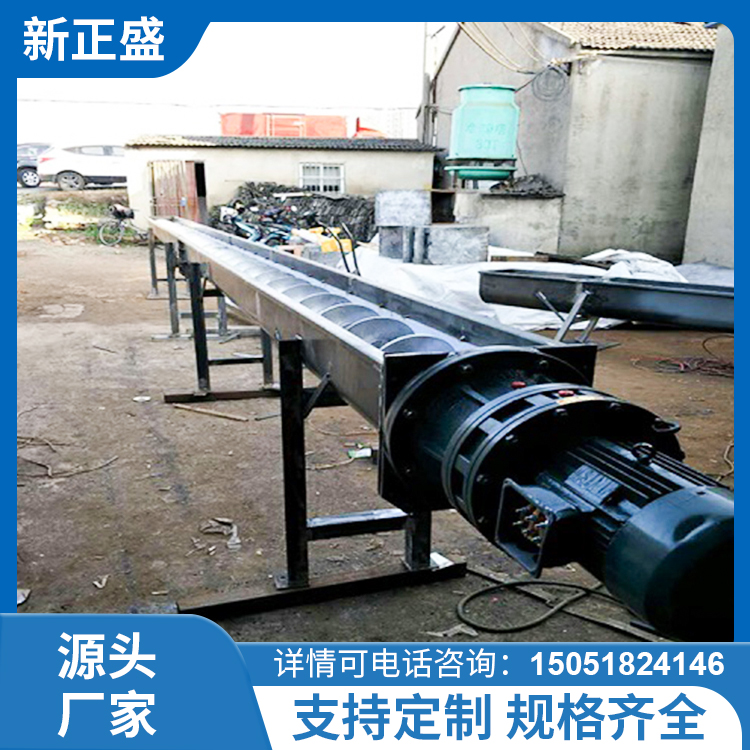
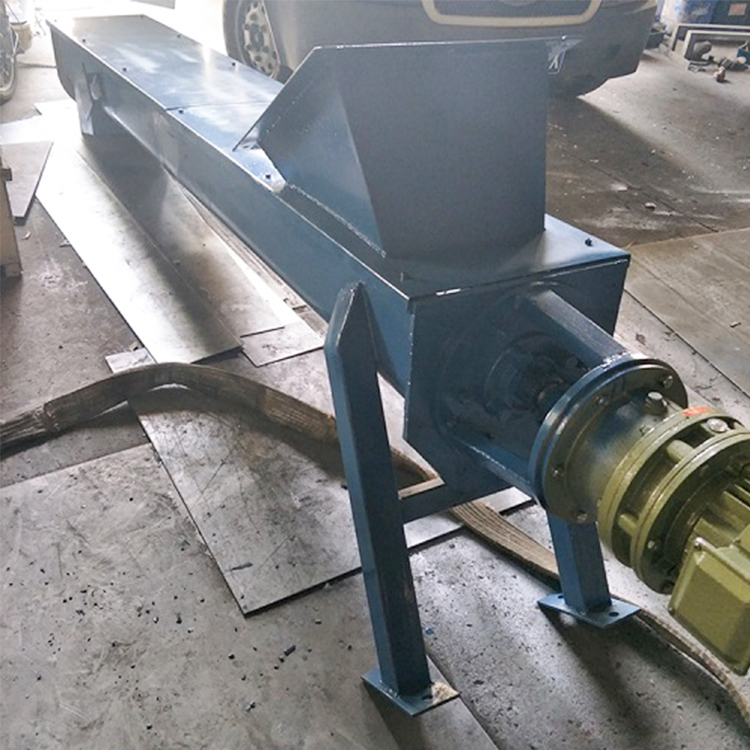
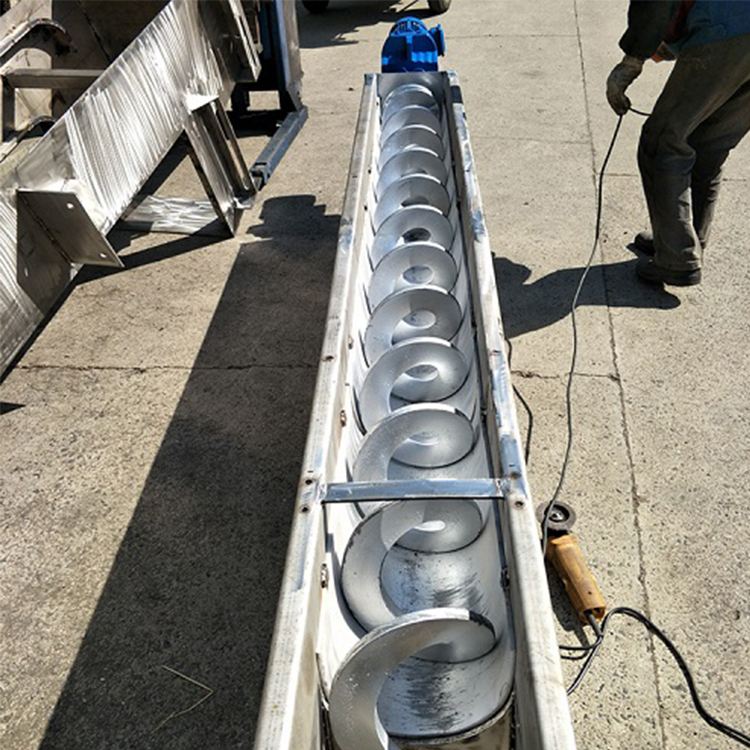
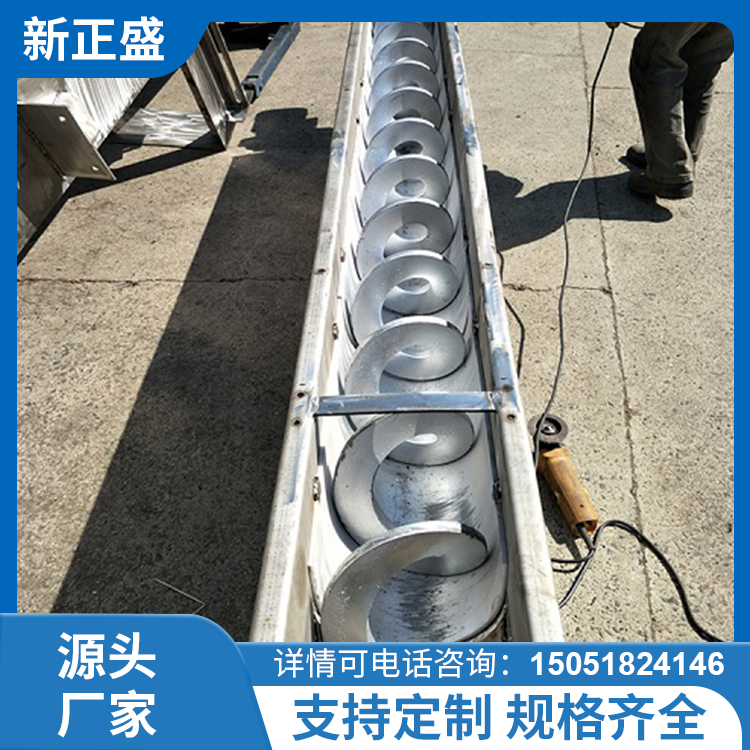
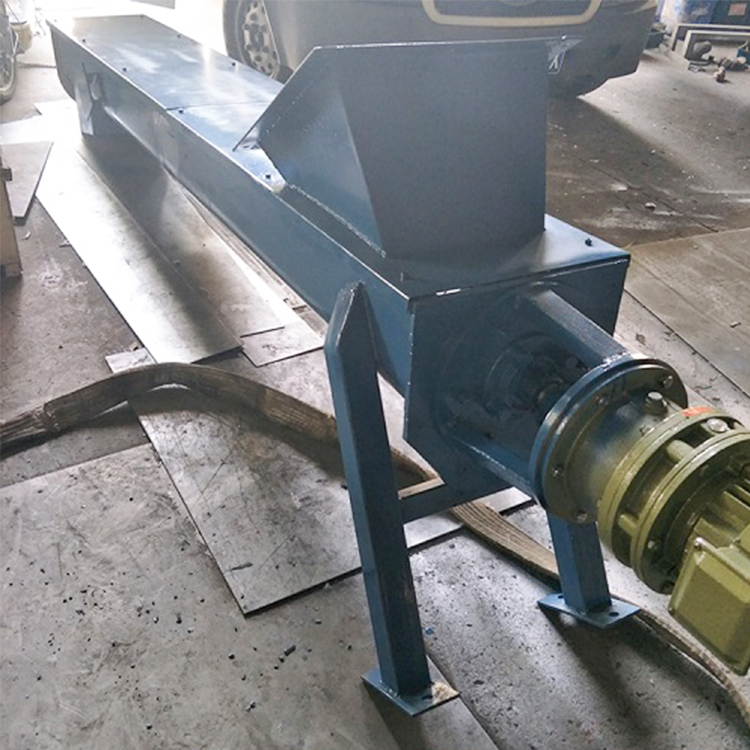
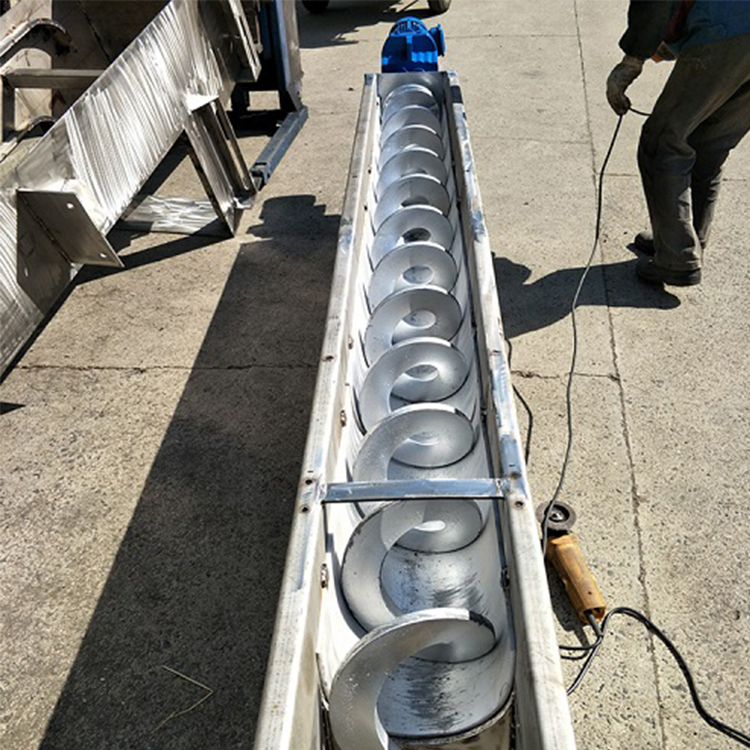
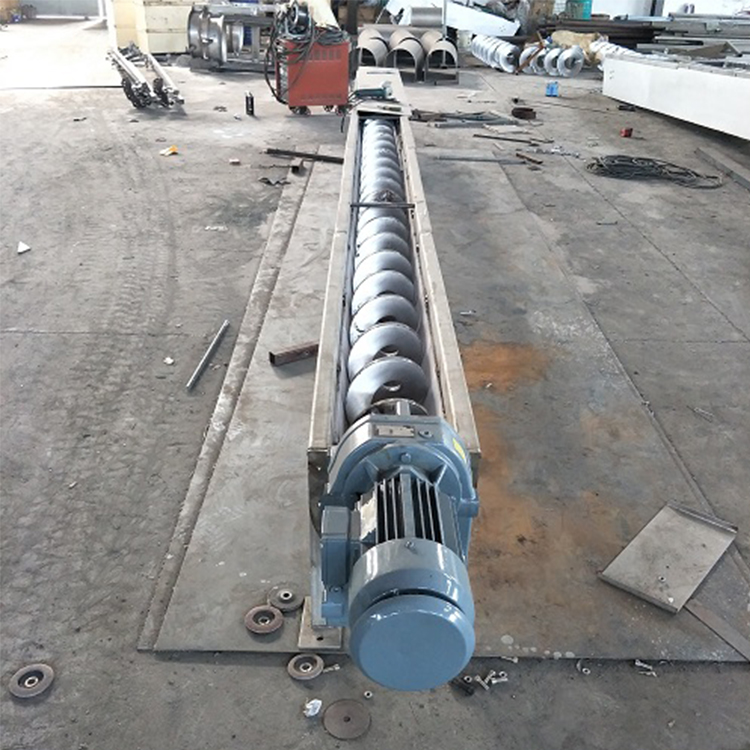
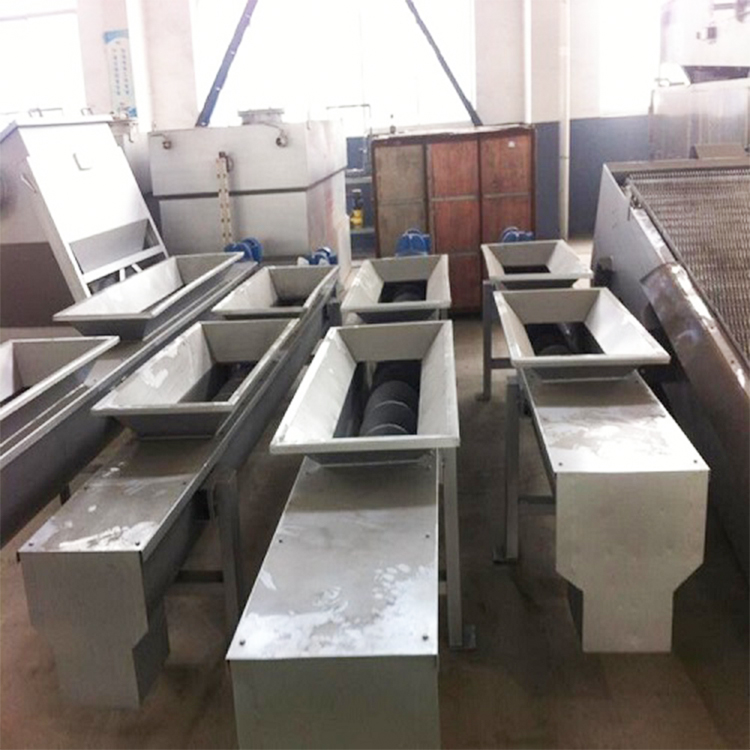
One of the commonly used continuous conveying equipment is the screw conveyor, due to its simple structure, small cross-sectional area dimensions, and especially its ability for enclosed conveying with minimal environmental pollution. It is now being used in the wastewater treatment industry as one of the material conveying devices.
Section II: Equipment Model Representation and Working Principle:
1. Method of Equipment Model Representation:
 WLS — 300
Spiral DiameterΦmm)
Spiral Conveyer
2. Working Principle:
The material conveying of the screw conveyor is achieved through the sliding movement of rotating blades. The conveying direction determines the clockwise or counterclockwise rotation of the screw blades and their rotational direction. Therefore, it can be single-direction or double-direction conveying as needed, and multi-point loading is also possible. It can be installed horizontally or at a certain angle of inclination. Material enters through the feed opening (5) Upon entering the helical chamber, materials are discharged or transported to the pressurizer (1) for squeezing and dehydration before being shipped. The conveyor length L is selected by the user. The power-driven unit (6) features a double helical gear reducer or a worm gear helical reducer, which can be mounted at either the entry end (push-type helix) or the exit end (pull-type helix) of the conveyor. The U-shaped channel of the equipment is fitted with wear-resistant protective bushes, chosen based on the type of material being conveyed.
3. Key Performance Indicators:
Spiral Diameter:Φ200--Φ400
Please provide the Chinese content to be translated. Quick:12 RPM - 20 RPM
Input Please deliver Quantity:Q=2-6 cubic meters per hour
Conveying Length: Less than or equal to15 meters
Installation Inclination: ≤30 degrees
3. Installation & Commissioning:
If not specified in the order contract, the machine is factory-equipped with a ground stand according to the user's discharge height, which is secured in place with expansion bolts during installation.
2. Leave at least 0.7m of space above the top cover to ensure unhindered removal of the top cover, helix, bushes, etc., during maintenance. Whether a drain is needed at the bottom of the equipment is selected by the customer at the time of ordering.
3. Horizontal conveyors have a horizontal tolerance of 1/1000 in the length direction, and inclined installations have an angle error of ±1 degree.
4. Equipment must not collide or slip during hoisting, and effective measures must be taken to protect the stainless steel surface of the equipment. Scratches, wear, and dents are not permitted.
5. Check the oil level of the helical pinion reducer before starting the machine. Change the lubricating oil after 300 hours of first use. For equipment running continuously for over 16 hours, replace the oil every 2500 hours. For equipment running 8 hours per shift, the interval can be extended to 4000 hours.
6. When conducting power-on testing, first perform a momentary operation to ensure there is no component friction before proceeding to normal operation.
7. Run the machine for two hours to磨合 the newly assembled parts; use some appropriate lubrication (such as...).
(Soap solution) to reduce vibration and noise, inspect for abnormal wear between the sleeve and the helix. Strictly prohibited is the operation of the helix without material and lubrication measures, as it will severely damage the sleeve. (This applies to helices that do not have support at one end.)
4. Usage and Maintenance:
Operators must be trained and qualified before they can start operation.
2. Equipment is operated in accordance with the established systems for regular inspections, maintenance, repairs, and lubrication management.
3. Conduct daily inspections of machine operation; no abnormal noises are present. Add the appropriate amount of bearing grease and check for any leaks in the seals. Monthly, inspect the oil level in the drive unit's gear box and top it up to the required level.
Open the top cover every six months to inspect the wear on the helix and sleeve, and check the tightness of all fastening connections.
Each year: Inspect seal wear and replace as necessary.
Every two years: dismantle and overhaul the equipment, disassemble and clean the bearing housing, replace worn parts, replace seals and worn bushes, inspect and align the helix, etc.
4. The speed reducer's RPM and conveying capacity are selected according to customer requirements. The conveying material must be ensured to be even and not excessive or overly large.
5. After a material blockage causes the helical pump to shut down, the cause must be identified and the fault resolved before it can be restarted.
6. When the equipment is shut down for three days or more, flush or drain internal materials to prevent them from drying out and forming clumps (especially when temperatures are high). In winter when temperatures are low, be mindful of frost prevention. Remove clumps and ice before restarting the equipment.
V. Equipment Spare Parts and Wear Parts List:
Serial Number | Part Name | Model and Specifications | Material | Quantity | Note |
1 | Axle Transmitted | 1 set | |||
2 | Axle Please provide the Chinese content that needs to be translated into American English. | 1 set | |||
3 | Bone Oil Seal | Oak Adhesive | 1 piece | ||
4 | Oil Cup | M10×1 | 1 piece |
Section 6: Equipment Troubleshooting :
Part | Fault Condition | Fault Cause | Exclusion Measures |
Driver Equipment | Motor fails to start | Fuse blown | Identify the cause and replace the fuse |
Thermal relay tripped | Identify the cause and resume operations | ||
Phased operation | Identify the cause and repair. | ||
Motor reverse direction | Incorrect wire phase sequence | Phase Transformation | |
Fuses blown or thermal relay tripped | Electrical circuit short circuit | Repair Lines | |
Motor short circuit | Professional repair or replacement | ||
Motor overload | Identify the cause and reduce load operation. | ||
Motor overload | Main voltage exceeds technical specifications5% | Guarantee the voltage value is within the motor's technical parameters range. | |
Excessive ambient temperature | Lower environmental temperature | ||
Motor fan blade is damaged | Repair and replace | ||
Material blockage helix | Clear clogs | ||
Gearbox malfunction | Inspection | ||
Gearbox Failure | Internal machinery wear and damage | Professionally repaired and installed | |
Safety pin cut-off | Helical plug | Clear material | |
Gearbox failure | Professional repair services | ||
Screw Spinning Body | Block Sai | Helical Bend | Straighten or replace the helix |
Excessive materials | Remove excess material | ||
Frozen | Heating Melt | ||
Sleeve loose | Secure or replace bushes | ||
Material is extruded into the space between the hopper and the sleeve. | Exclude | ||
Sleeve loose | Loose or missing connecting screws | Secure or replace screws | |
Material adhesion and accumulation between the hopper and the spiral. | Use the correct sleeve | ||
Sleeve wear | Material transfer changed, not in compliance with original design specifications. | Adjust or replace other sleeve models | |
Excessive idle running time for equipment | Prevent | ||
Out Material Mouth | Not supplied Insufficient shipment quantity | Clog | Exclude |
Helical Wear | Replace the helix | ||
Excessive tilt angle for equipment installation | Minimize the tilt angle as much as possible. | ||
Insufficient material | Adjust operating shifts and single work periods |
询价单


