


- AllProduct Category
-
Diving Agitator
Company News
Dive Propeller
Industry News
Multi-Surface Blender
Paddle Mixer
Grille Cleaning Machine
Spiral Conveyors
Diving, Buoy Aerator
Integrated Rainwater Pumping Station


详情描述
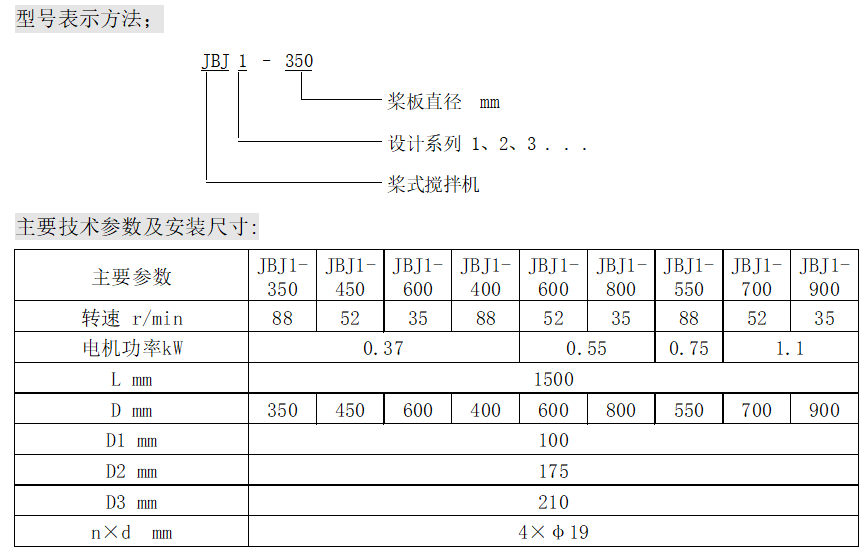
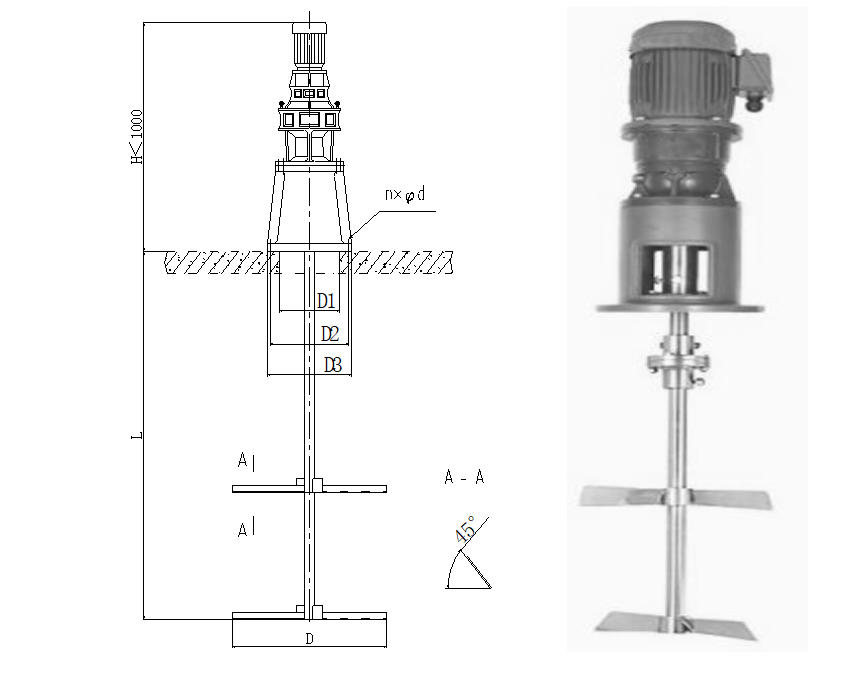
Features :
1) Fewer transmission links, high mechanical efficiency, compact structure, and smooth operation.
2) Small footprint, high capacity, and low energy consumption;
3) Low installation, operation, and maintenance costs.
4) Achieves a certain blending intensity within the required mixing time, meeting the requirements of fast, even, and thorough blending, with minimal head loss and adaptability to changes in water volume, making it suitable for water plants of various water capacities.
Structure and Operation Process :
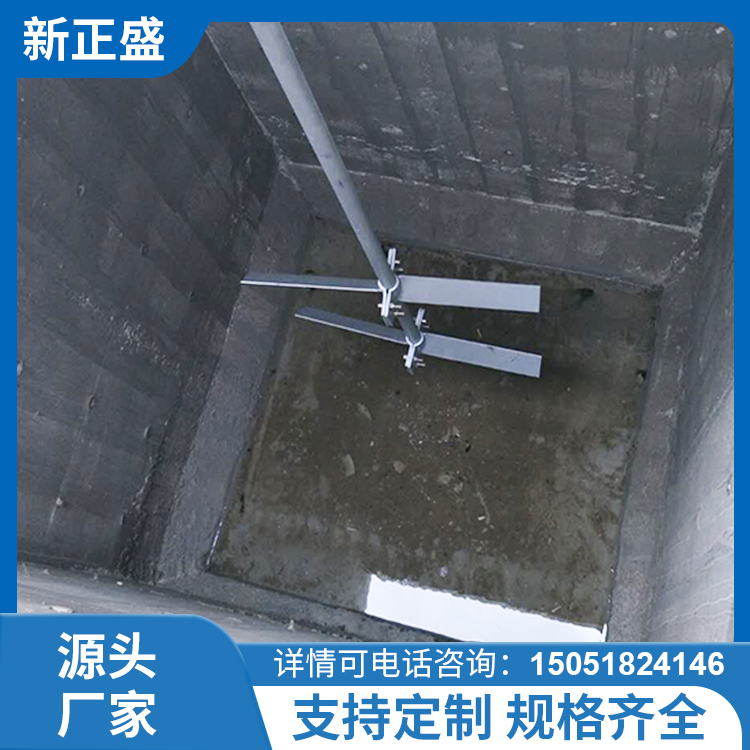
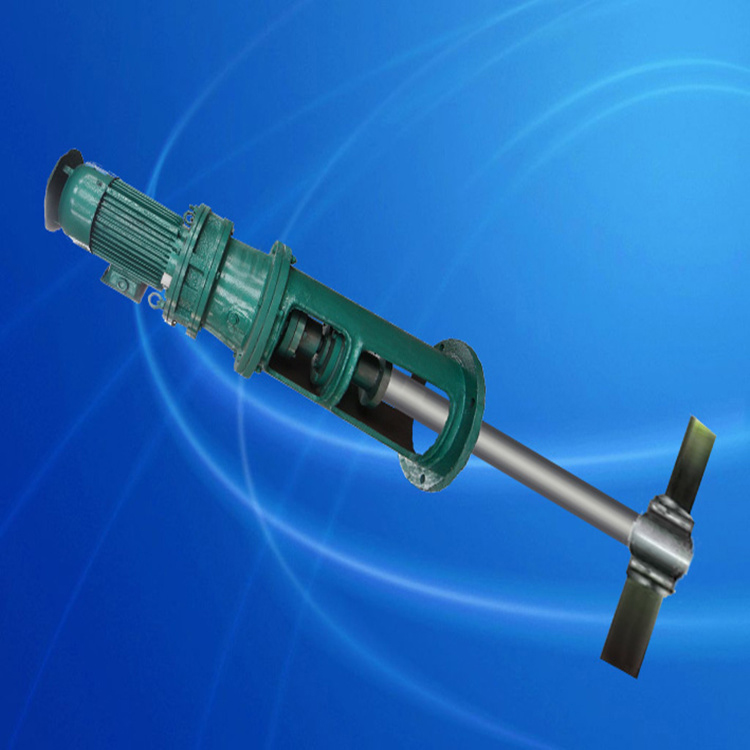
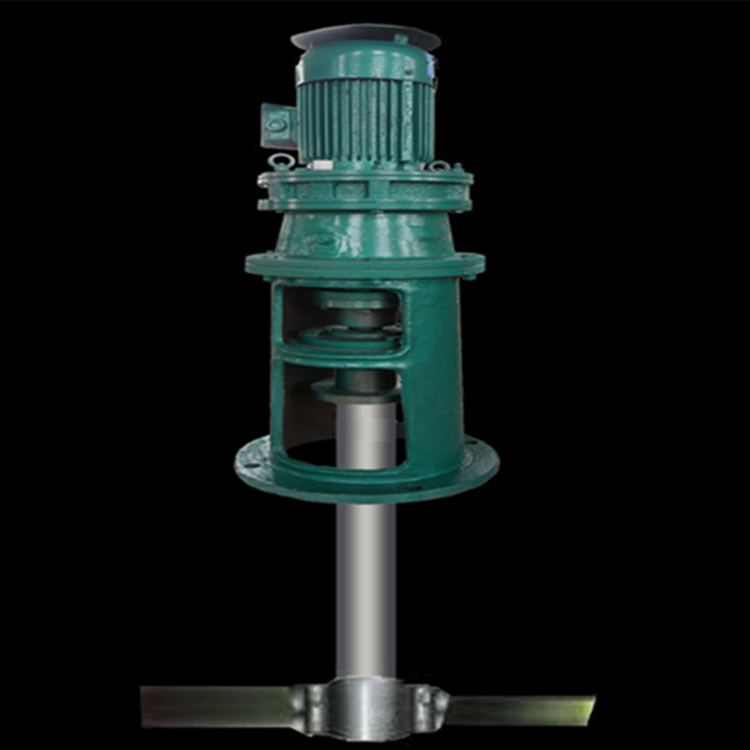
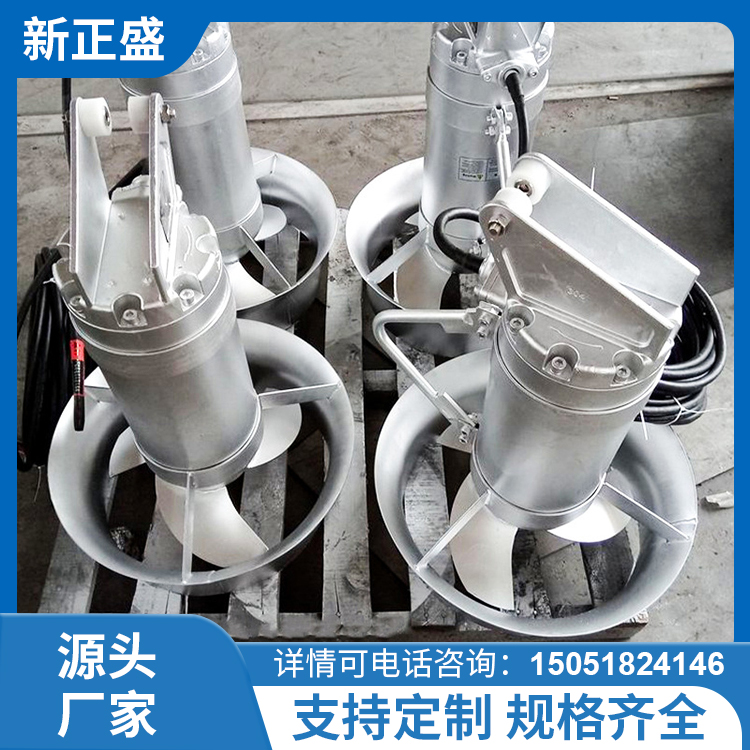
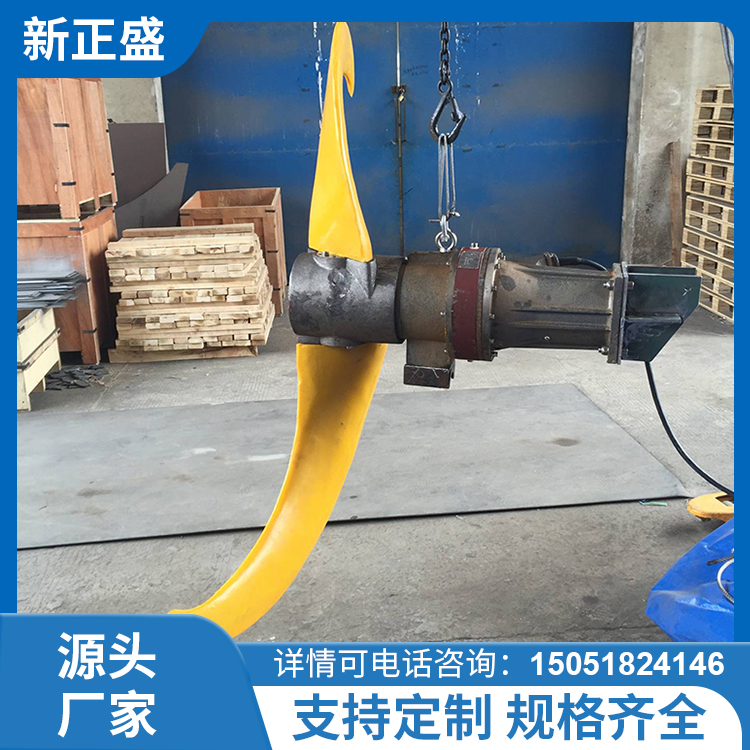
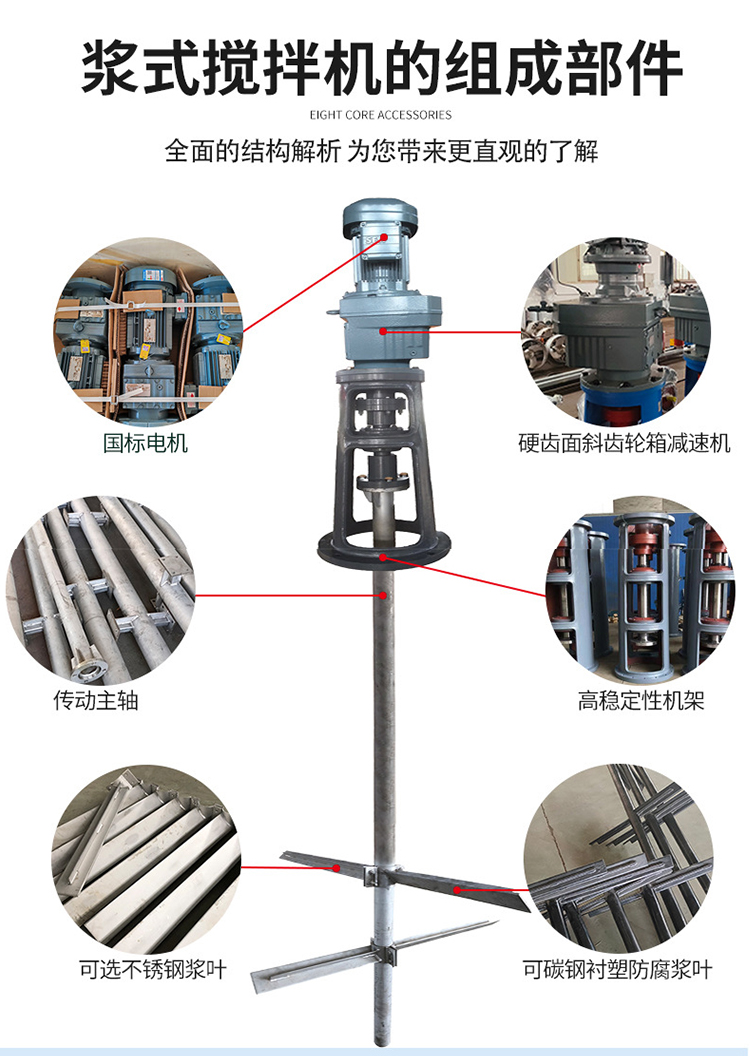
The JBJ type paddle mixer is composed of a motor, reducer, frame, mixing shaft, paddle blades, coupling, underwater support, etc. It can be categorized by sealing method as follows: Type A: equipped with mechanical sealing, Type B: without sealing, Type C: other sealing methods, suitable for different sealing requirements.
The drive unit utilizes standard or explosion-proof motors, with a harmonic drive reducer, where the main shaft of the drive unit is connected to the agitator shaft via a coupling. The agitator shaft is supported by bearings, featuring adequate strength and high stability.
Agitator blades are made of45-degree aileron propeller, capable of generating axial, radial, and annular分流, for rapid and thorough mixing of material with water, meeting process requirements.
Please provide the Chinese content to be translated.Transportation, installation, and commissioning precautions:
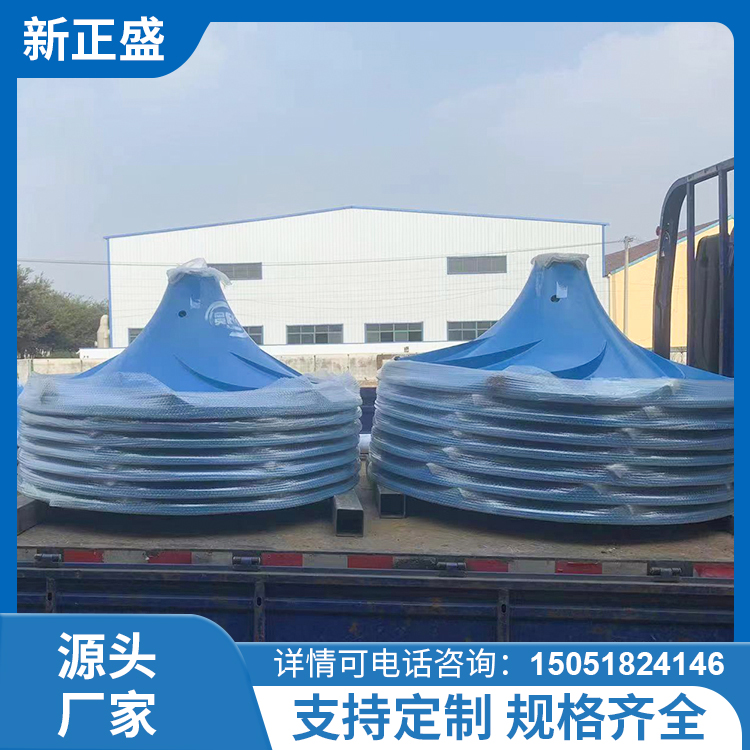
During storage and transportation, the long shaft should be placed as upright as possible; if it must be horizontal, prevent it from being crushed or deformed.
2. Be cautious to avoid collisions during lifting. 3. Installation Method:
1) Prior to installation, verify that the basic dimensions of the equipment to be installed meet the installation requirements. 2) After securing the reducer bracket to the connecting base plate, place it horizontally on the corresponding position of the pre-buried construction components.
Check and adjust the connection plane between the alignment bracket and the reducer to ensure it is level.
3) Connect the mixer shaft to the reducer base.
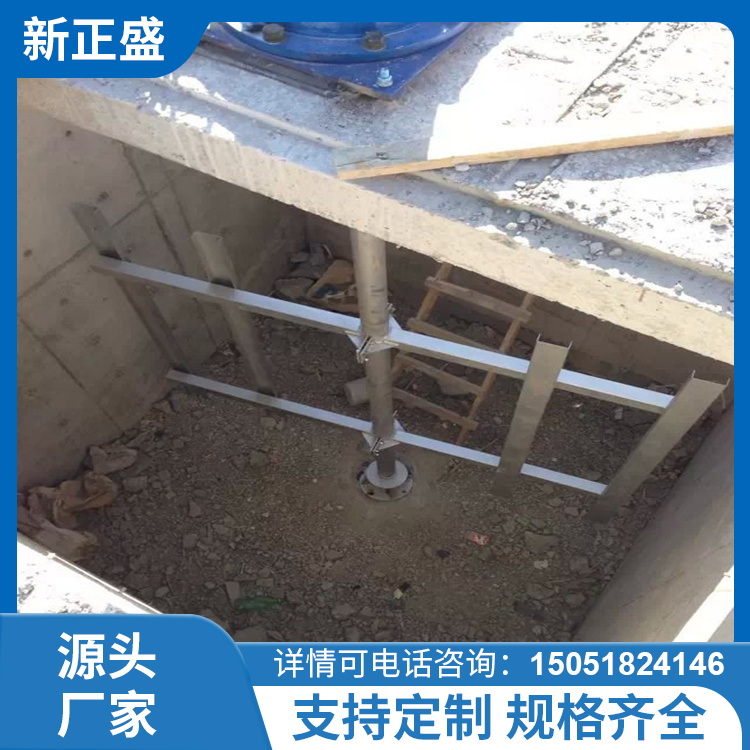
4) For propeller mixers with underwater brackets: After securing the underwater bracket to the connecting base, place it horizontally on the corresponding position of the pre-buried construction on the pool bottom. Check and adjust the bracket plane for levelness, ensuring the center position is at the vertex of the reducer bracket's center, and make necessary adjustments to achieve a level state.
5) For propeller mixers with underwater supports: Connect the mixer shaft to the underwater support, manually rotate the inner half coupling of the reducer support. At this point, the shaft should rotate freely, and the underwater support should not exhibit any significant displacement.
6) For mixers with underwater supports: First, spot-weld the underwater support to secure the base plate to the foundation embed plate. Then, spot-weld the reducer support to connect the base plate to the foundation embed plate.
7) Manually rotate the half coupling of the handwheel-mounted reducer bracket; at this point, the shaft should rotate smoothly. If there is any jamming, it should be resecured until it reaches a good state. Weld the reducer bracket connection base plate to the foundation embed plate. For mixers with underwater brackets, proceed to weld and secure the underwater bracket connection base plate to the foundation embed plate.
8) Install paddle blades and drive components (reducer, motor).
9) Tighten the bolts and nuts on the half coupling appropriately.
Adjustment Method:
Before tuning, oiling according to the reducer's requirements.
2) Insulate the driving motor and ensure the ground insulation resistance is not less than 5MΩ.
3) Connect the motor to the control system as per the motor connection method. Refer to the electrical control schematic and instructions for wiring the control system.
4) Before the mixer is officially put into use, it must undergo a trial run. During the trial run, the mixer should operate smoothly and without any abnormal vibrations. Once the no-load operation is normal, gradually increase the load for operation.
询价单


