




Last week, NT, hailed as the "Ningde Times" of Europe, filed for bankruptcy protection in the U.S. Founder Peter Carlsson resigned, leaving a stern remark: "If Europe doesn't push for a shift to clean technology, they'll regret it in 20 years!"
Now, with only $30 million left in NT's account, at least $1.2 billion is needed to revitalize it. Who in their right mind would step forward to NT?
NT was once incredibly strong; the government gave them the green light and venture capitalists were rushing to pour money into them. Car manufacturers placed orders worth tens of billions even before they had a single battery. In 8 years, NT has secured over $15 billion in funding.
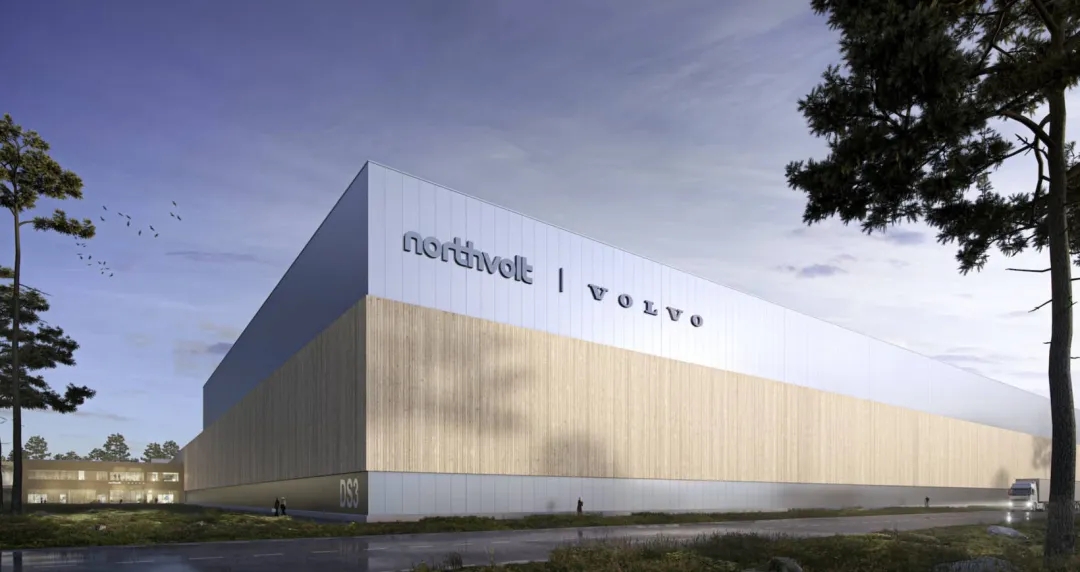
NT can be said to be nurtured and raised by the EU with a lot of hard work and perseverance.
NT's founder is no small fish; it's none other than Carlson, the former Vice President of Tesla. In 2011, as old Ma was preparing to turn the tide for the Model S, the high costs were driving him crazy. That's when Carlson joined from NXP Semiconductors, tidying up Tesla's supply chain.
Such an "outsider" fully utilized the first principle philosophy advocated by old Ma, establishing a tiered and categorized procurement system for Tesla, which, in layman's terms, is vertical integration. This broke the traditional mindset of automotive companies and significantly reduced the cost of the Model S.
That's why we got to see a $60,000 Model S, and Tesla took off from there. But logically speaking, with Tesla's supply chain and billions in funds, Xiaomi has even managed to produce their own car. So why can't NT figure out a single battery?
The answer to this question boils down to four words: political correctness.
In 2016, as Tesla in the U.S. soared, China's Xpeng, NIO, and Li Auto were just taking off, the European automotive industry was severely damaged by the diesel emissions scandal, left in disarray, and began to follow suit, pivoting towards new energy.
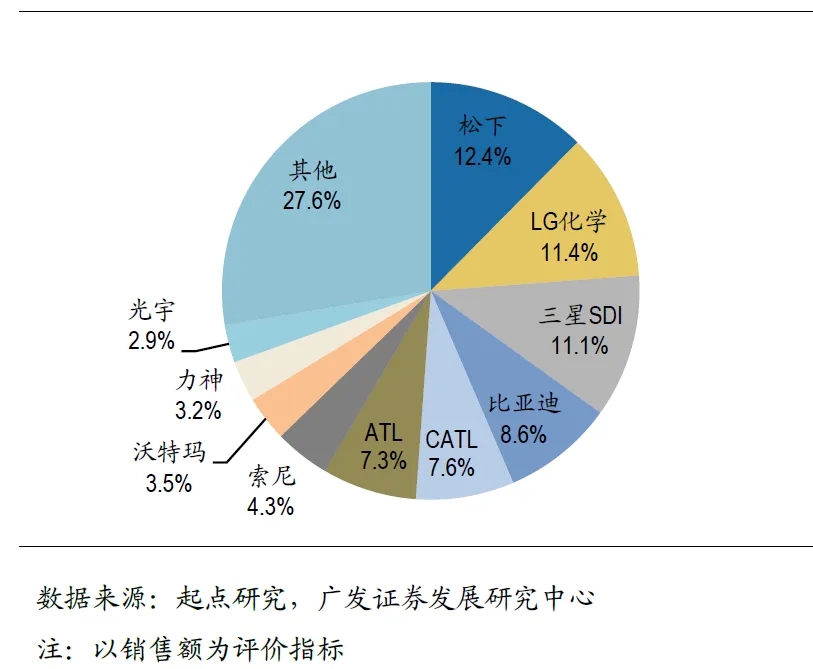
However, the battery industry is highly integrated, and due to the popularity of consumer electronics, the first-mover advantage in the battery sector is very evident among China, Japan, and South Korea. These three countries account for 98% of the global market share, leaving Europe in a bind.
So, Carlson seized this opportunity and founded NT in 2016, declaring publicly that they would produce "100.% eco-friendly" batteries to differentiate themselves.
Here we go, the EU can reduce its dependence on Russian energy, car manufacturers can mitigate the impact of the emissions scandal, and even the usually slower-moving European venture capitalists finally get a seat at the table.
Triple win, massive influx of money, NT takes off instantly.
Then, something quite peculiar happened.
Adhering to the vertical integration philosophy of Carlson, NT aims to blend environmental sustainability with a new industrial chain.
Firstly, the factory's energy needs to be environmentally friendly, which is why the NT factory was built in the northern Swedish town of Sarek, rich in hydropower and wind power resources.
You've never heard of it, right? This place, more of a town than a city, is located in the Arctic Circle with a population of just over 30,000, offering very little in terms of convenience.
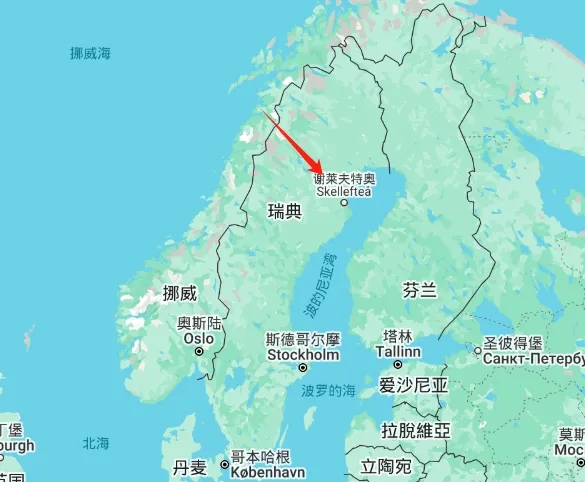
Labor shortages necessitate recruitment from Stockholm, Gothenburg, and even Germany and France. Workers must also overcome the impact of the midnight sun and polar night phenomenon (not working through the night sounds like a 007 mission, genius), which greatly affects work efficiency.
Besides energy, the next critical factor is the raw materials for batteries.
They quickly noticed, "Wherever we go, there are so many Chinese people?"
China began to lay out the lithium mining market globally over a decade ago, now controlling more than 50% of the global lithium mining output. Additionally, 95% of the world's manganese, 73% of cobalt, 70% of graphite, 67% of lithium, and 63% of nickel are refined in China, making batteries almost inseparable from the country.
No way! Chinese people are not environmentally friendly; we must take strong measures.
For instance, they purchase mines from Tianqi Lithium Industry, demanding that the refining plant be constructed near the mine site for on-site processing. This eliminates the need to transport the ore back to China for refining, thereby saving fuel consumption.
He's truly eco-friendly, I'm crying!
Tianqi Lithium is also pleased; for such anti-scale requirements, an increase in cost is necessary.
Tackling the negative pole, along with graphite, electrolyte, and separator, all must be "environmentally friendly." That money is all going into our company's pocket.
Overall, NT's operations are increasing their expenditures, but they proudly claim that this vertical integration can reduce carbon dioxide emissions by 60%-70% compared to batteries produced in China.
Money and ideals may have initially greened the battery sector, but can they really manufacture the batteries?
The answer remains negative, as Europe simply lacks battery talent.
An engineer from Wuxi Xiandao, a supplier of NT equipment, gave an example of an NT: The battery forming equipment is like a vending machine for soft drinks, used to let batteries rest. Unconcerned about safety, European workers used this equipment to store their daily items like laptops, leading to production line errors and then blaming the equipment for issues.
It's hard to imagine anyone doing such things on a battery production line with such high cleanliness standards, let alone all the bizarre incidents. No wonder the Chinese engineers couldn't help but vent online.
对了, their battery process technology leader is also clueless. After we weld our batteries, there's a helium leak test process. This leader always asks if we can use hydrogen gas... because it's cheaper. He has no idea that hydrogen gas is flammable.
While front-line workers and middle management are dealing with various shoddy operations, NT's top brass is still dreaming of environmental grandeur. They're developing sodium-ion batteries with no end in sight, while also manually disassembling batteries for environmental recycling. They neglect economic matters and simply burn cash. Even NT engineers have openly criticized the management on Reddit forums, suggesting they should scale back their ambitions and focus on breakthroughs in a specific field.
This proliferation of "blossoms" has left NT even with deep pockets struggling to keep up. Despite the battery, which was initially projected for mass production in 2022, failing to deliver on a large scale by 2024, the quantity of the first batch delivered has been kept under wraps, with no official disclosure made.
Shyly, NT finally wore down the EU's patience. With Germany and France establishing their own battery industry alliance, BMW pulled a 2 billion yuan order, Scania publicly criticized NT for delayed deliveries, and NT finally sent the goods this year.
NT's fate reminds me of the comments made by Zeng Yumin, Chairman of CATL, regarding the European battery industry: "Their design is wrong. Second, their process is wrong. Third, their equipment is wrong."
Now, in Europe, they seem to have lost hope for building their own battery factories and are instead trading the market for technology, attracting investment and talents, and using tariff barriers to compel East Asian battery manufacturers to set up factories in Europe. This facilitates technology transfer and nurtures their own supply chains.
Currently, CATL, NIO Power, Samsung, and IGH have all announced plans to build factories. Could this lead to reduced battery costs in Europe, making electric vehicles even cheaper in the future?
