




On a chilly winter day, wouldn't it be amazing if a scarf could keep you warm and charge your phone at the same time? The secret behind the scarf is actually...Flexible Battery Technology
Recently, onAt the "2024 Super Science Evening" hosted by Bilibili, Professor Zhong Cheng from the School of Materials Science and Engineering at Tianjin University showcased new applications of flexible battery technology to the entire online audience. "Everything can be a power bank" is no longer a dream, but to fully realize "one device for all," we still need to be patient as related technologies move from the lab to the production line.
Flexible Batteries: Powering Everything for Zero Waste
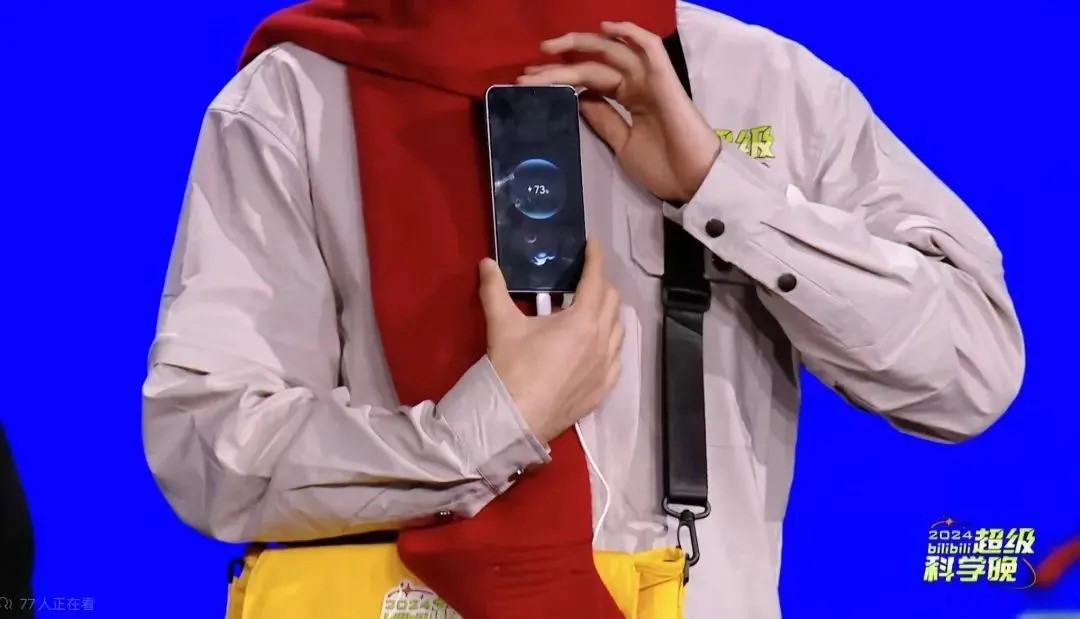
Just plug in the charging cable, and the scarf can charge your phone."Two-in-one fabric."
The "Pain Package" beloved by anime enthusiasts: simply place your phone in the plastic pocket of the bag, and it will start charging automatically.
If you're too lazy to carry a bag, you can simply put your phone in the wearable bulletproof vest and charge it. The same goes for earphones and watches; they can all be charged in the same manner.
Please provide the Chinese content you would like translated into American English.At the Bilibili Science Evening Conference, Professor Zhong Cheng's three demonstrations instantly captivated the audience who strongly resonated with "battery anxiety."
Anticipated Trend: As more and more portable chargers are purchased at home, shared charging stations are becoming...In the era of "Battery Killers," scarves and clothing can now charge, potentially rendering power banks obsolete.
This wish is feasible, but patience may be required. On the万能 Taobao, at least for now, no merchant has directly offered...The "Charging Scarf" is now available for sale, along with no other related consumer products.
As per the latest authoritative releases, these new"Chargers are still en route. Large-scale application of flexible batteries requires overcoming some technical hurdles."
Let's get some facts straight.
What so calledFlexible batteries refer to a type of battery with certain flexibility and bendability, capable of withstanding bending, twisting, or stretching without damaging its internal structure.
Professor Zhong Cheng explained the flexible battery's..."The secret to 'Soft Secret' lies in the innovation of materials and the optimization of structure.
It stores electrical energy through electrochemical processes between the positive and negative electrodes, similar to traditional batteries. However, it differs significantly from traditional rigid batteries, as it employs soft materials for both the positive and negative electrodes, and utilizes flexible semi-solid or solid electrolytes.
This unique flexible material is what enables flexible batteries to withstand a variety of complex environments and shapes.
It can be folded like a piece of paper or coiled like a thread. This flexibility not only allows the battery to better adapt to various shapes and size requirements of devices, but also enhances its reliability and durability.
It is precisely due to the flexibility and bendability of flexible batteries that they can be integrated with clothing, bags, and other items."Integration" for various surface shapes.
02 Flexible Batteries: Ready to Move from the Lab to the Production Line
Two individuals are worth noting when it comes to understanding flexible batteries.
A Finnish-Chinese scientistDr. Zhang Changxia, known as the "Father of Paper Batteries," and another is Professor Peng Huisheng, a member of the Chinese Academy of Sciences and a professor in the Department of Polymer Science and the Institute of Fiber Electronics and Devices at Fudan University, who primarily leads a team researching "Flexible Fiber Batteries."
Dr. Zhang Changxia, originally from Beilun, Ningbo, was born in Shanghai and attended the current East China University of Science and Technology. In 1989, she pursued a Ph.D. in Biotechnology at the Helsinki University of Technology in Finland.
He initially focused on biofuel batteries; however, due to their high cost, it was challenging to penetrate the market.Dr. Zhang and his team have decisively shifted to "thin, flexible paper batteries."
Paper batteries are a type of flexible battery.
Its core feature is the use of paper as the base material, while the base of flexible batteries is not limited to paper and can be made of various materials such as plastic, foil, and more.
In 2006, Dr. Zhang and his team developed the world's first ultra-thin flexible paper battery, which was named one of the "Top 8 Innovations of the Year" by Time magazine. Dr. Zhang has since become a representative figure in the field of flexible batteries.
Now,Dr. Zhang's relevant research has already found applications in various industries and consumer sectors, including healthcare, medical aesthetics, and intelligent packaging.
Another prominent figure is Professor Hui-Sheng Peng from Fudan University, who specializes in...Flexible Fiber Battery, with the addition of the word "Fiber."
Flexible fiber batteries are a special form of flexible batteries. One of their key features is their high compatibility with the textile industry, serving as functional yarns and can be used directlyIntegrated into textiles, it holds vast prospects for application in the textile industry.
Flexible fiber batteries have faced three challenges: Can soft lithium-ion batteries be obtained through the design of fiber structures? How to prepare high-energy density fiber lithium-ion batteries? How to achieve high-safety fiber lithium-ion batteries?
No Chinese content provided.A problem has been resolved after research. The next two challenges are to achieve both "high energy density" and "high safety" in flexible fiber batteries, which are breakthroughs to be conquered.
Until this yearIn April, authoritative media reported that Professor Peng Huisheng and his team successfully navigated the "last mile" in the research and development of flexible fiber batteries.One kilometer"— Achieving the mass production of high-safety and high-energy storage performance fiber batteries.
Specifically, as early asIn 2021, Professor Peng Huisheng's team claimed to have achieved the "preparation of high-energy density fiber batteries"—a fabric woven from fiber batteries can charge up to 10 smartphones.
But since the battery needs to be in close contact with the skin, concerns about battery safety have arisen.
Later, Professor Peng Huisheng observed that ivy could secrete a liquid with good wettability, allowing it to tightly wrap around another vine. Inspired by this, he designed a fiber electrode with multi-layered network pores and oriented pores, achieving a combination of high energy storage and high safety.
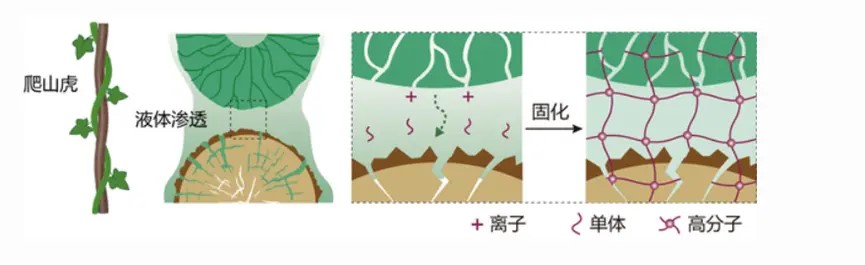
This yearOn April 24th, Professor Peng Huisheng's paper titled "High-Performance Fiber Batteries Based on Polymer Gel Electrolytes" was published in the main journal of Nature.
Professor Peng Huisheng hopes to enhance cooperation with the industry, inviting professional manufacturers to participate in the production line development to further improve the performance of the new fiber lithium-ion battery, while reducing costs and promoting the wide application of fiber batteries.
In a nutshell, we aim to transition flexible fiber battery technology from the lab to the production line for large-scale production and iterative improvement.
