

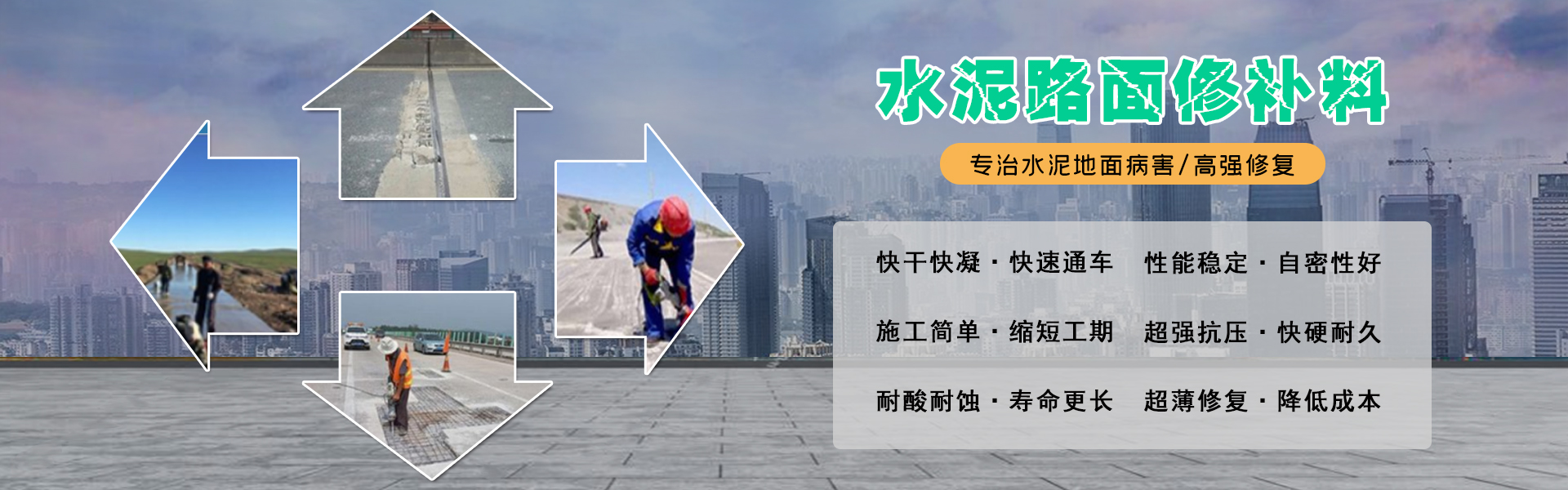

Due to the compression from large vehicles, freeze-thaw cycles, and bending stresses, cement road surfaces often suffer from water seepage and subgrade damage. Many construction companies tend to opt for cement road repair materials to patch up the surfaces. But, are these repair materials effective? This is a question many users are concerned about. Let's delve into the details below!
The cement road repair material features high flexibility and tensile strength, along with compressive and adhesive strength. It can be used to cross expansion joints, allowing for direct application to the damaged area for ultra-thin repairs. It won't crack or peel under high-speed and high-pressure traffic conditions. The construction process requires no complex machinery or technical expertise and doesn't necessitate long-term road closures. Traffic can resume within two hours after completion, significantly saving on construction costs, material expenses, and maintenance time.
The cement road repair material, due to its above-mentioned usage advantages, is commonly used for repairs in high-speed roads, provincial and national highways, county and rural roads, municipal roads, and gas station floors, which are subject to heavy loads and prone to concrete damage.
