
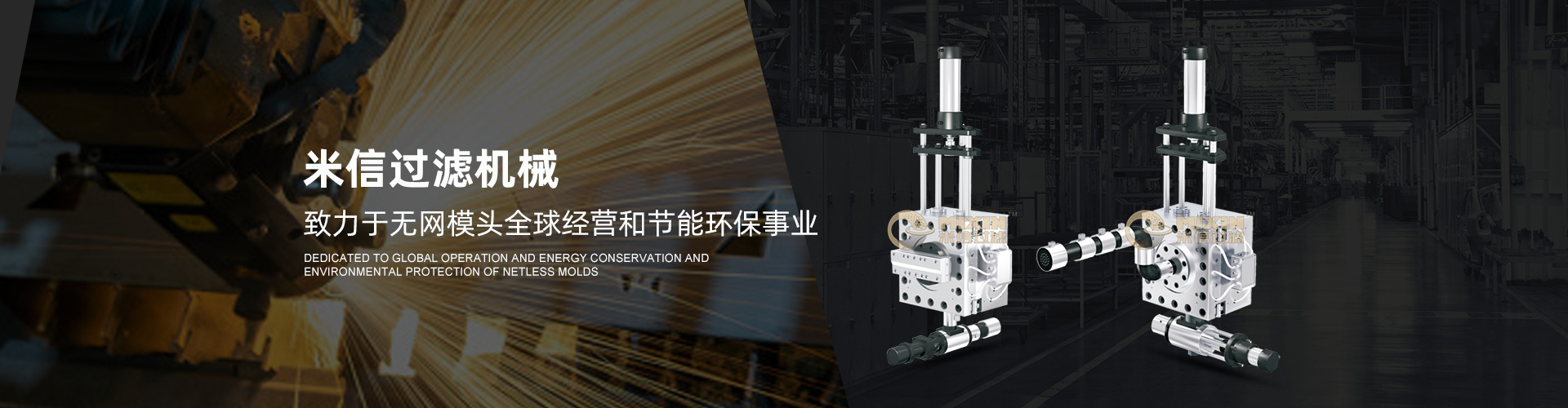

The double-column hydraulic screen changer is particularly suitable for melt filtration standards on high-level automatic production lines. Our products are ideal for the manufacturing of sheet, plate, film, tube, wire, fiber, cable, and other products. They are well-suited for raw materials including PP, PE, ABS, PS, PET, PVB, PBT, TPE, PMMA, PC, and PA.
Dual-piston hydraulic screen changer screen changing steps: Firstly: Normal working position. The cavity, after heat treatment, has two pistons, each with two screen chambers. The plastic melt enters evenly into the four fluid pathways. When the predetermined pressure difference is reached, the screen changing begins. Secondly: Screen changing working position. During screen changing, the piston moves out of the cavity until the screen chamber reaches the corresponding position. At this point, the dirty screen can be replaced with a new one, and then the piston is moved back to the working position. Throughout the screen changing process, there are still three screen chambers in the housing, providing ample screening area for the filtering work.
Advantages of Double-Pillar Hydraulic Mesh Changeover Device:
The two pistons on the inverter each have two channels for the polymer medium to flow through, filtering the polymer medium through a mesh to clean the medium and produce high-quality products. The filter mesh design with high wear resistance, high pressure resistance, and high precision increases the effective filtering area and the quality of the filtration.
2. Larger filtration area, suitable for extrusion production with various materials and process characteristics, boasts excellent sealing properties; the advanced design concept and high-precision machining quality, combined with the exhaust control system used in conjunction, collectively highlight the filter + exhaust features of this series of screen changers.
3. Standardly equipped with specifications ranging from 80 to 270mm, as well as processing for other special sizes; its performance in use is unaffected even under conditions of 25Mpa pressure and temperatures below 300°C.
