

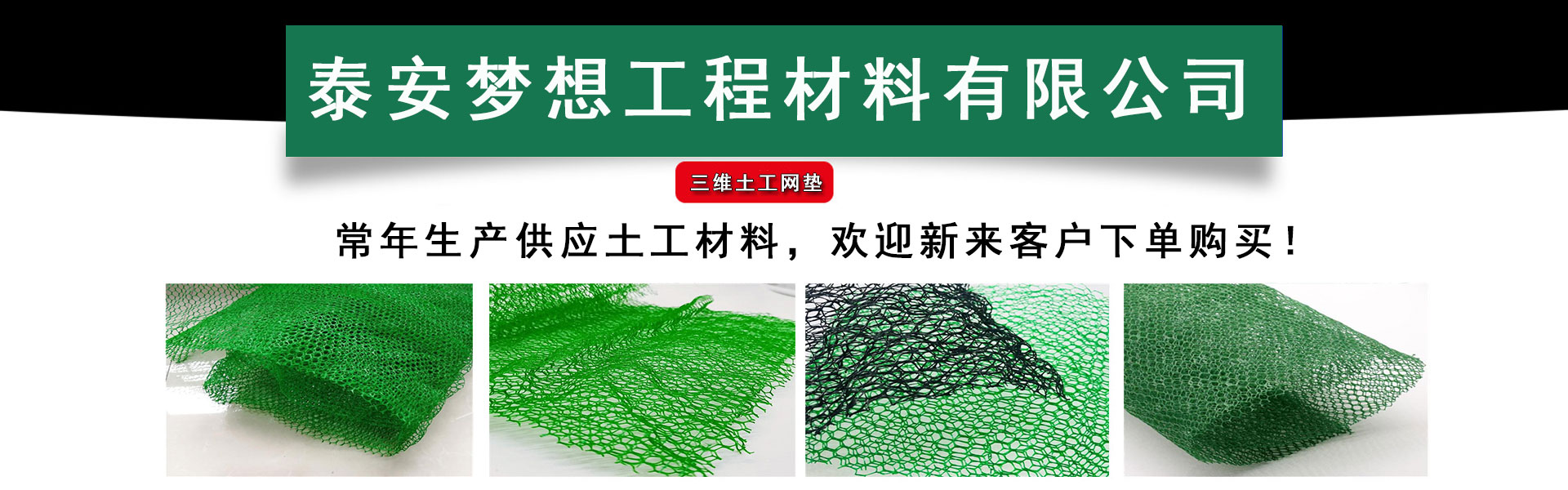
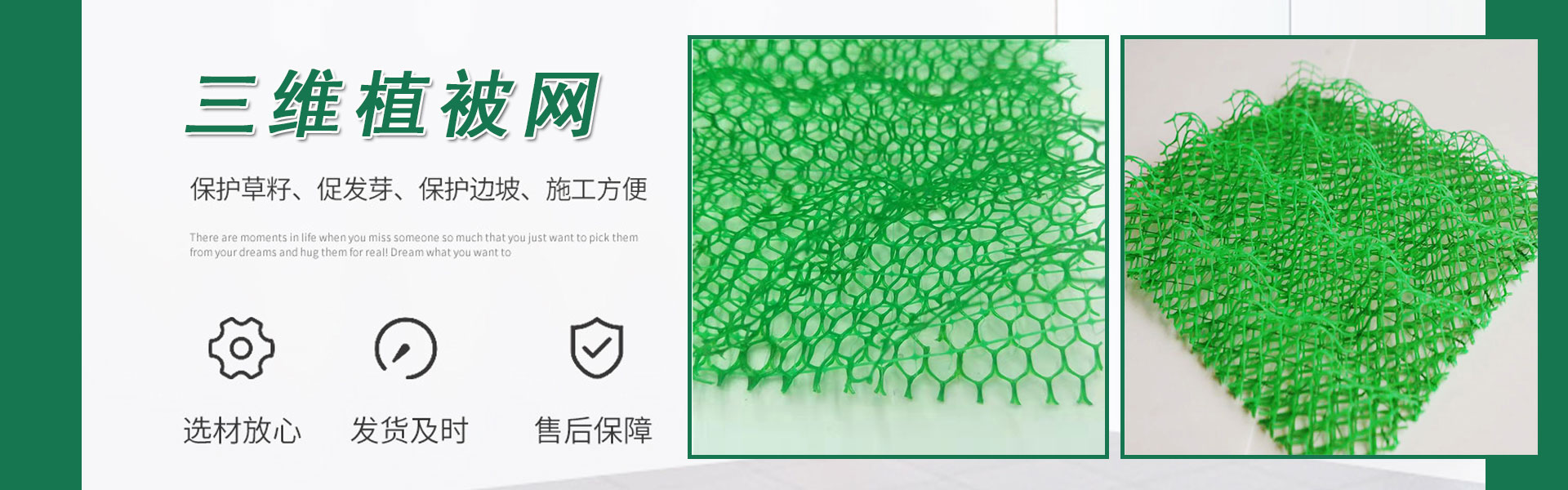
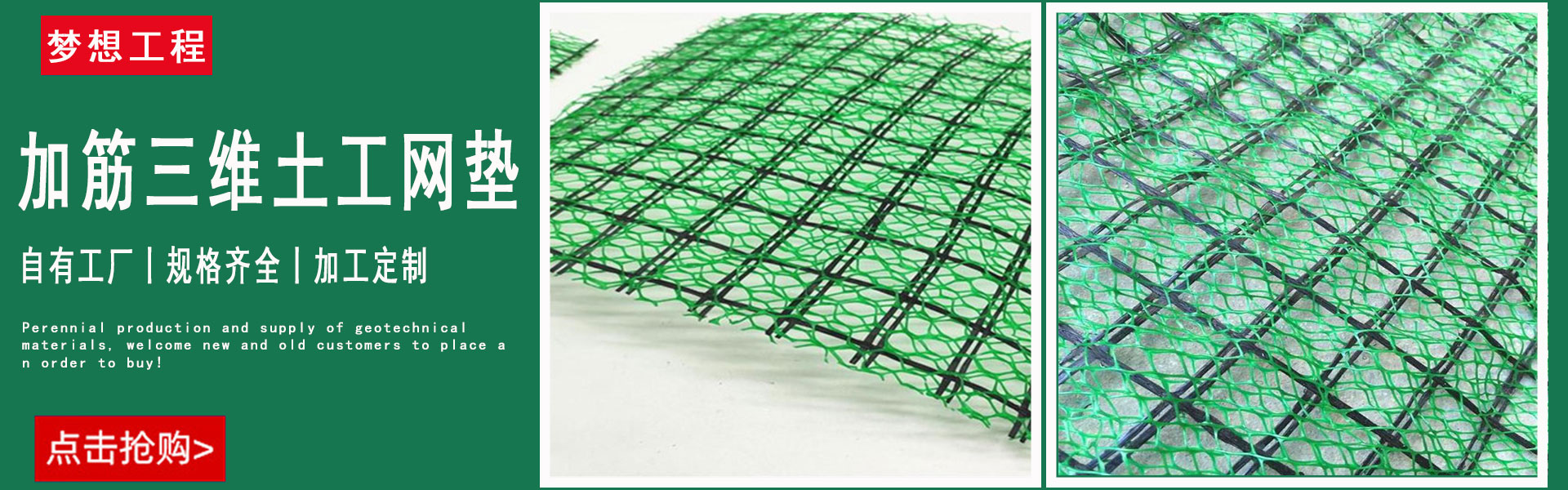

The installation steps for the three-dimensional vegetation net are as follows:
The three-dimensional vegetation net is laid on the slope from top to bottom, ensuring a smooth and even integration between the net and the slope surface.
When laying the pre-buried three-dimensional mesh on the slope top, it should extend 40-80 cm, be buried in the soil, and compacted.
The anchoring process involves fixing the three-dimensional mesh from bottom to top using U-shaped steel bars with a diameter of 6mm or more. The U-shaped bars are approximately 15 to 30cm in length and 8mm wide. The spacing between the U-shaped bars is about 1.5 to 2.5 meters, with 8# U-shaped nails or bamboo pegs used for auxiliary fixation in the middle.
The three-dimensional vegetation mesh has been laid, and the soil is evenly spread over the mesh, covering it completely until no air pockets are visible, ensuring a soil thickness of at least 12mm on the mesh. Subsequently, fertilizer, auxin, and binder are mixed in a specific ratio and applied evenly to the surface.
The slope protection technology combines the advantages of geotextile and vegetation slope protection, serving as a composite slope protection solution. When the vegetation coverage on the slope reaches over 30%, it can withstand the erosion from light rain, and when the coverage exceeds 80%, it can endure heavy rain. As the plants grow lushly, the erosion-resistant flow velocity reaches up to 6m/s, which is more than twice that of ordinary grass. The presence of geotextile effectively reduces soil moisture evaporation on the slope and increases infiltration. Additionally, due to the black polyethylene material of the geotextile, it has a heat-absorbing and insulating effect, which is beneficial for seed germination and plant growth.


