
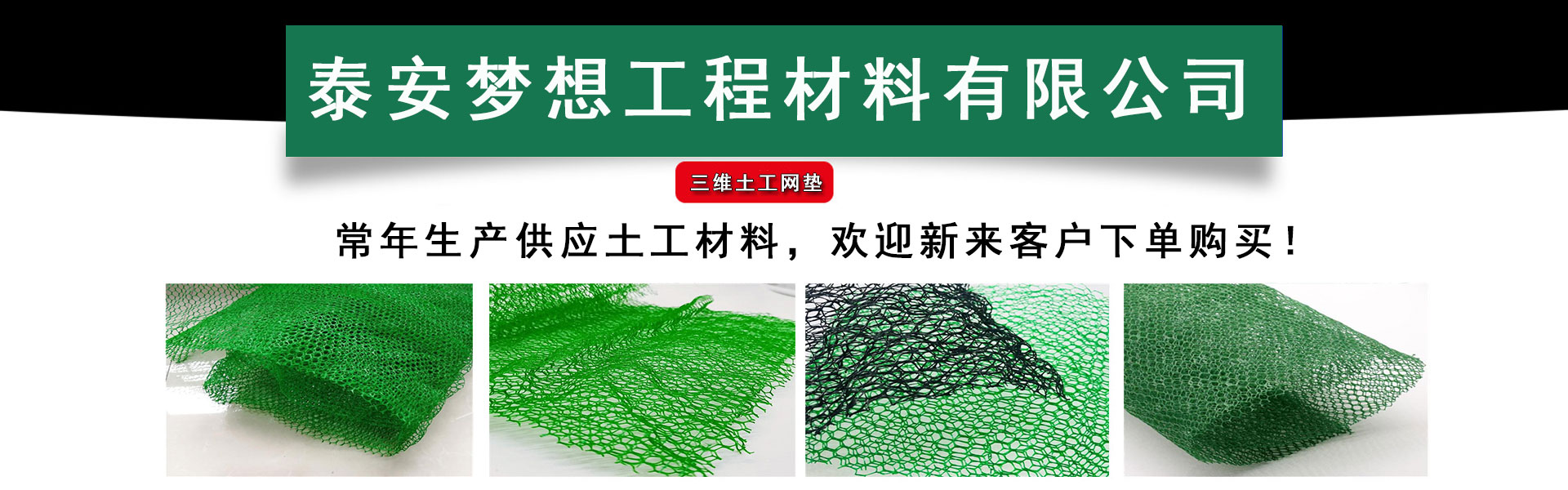
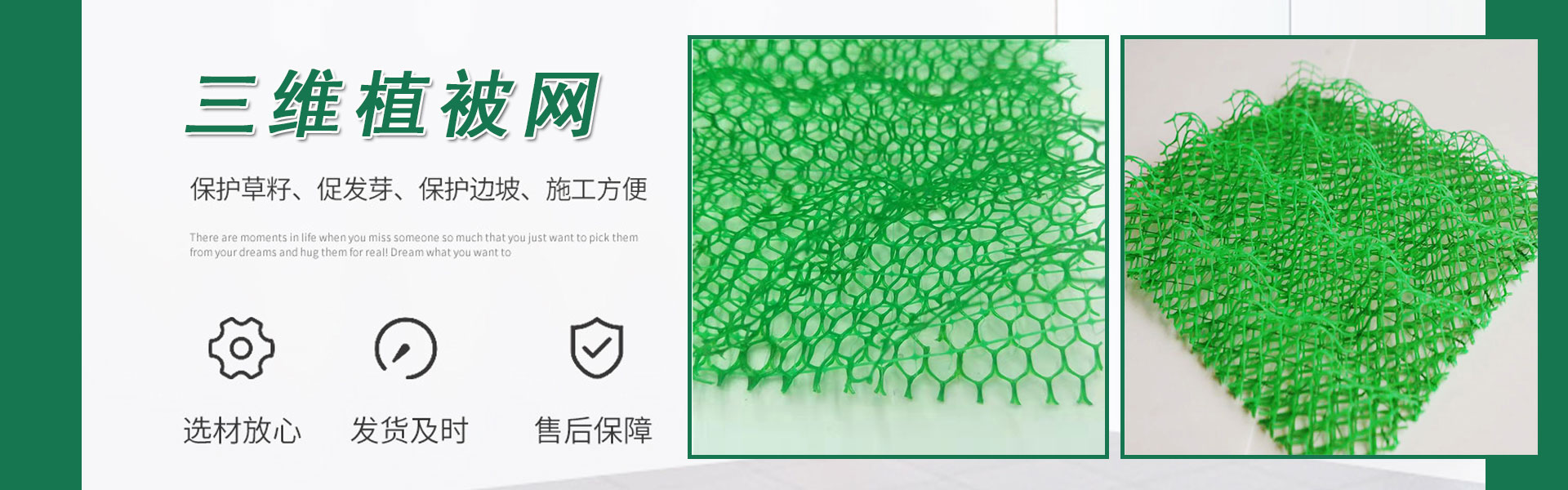
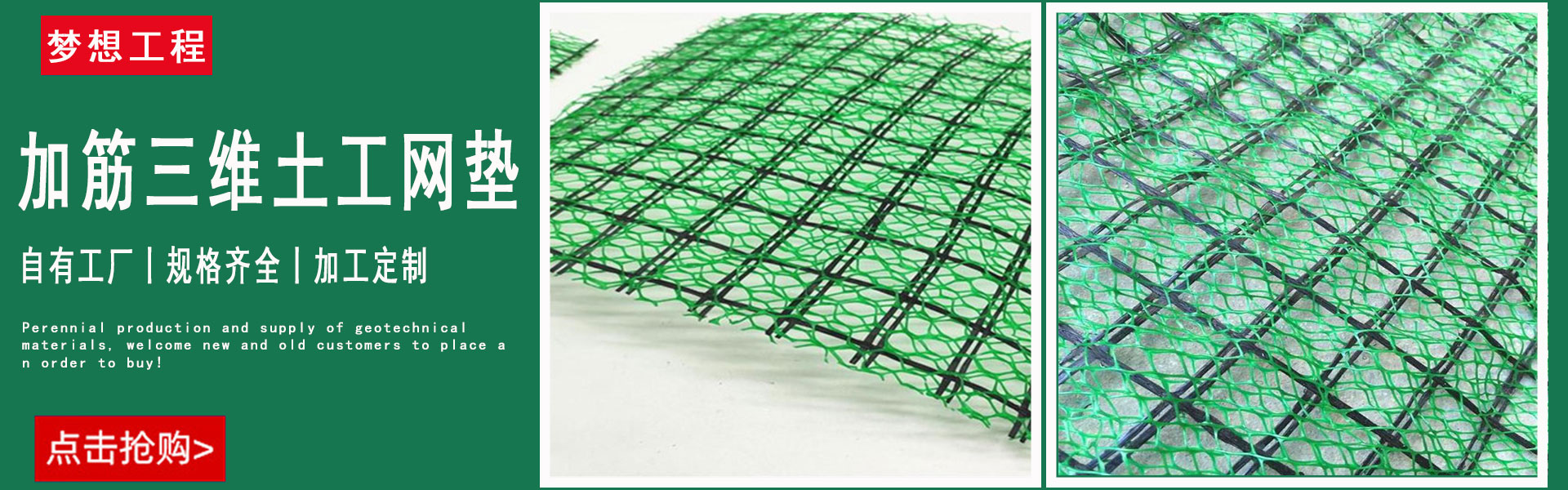

The anti-erosion effect of the three-dimensional vegetation net is achieved through its three main components: 1) The growth layer of plants (including sepals, sheaths, leaves, and stems), which prevents the topsoil of the slope from being directly eroded by rainwater through its dense coverage, reducing the scouring energy of heavy rain runoff and the speed of surface runoff, thereby reducing soil loss; 2) The humus layer (including the interface between the fallen leaves layer and the root stem), providing a protective layer for the topsoil of the slope; 3) The root system layer, which reinforces and anchors the surface soil of the slope, providing mechanical stability. Generally, in the early stages of plant growth, the individual plant's root system is loosely intertwined without a sprawling root system, making it easy to separate from the soil layer and not serve as a protective function. The application of the three-dimensional net is precisely to enhance the effectiveness of these three aspects to achieve a more thorough shallow protection.
News Center Co., Ltd.


