
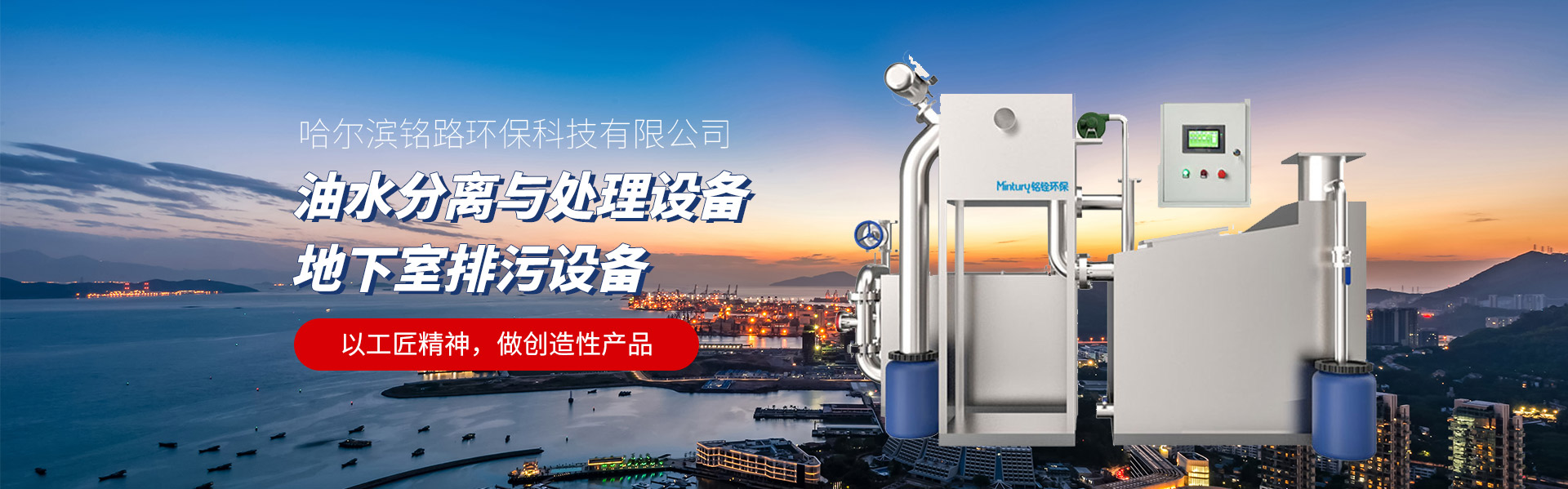





1. The process primarily involves pumping oil-contaminated wastewater into an oil-water separator, where, after passing through a diffuser nozzle, large oil droplets float to the top of the left oil collection chamber.
Wastewater containing small oil droplets enters the lower section of the corrugated plate coalescer, where it aggregates some oil droplets into larger ones, which then flow into the right oil collection chamber.
3. Wastewater containing smaller oil droplets passes through a fine filter to remove impurities, and then sequentially enters a fiber agglomeration unit, enabling the tiny oil droplets to coalesce into larger ones, thereby separating from the water.
4. Post-separation, clean water is discharged through the exhaust outlet, while the sludge oil in the left and right oil collection chambers is automatically drained through solenoid valves. The sludge oil separated by the fiber agglomerator is typically discharged through manual valves.
