



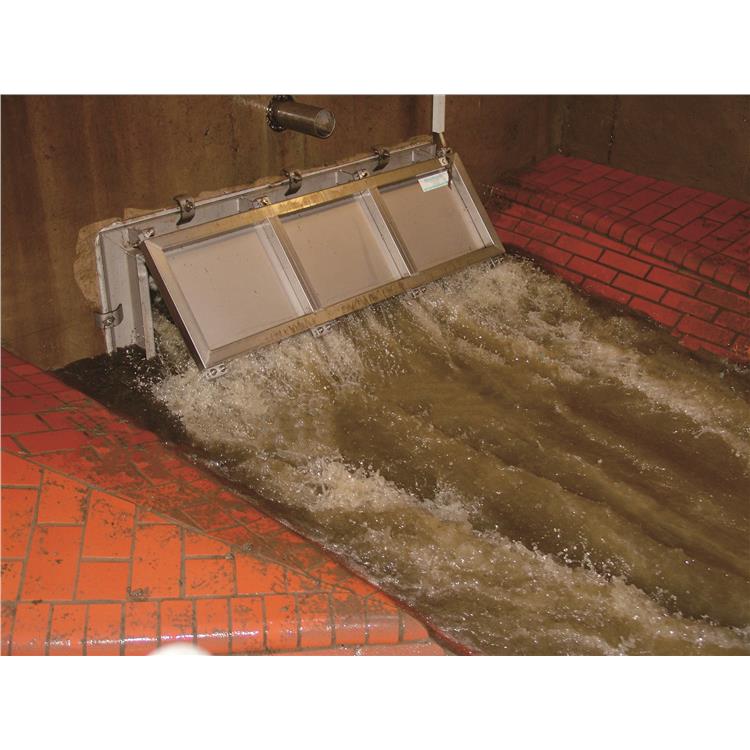
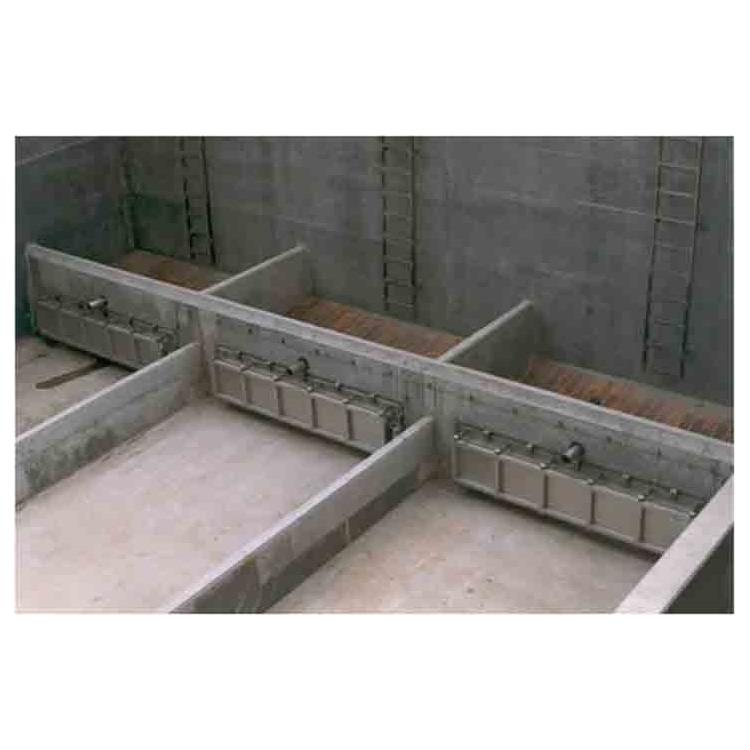
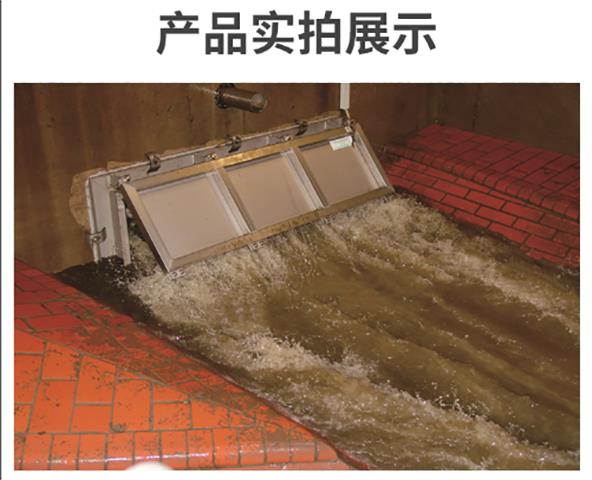
After rinsing, the rinse door closes slowly under the action of the damper, relying on its own weight, until the next cycle is used.
Regulated Reservoir Vacuum Flushing, Regulated Reservoir Cleaning Equipment, Regulated Reservoir Vacuum Cleaning System, Water Storage Tank Cleaning, Regulated Reservoir Automatic Cleaning Device, Rainwater Regulated Reservoir Cleaning, Sponge City Rainwater Regulated Reservoir, Pipeline and Regulated Reservoir Cleaning, Vacuum Cleaning Regulated Reservoir, Hydro Vacuum Cleaning
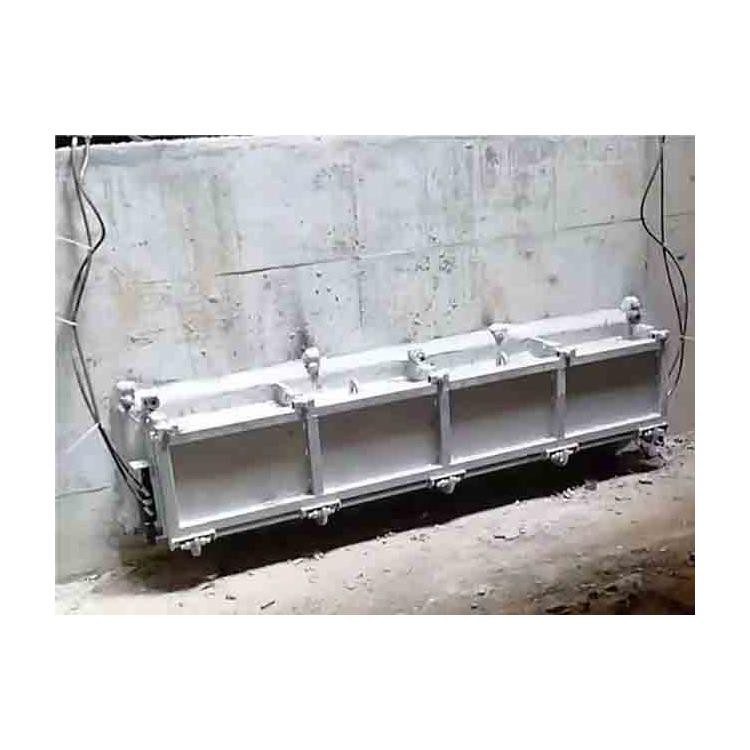
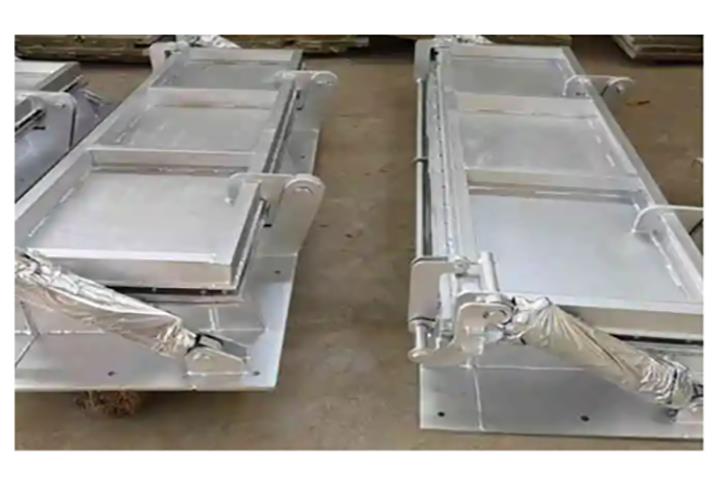
Hydraulic flushing door regulating pool gate flushing system can fully utilize the potential pipeline capacity to store waste water; utilizes stored waste water to flush pipes; flexibly controls waste water of different qualities based on water quality conditions. The installation position of the retaining flushing door is determined by the wall structure of the structure. The retaining door can be locked with a pivot rotation.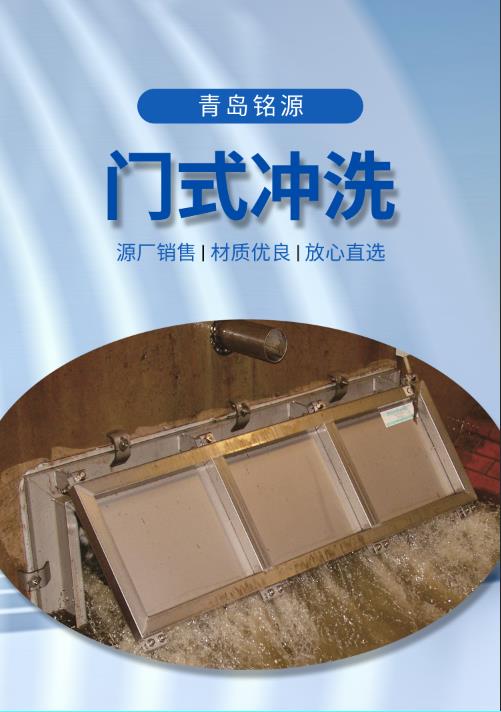
Operation process as follows:
Divide the rainwater retention pond into multiple flushing channels. Then, in each channel, separate a single storage compartment for storing incoming water during the pond's daily inflow, serving as the flushing water source for cleaning the pond. When water pollutants settle at the bottom of the pond and require cleaning, empty the rainwater retention pond, activate the hydraulic system via the PLC control system, open the flushing door before the storage compartment, and begin cleaning the channel.
Hydraulic Flush Door, Retaining Basin Gate Flush
The device, utilizing the retention function of the retention gate, can fully store wastewater in the pipeline's potential capacity; it uses the retained wastewater to flush the pipeline; and it can flexibly control wastewater of different qualities based on water quality conditions. The installation position of the retention flushing gate is determined by the structural walls of the structure. The retention gate rotates around a pivot and can be locked at any position. When idle, the retention gate can be locked in a larger open position; when retaining water, it is locked in a closed state, sealing with the bottom of the pipeline to retain wastewater. The designed retention gate can be set for *outflow or bottom outflow. Retention pool flushing valve, retention shield flushing hydraulic flap gate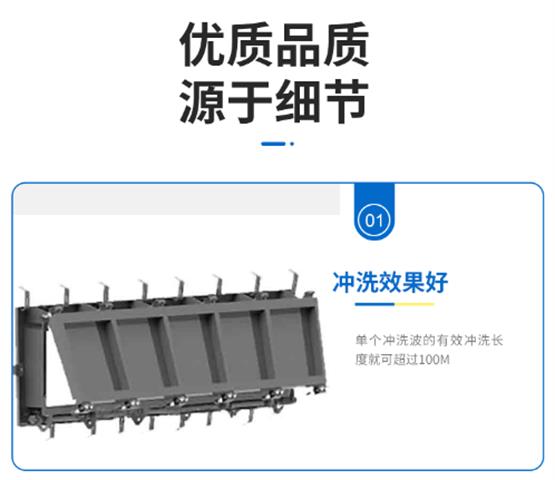
Made of stainless steel, sturdy and durable construction; one-time rinse length 10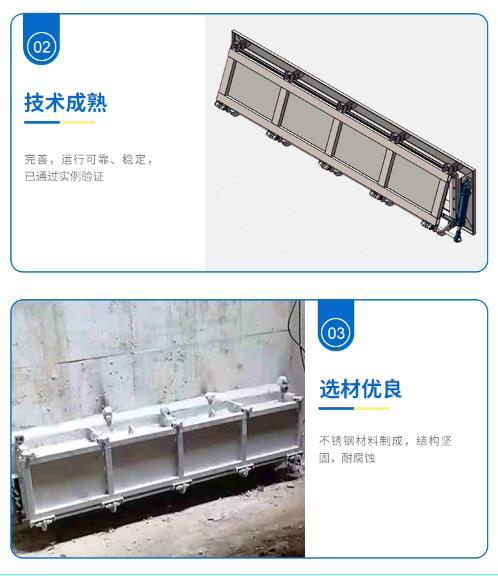
Primary Functions and Application Scope:
Large Tri醛 Intermediate Wash】Primarily used for oil washing and maintenance of drainage pipelines with larger diameters, such as wastewater or combined sewers, culverts, and rectangular ditches. Additionally, it can serve as a management facility for the entire pipeline network or section by utilizing the potential capacity of the pipeline through the retention gate's retention function. The hydraulic flushing gate is mainly installed in rainwater storage ponds or culverts, performing automatic flushing of the sediment at the bottom. It features long-lasting operation, reliability, and efficiency.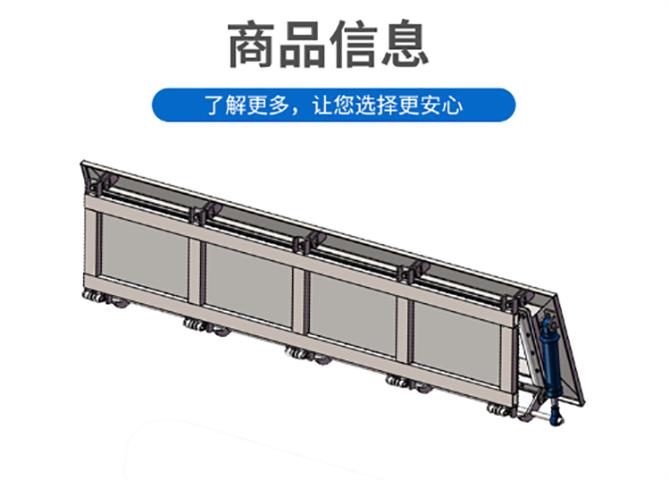
Technical Advantages
Excellent flushing performance; the effective flushing length of a single flushing wave can exceed 100 meters.
Technologically mature and refined, operationally reliable and stable, and has been verified through practical examples
Made of stainless steel, the structure is sturdy and corrosion-resistant.
Water inlet at the bottom of the storage room, which ensures the storage room automatically fills up even if the regulating pool is not at full capacity.
Noise-free, external power source, external water supply, energy-saving, environmental protection
Basic maintenance-free
Reservoir vacuum flushing, reservoir flushing equipment, reservoir vacuum flushing system, water storage tank flushing, reservoir automatic flushing device, rainwater reservoir flushing, Sponge City rainwater reservoir, pipeline and reservoir flushing, vacuum flushing reservoir, hydraulic vacuum flushing
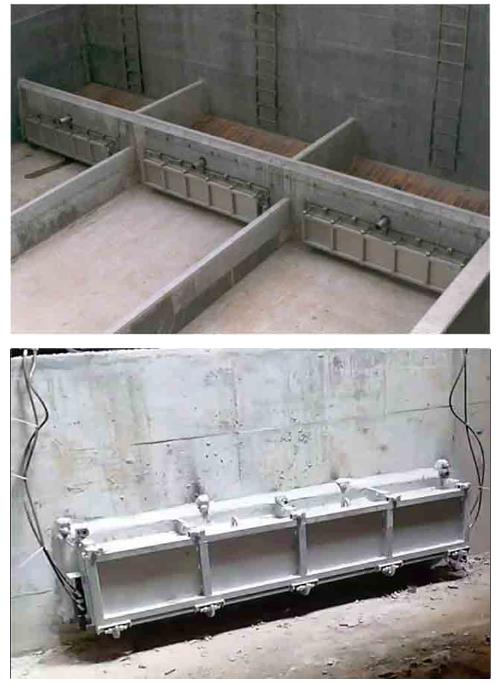
Rainwater storage ponds are typically fully underground structures with considerable depth. Their total operating days throughout the year are limited, serving as storage during rainfall only. Therefore, the operation of newly constructed rainwater storage pond systems is usually **unmanned or with infrequent on-site inspections. China has developed its technology for rainwater storage relatively late, and early-built rainwater storage ponds primarily had the "storage" function, lacking "adjustment" and "utilization" capabilities, and are in urgent need of upgrading or supplementing.
Rainwater retention ponds are typically connected to municipal stormwater wells for the collection and storage of rainwater; they are equipped with drainage pumps and level gauges. The drainage pumps are connected to the municipal stormwater system via drainage pipes to empty the retention pond into the stormwater system before rainfall, while the level gauges display the water level within the pond. Current technology relies on manual on-site operations for the management, utilization, and control of rainwater retention ponds. Given the widespread distribution of these ponds, often located underground, and the unclear responsibilities—some being part of the municipal system, others belonging to property management—it is both difficult and costly to manage them manually. Additionally, due to the requirement of emptying the retention ponds before heavy rain, with their widespread and numerous locations, it is challenging to monitor and empty them within a short time frame upon receiving heavy rain warnings. Relying on manual management results in insufficient control and delayed response times; plus, on-site operation requires trained workers, increasing labor costs. If the retention ponds cannot be effectively emptied before heavy rain, it could increase the likelihood of urban flooding.
