
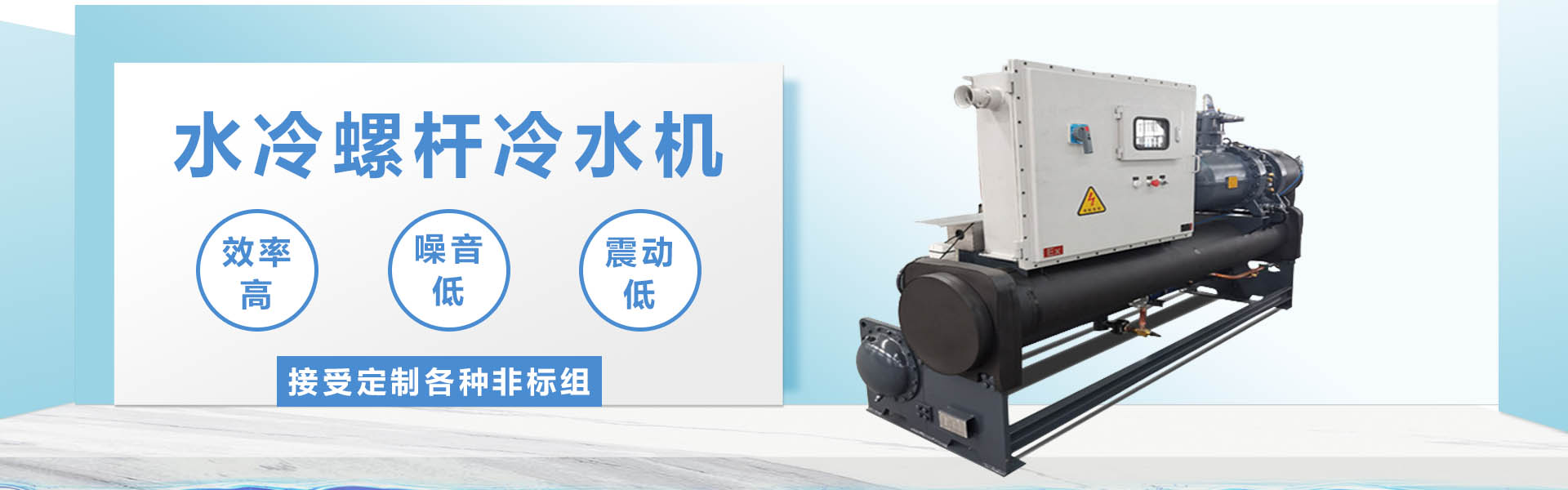

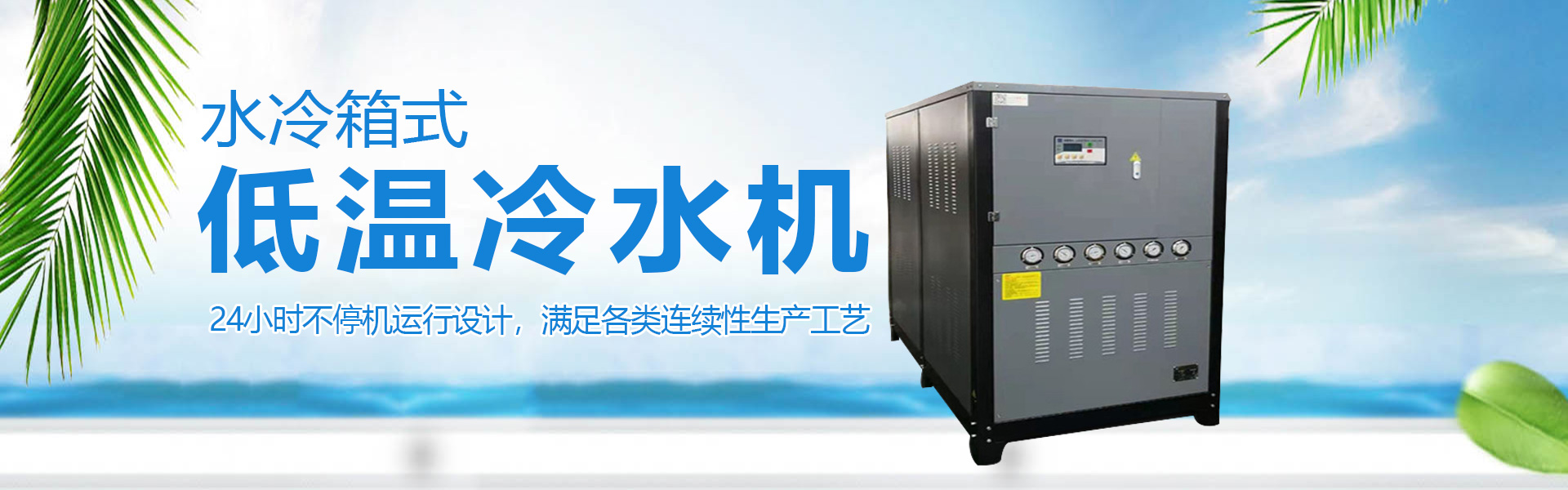
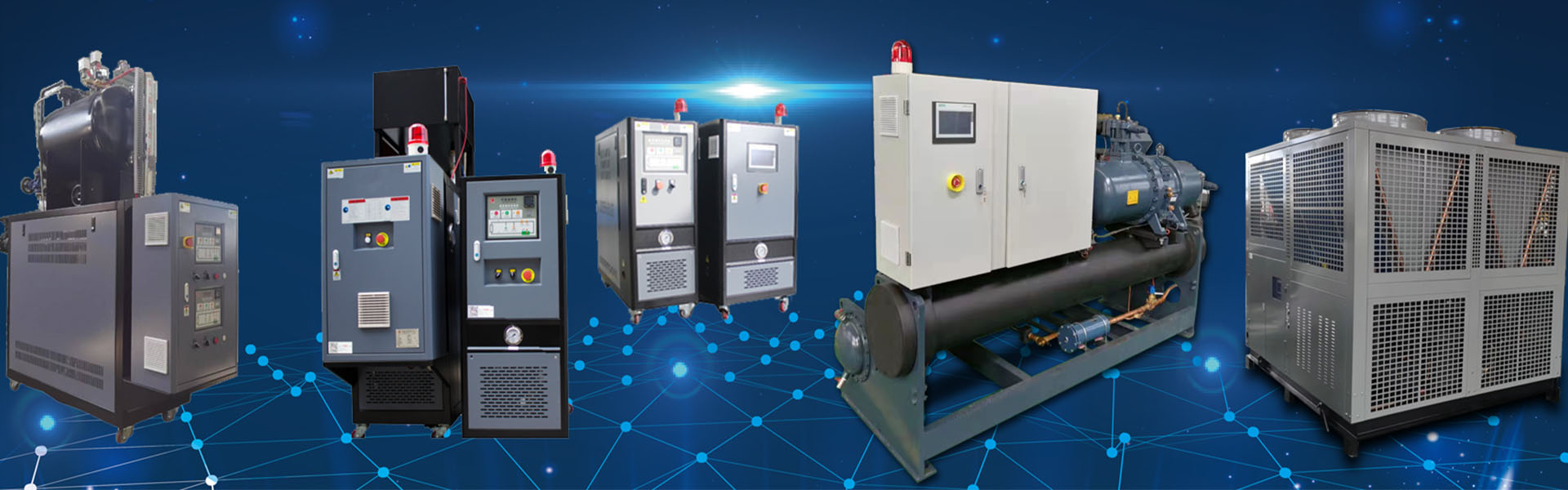
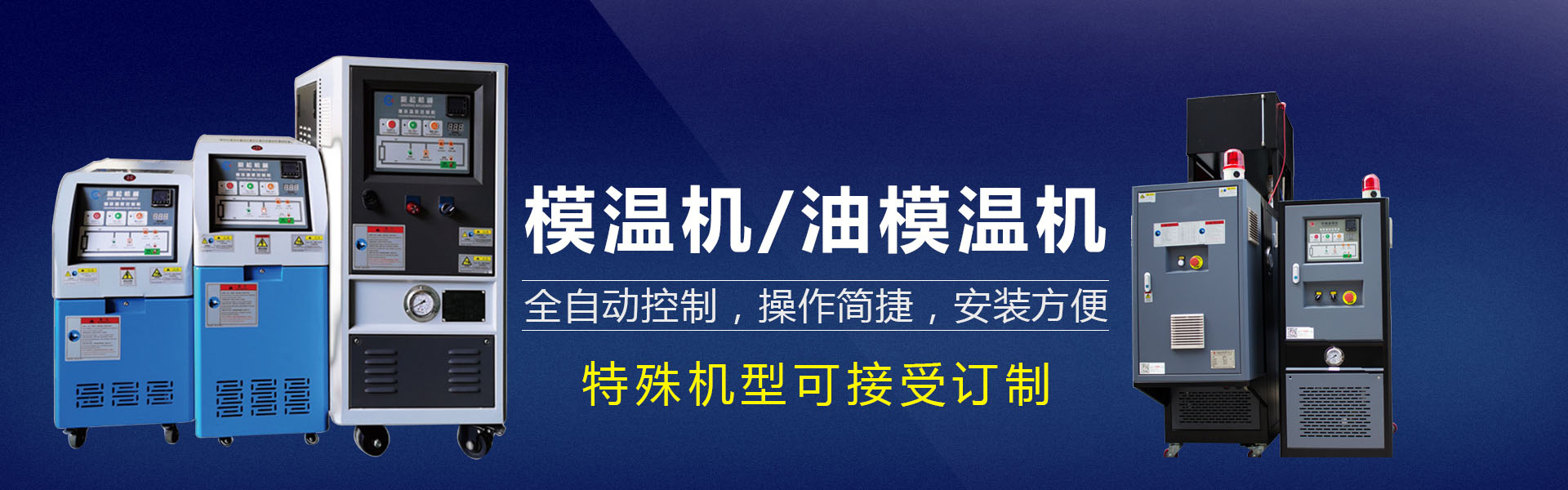

The hardware configuration of the industrial cold water chiller determines its characteristics across various fields. Low-temperature refrigeration units can be divided into air-cooled and water-cooled units, with the key equipment configuration involving several major aspects.
Low Temperature Refrigeration Machine
1. The automatic control system software for negative feedback closed-loop control based on the principle of manipulation: temperature measurement components (resistance thermometers or thermocouples) transmit the temperature data signal (mV) to an intelligent PID temperature controller; the temperature controller outputs a DC 15V, 20mA pull-up resistor according to the confirmed fixed-time PWM duty cycle, driving a zero-crossing type non-contact switch control board, thereby controlling the power of the heat transfer oil heater.

2. Low-voltage complete sets of equipment for the composition of a centralized automatic control system: control cabinet control panel for setting, adjustment, actual operation, and alarm indicators of components; internal components for setting, switching power supply, maintenance, propulsion, and data signal conversion.
3. Equipment Protection: a. Overheat Alarm - When the outlet temperature of the heat-conducting oil heater exceeds the set temperature by the temperature controller (usually set above the processing temperature but below the permitted application temperature of high-temperature heat-conducting oil), an optical alarm signal is emitted from the electrical cabinet, and at the same time, the system software automatically pauses the heating process. Attention! It is not allowed to stop the circulation oil pump at this time.
b. Low Liquid Level Alarm for Expansion Tank: When the system requires low liquid level alarm maintenance, install a pump pressure switch liquid level control panel on the expansion tank. When the high-temperature thermal oil in the expansion tank falls below the lower limit level, the liquid level gauge transmits a data signal for adjustment, and the electrical cabinet emits an optical alarm message. After the alarm, immediately replenish high-temperature thermal oil into the expansion tank to restore it to normal level.

c. Timely inspection of the oil pump discharge pressure gauge in the recirculation system: This gauge is one of the essential safety components that cannot be missing in the operational system. It accurately measures the pressure values in the recirculation, monitoring and controlling the operation of the technology. If the system requires overpressure alarm maintenance, an electrical contact pressure gauge should be used. When the gauge needle overlaps and touches the left and right limit positions, an alarm signal is emitted. Note! During the operation of the heating equipment, it is necessary to frequently monitor the system pressure; if the pressure gauge fails or causes damage, it must be replaced immediately.
4. The electrical control system adjusts the main power supply for the heating element in the heating section, utilizing a zero-crossing relay circuit, incorporating a regular power switch, and having no impact on the distribution network.
5. The temperature control dashboard utilizes a PID self-tuning intelligent temperature controller, ensuring that the application temperature is maintained within a ±2℃ error margin compared to the set value.
