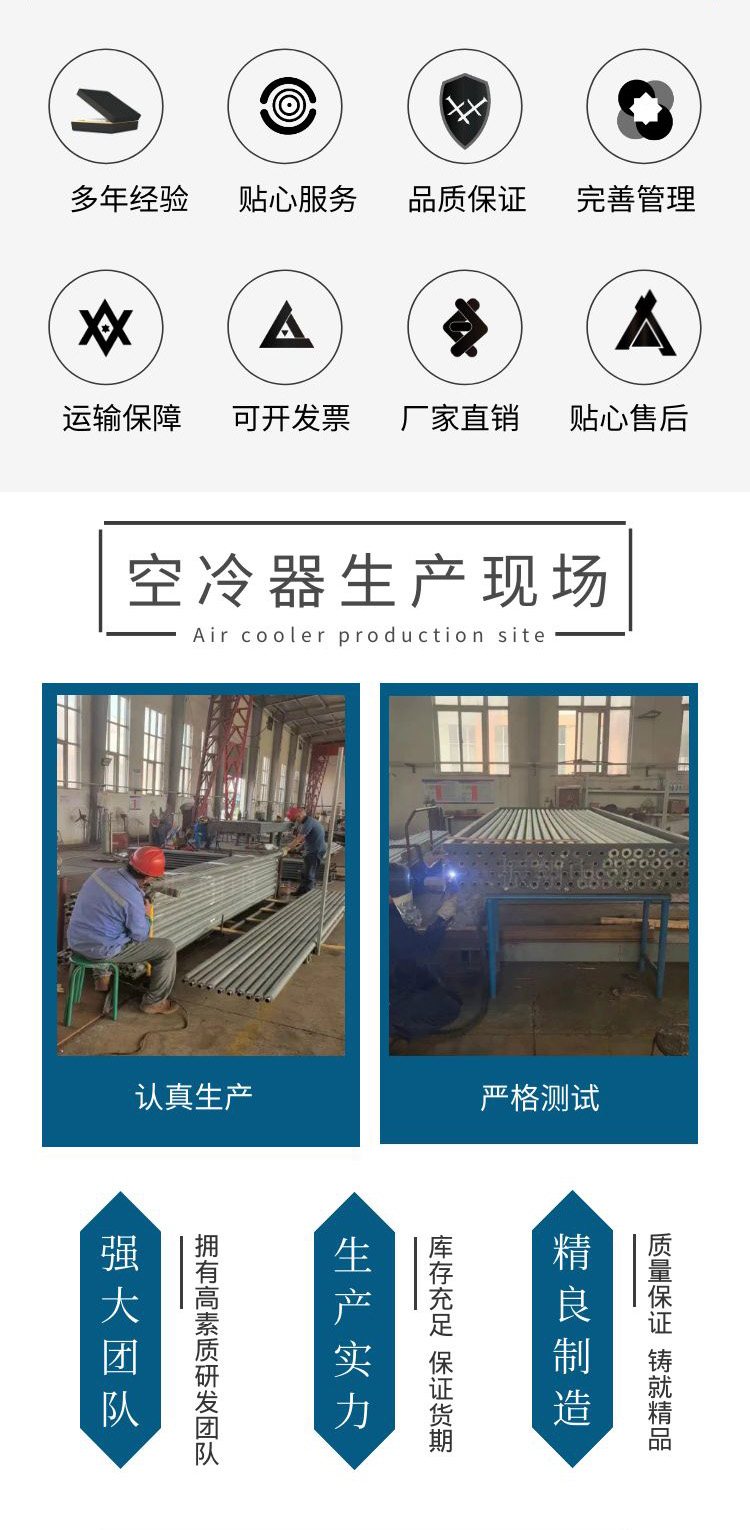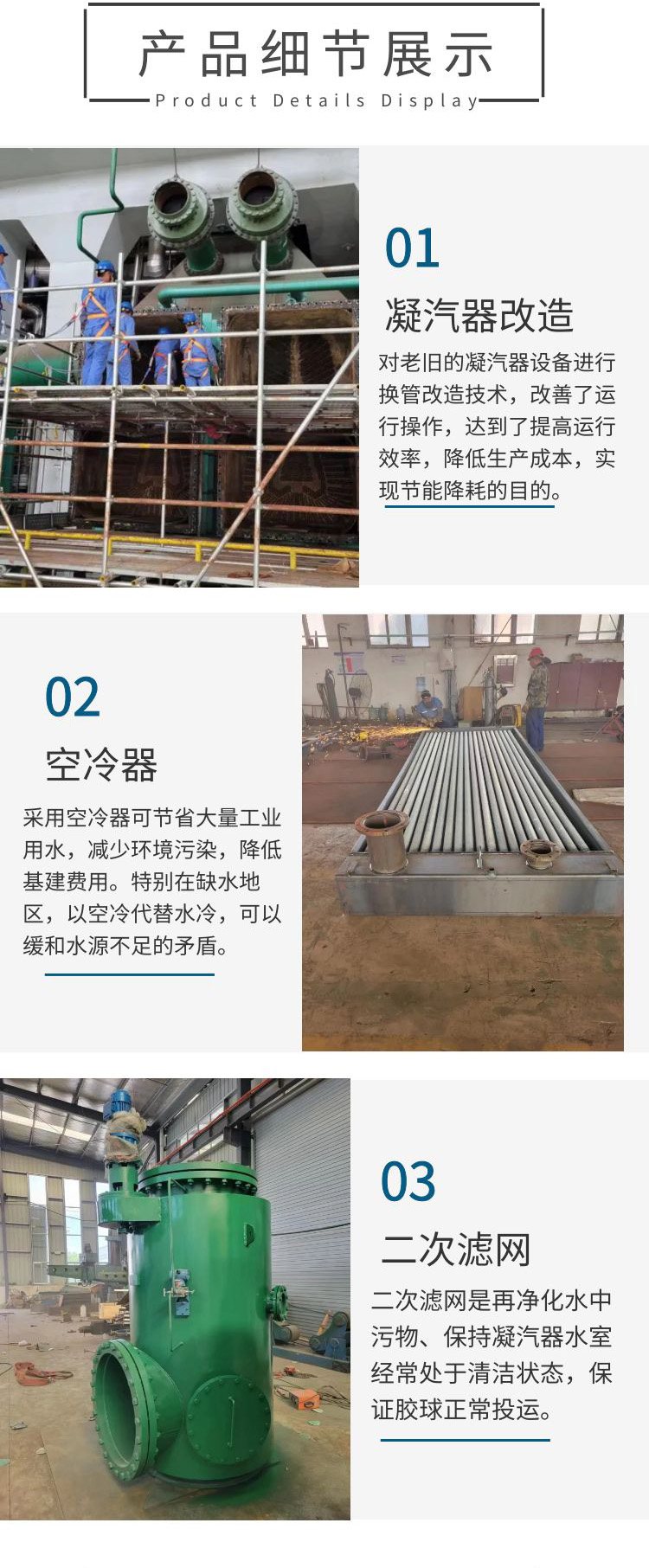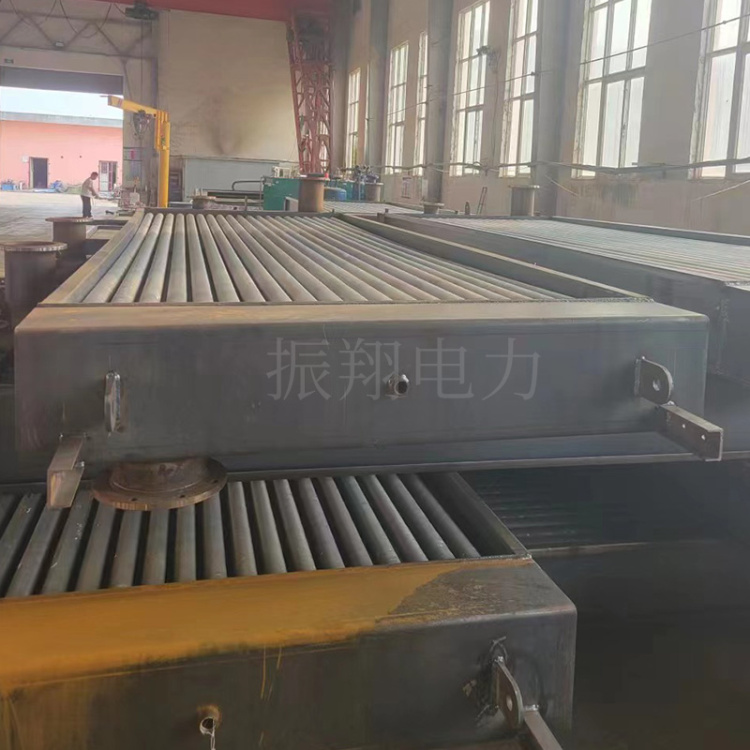
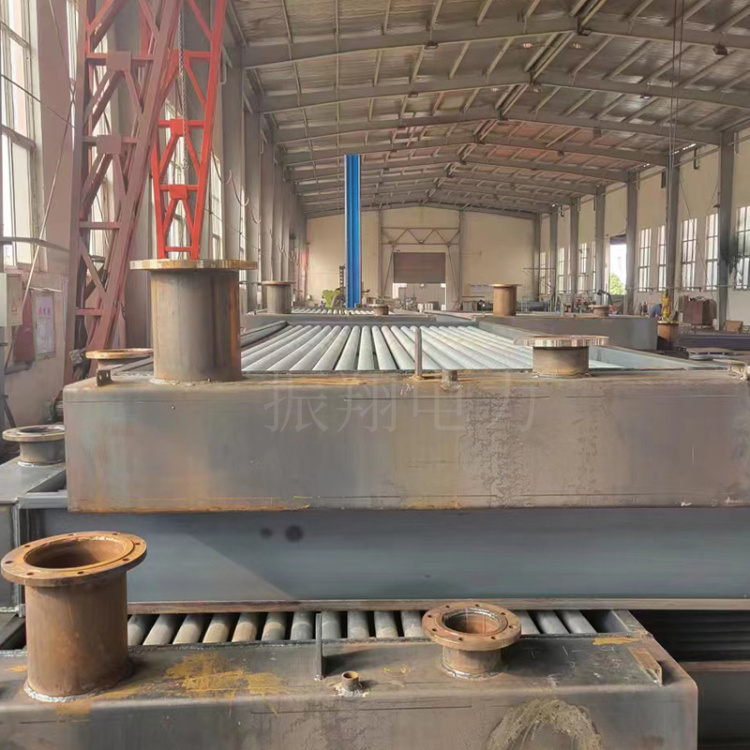
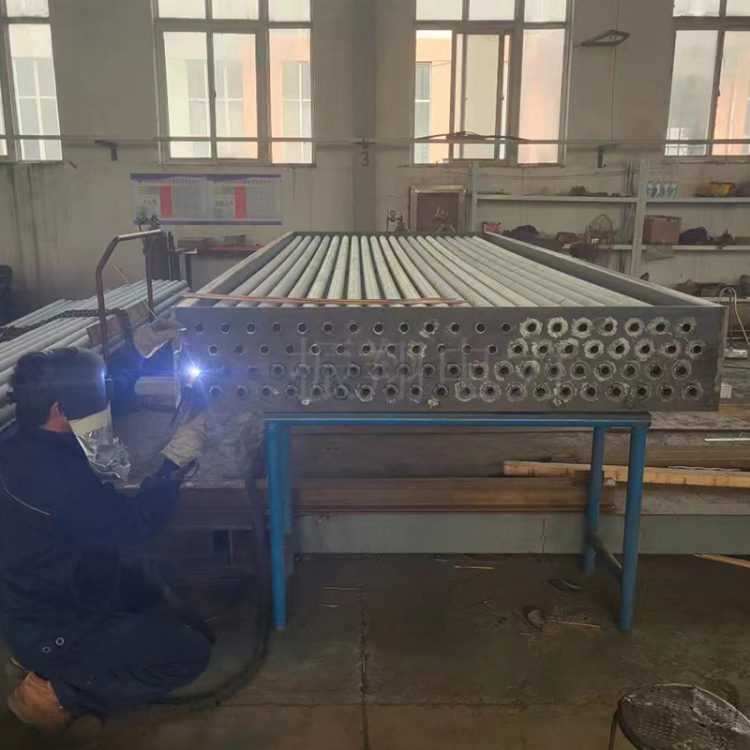
Air coolers, also known as air coolers, use air as the cooling agent and can be used as both coolers and condensers. They are primarily composed of tube bundles, frames, and supports. The hot fluid flows inside the tubes, while air blows over the tube bundles.
The type and material of the tube bundle greatly affect the performance of air-cooled heat exchangers. Due to the small heat transfer coefficient on the air side, fins are often added to the outside of the tube to increase the heat transfer area and fluid turbulence, reducing thermal resistance. Air-cooled heat exchangers usually employ radial fins. They typically use plain tubes with an outer diameter of 19-25mm, low fin tubes with a fin height of 12.5mm, and high fin tubes with a fin height of 16mm. Fins are generally made of high thermal conductivity materials (***commonly aluminum) and are wound or embedded onto the plain tubes. To enhance the heat transfer efficiency of the air-cooled heat exchanger, water can be sprayed to humidify the incoming air. This not only lowers the air temperature but also increases the heat transfer coefficient.
Air-cooled heat exchanger tube bundles include heat transfer tubes, tube boxes, side beams, and cross beams, etc. They can be arranged in three basic forms: horizontal, vertical, and slanting roof (V-shaped). Among them, the horizontal arrangement has a large heat transfer area, even air distribution, and good heat transfer performance; the slanting roof arrangement features a small land area and a compact structure, with the fan installed in the central V-shaped space. To offset the lower heat transfer coefficient on the air side, tubes with fins on the outer wall are typically used. Finned tubes, as heat transfer tubes, can expand the heat transfer area. The fins are arranged in layers and connected to the tube box at both ends using welding or胀接 methods. The tube arrangement usually consists of 3 to 8 rows. The tube bundle series sizes can extend up to 12 meters. The finned tube is the core component of the air cooler, and its form and material directly affect the equipment's performance. The tubes can be made of carbon steel, copper, aluminum, and stainless steel; the fin material is determined based on the operating environment and manufacturing process, with industrial pure aluminum being commonly used. Copper or stainless steel may also be used in cases of high corrosion resistance requirements or special manufacturing conditions. The fins can be arranged horizontally or vertically.