
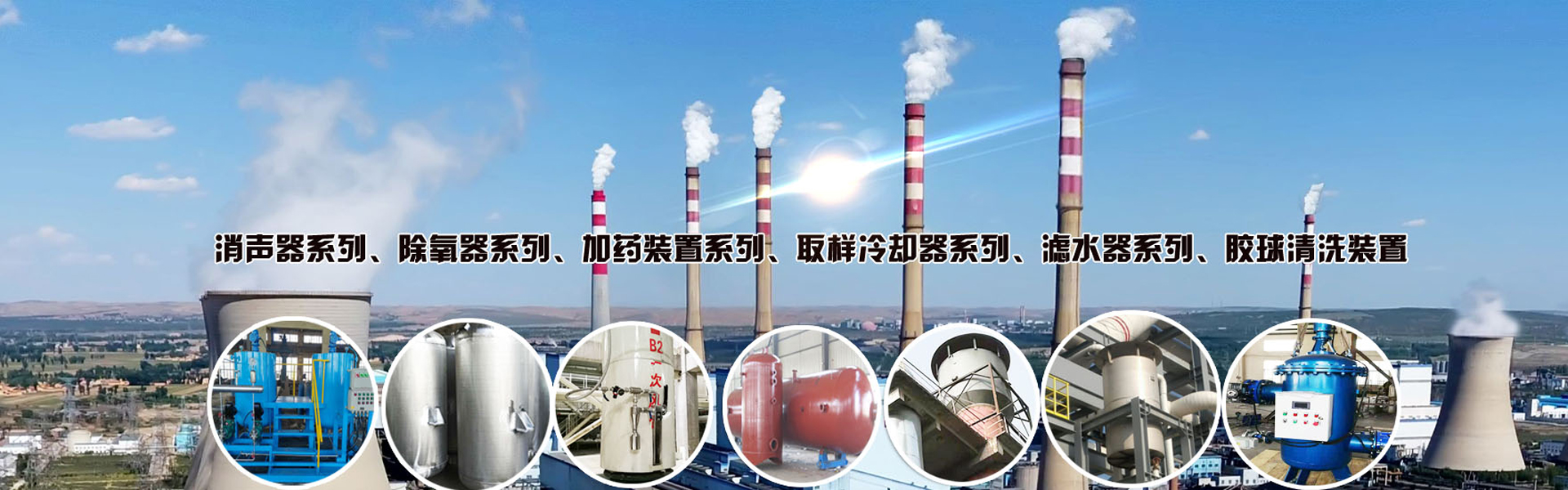



The Deaerator mainly consists of the deaeration head, deaeration tank, and auxiliary accessories. The structure and function of each part are as follows:
Deoxygenation Head
Shell: Made by welding the cylinder body and stamped elliptical end caps. Medium and small low-pressure deaerators are usually equipped with a pair of flange connections for the upper and lower parts, facilitating assembly and maintenance; high-pressure deaerators are fitted with manholes.
Air Separator: Replacing the old-style oxygen-removing unit with a grass hat cone structure, it can eliminate the phenomenon of steam discharge with water and improve the oxygen-removing effect.
The Membrane Rotator Assembly: Comprising a water chamber, steam chamber, membrane tube, condensate connection, makeup water connection, and primary steam inlet connection. Condensate and chemical makeup water are ejected in a spiral pattern at a certain angle through the membrane rotator, forming a water film skirt, which then undergoes heat exchange with the primary heating steam to achieve the purpose of primary deoxygenation.
The Sprinkler Grating: Composed of multiple layers of interlaced angular steel, the water supply after coarse degassing in the spinning film section is here subjected to a secondary distribution, falling evenly as a sprinkling rain onto the liquid-gas net below.
Regenerative Filling Material Liquid-Vapor Network: Typically made of metal mesh or plastic, it boasts excellent breathability and thermal conductivity. By utilizing the surface area of the filling layer, it ensures thorough contact between the steam-water mixture, achieving deep deoxygenation. Additionally, it can store a certain amount of heat, enhancing thermal efficiency.
Deoxygenation Tank
The water tank is designed to store deoxygenated qualified water for stable supply to boilers and other equipment. The exterior of the tank is typically insulated with materials like rock wool to reduce heat loss, maintain water temperature stability, and prevent secondary oxygenation.
Accessory Assistance
Steam regulating valve: Used to control the amount of steam entering the deaerator, thereby adjusting water temperature and pressure.
Level Gauge / Level Transmitter: Monitors water tank level in real-time, preventing overflow or water shortage.
Safety Valve: Automatically releases pressure when the pressure inside the deaerator exceeds the limit, ensuring equipment safety.
Recirculation Pipeline for Water Supply: During low-load periods, such as at startup, return a portion of the water supply to the deaerator to prevent a drop in water temperature, which could lead to excessive dissolved oxygen levels.
