




The exhaust muffler is an industrial product designed to reduce exhaust noise by gradually lowering exhaust pressure and dampening the pulsations of exhaust pressure, primarily used in automotive applications. It is mainly constructed from aluminum-coated steel plates or stainless steel plates, featuring a resonant chamber, an expansion chamber, and a porous pipe system inside. The outer shell is made with a double steel plate welded sandwich structure to enhance sound pressure attenuation, while the inner shell's wavy design promotes pressure diffusion and sound wave scattering. The standard installation position is between the catalytic converter and the exhaust tailpipe. In special conditions where it is placed at the rear of the vehicle, it must address issues of condensation water corrosion. In necessary cases, a resonator can be connected in series to further reduce noise.
The device utilizes energy consumption by changing the airflow direction through porous pipes, with some models filled with high-temperature-resistant and sound-absorbing materials like glass fiber. The innovative design integrates acoustic and vibration analysis techniques, employing the principle of reverse sound waves and reflection interference, featuring the core component of the Helmholtz resonator. The demand for new energy vehicles is rapidly growing, with ceramic matrix composites reducing the volume of components by 40% and enhancing temperature resistance up to 1200°C.
Operation Principle
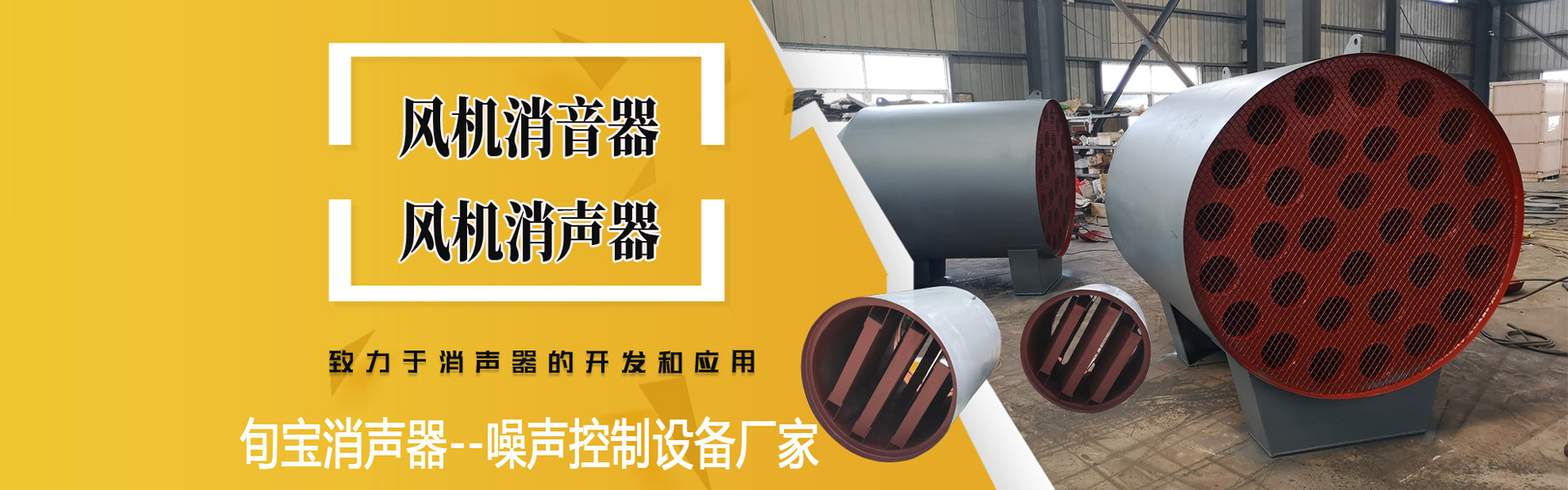
Silencers are typically made from aluminum-coated steel plate or stainless steel plate. Generally, a silencer consists of a resonance chamber, an expansion chamber, and a set of porous pipes. Some silencers are also filled with heat-resistant sound-absorbing materials, which are usually glass fiber or asbestos. Exhaust gas flows through the porous pipes into the expansion and resonance chambers, where it continuously changes direction, gradually reducing and attenuating its pressure and pressure pulsations, dissipating its energy, and ultimately reducing the exhaust noise.
Structure and Installation
It includes the muffler housing, inner shell, internal and external partitions, as well as the inlet and outlet pipes. The muffler housing is made of double-layer steel plates, with an intervening gap. The inner shell is corrugated and forms an exhaust passage with the inner wall of the housing. This structure facilitates the attenuation of sound pressure and the diffraction of sound waves, enhancing the noise reduction effect. Sometimes, the muffler alone is not sufficient to meet the automotive exhaust noise standards, and in such cases, a resonator similar to a small muffler is installed in the exhaust system. The resonator, when connected in series with the muffler, can further reduce the noise level. The muffler is typically installed between the catalytic converter and the exhaust tailpipe, near the center of the vehicle. However, due to space constraints, it is often mounted at the rear of the vehicle. In this case, because the muffler is at a lower temperature, more water vapor may condense into water inside the muffler, causing rust.