
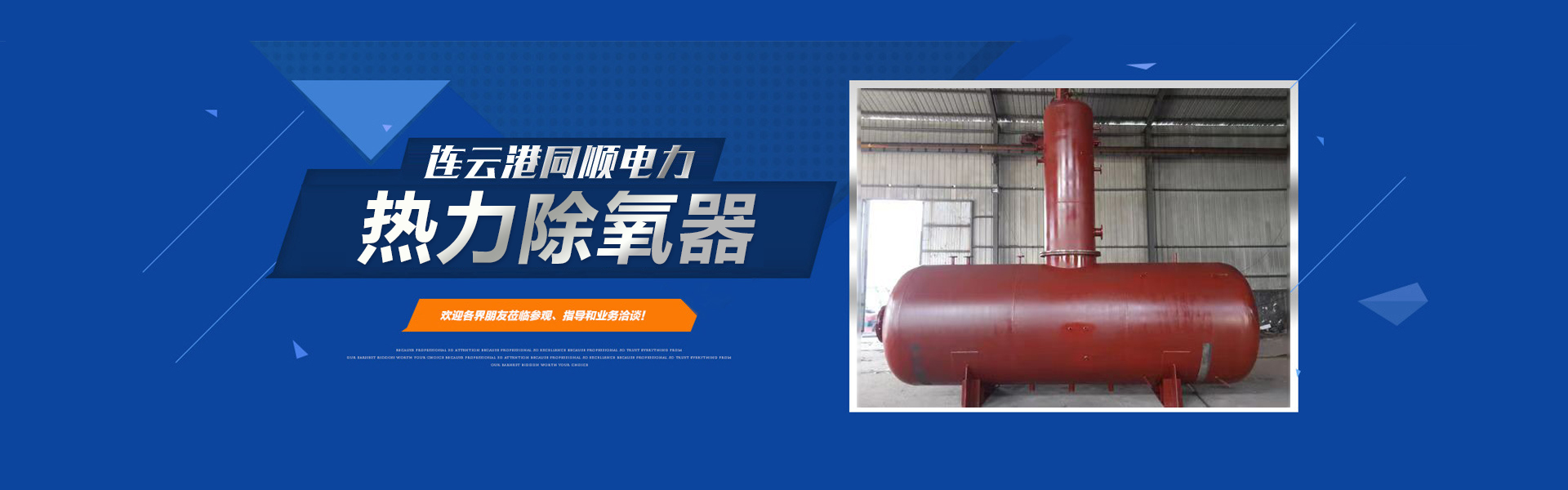

In a container, the amount of gas dissolved in water is proportional to the partial pressure of the gas above the water surface. The primary method for thermal deoxygenation involves using steam to heat the feed water, thereby increasing its temperature. This causes the partial pressure of steam above the water surface to gradually rise, while the partial pressure of dissolved gases decreases, leading to the continuous release of gases dissolved in the water. When the water is heated to its boiling point at the corresponding pressure, the surface is filled with steam, and the partial pressure of dissolved gases is zero, meaning the water can no longer dissolve gases, including oxygen, which can then be removed. The effectiveness of deoxygenation depends on whether the feed water is heated to its boiling point at the corresponding pressure and on the rate of dissolved gas removal, which is highly related to the size of the water and steam contact surface area.
Principle of operation for the rotary membrane oxygen removal unit (jet, entrainment, turbulence, heat transfer, mass transfer, water film skirt, rain-like, saturated)
Condensate and make-up water first enter the internal spiral membrane element group water chamber of the deaerator. Under a certain differential pressure of water level, they are spirally jetted into the inner chamber through small holes in the membrane tubes, forming a jet stream. Due to the inner chamber being filled with rising heated steam, a large amount of heated steam is entrained into the jet stream during its motion (experiments prove that the jet stream has an entrainment effect); a violent mixing and heating action is produced over an extremely short distance and small travel, significantly raising the water temperature. The rotating water continues to spiral downward along the inner wall of the membrane tube, forming a swirling water film skirt (the critical Reynolds number of the water in rotational flow decreases significantly, resulting in turbulent churning). At this point, the turbulent water has an ideal heat and mass transfer effect, reaching the saturation temperature. Oxygen is then separated out, as it cannot freely diffuse within the inner chamber and can only rise with the steam and be discharged into the atmosphere through the exhaust steam pipe. The water from the deaerator's membrane section, as well as the condensate introduced from the drain pipes, is mixed here for secondary distribution, falling in a uniform rain-like pattern onto the liquid-gas mesh below. After deep deaeration, it is then flowed into the storage tank. The oxygen content in the water within the tank is 0-7 μg/L at high pressure and less than 15 μg/L at low pressure, meeting the departmental operational standards.
Due to the vortex deaerator's ability to keep water in a turbulent state during operation and its substantial heat exchange surface area, the better the heat and mass transfer efficiency, the smaller the exhaust gas volume (i.e., less steam used for heating, resulting in lower energy loss and significant economic benefits). The excellent deoxygenation effect allows the deaerator to operate at an overload (typically up to 50% over the rated output) or meet operational standards under low water temperatures with full补水.