
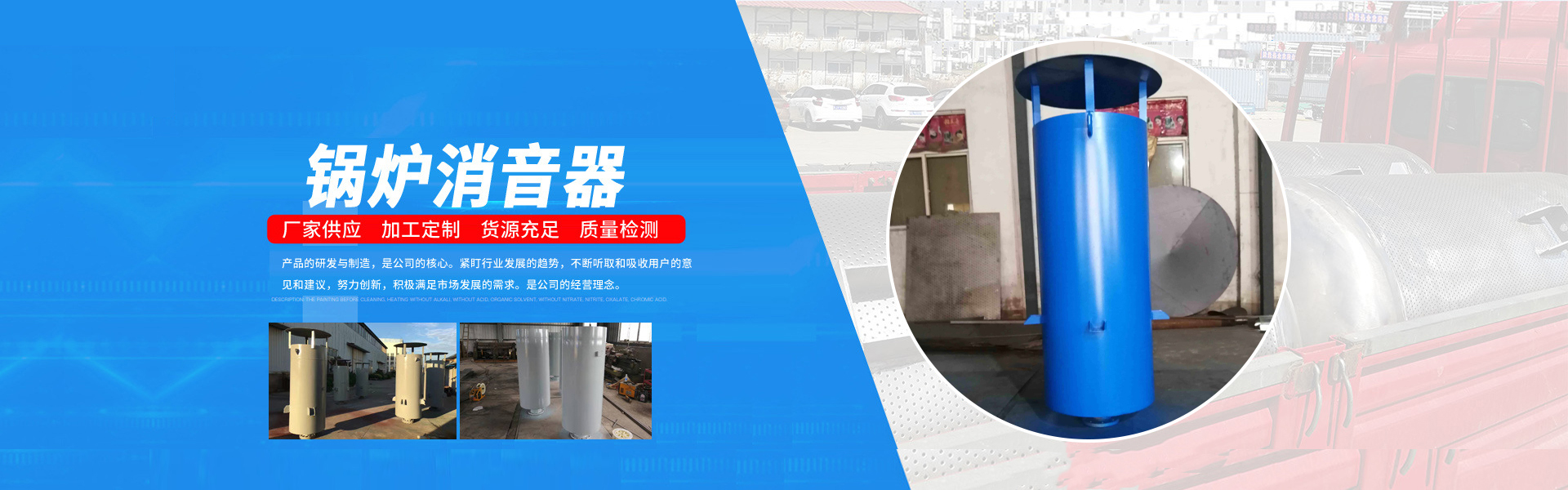



Boiler muffler working principle: The high-temperature and high-pressure steam, as well as low-pressure steam, are expanded and depressurized within the muffler once. They then enter a secondary depressurization chamber, where they undergo further expansion and depressurization to form low-pressure or ultra-low-pressure steam. After being ejected, the steam passes through a sound-absorbing cover, which is a composite structure made of multiple materials, outside the depressurization chamber to further reduce noise and sound levels before being released into the atmosphere.
Operation Principle
This industrial noise reduction and silencing equipment achieves noise reduction by first expanding and reducing the pressure of high-pressure and low-pressure steam within a silencer, followed by entering a secondary pressure reduction chamber. After undergoing a large-volume expansion and pressure reduction, the steam becomes low or ultra-low pressure. It is then ejected, passing through a sound-absorbing cover made of a composite structure with multiple materials outside the pressure reduction chamber, which further reduces noise before being released into the atmosphere. This type of equipment boasts high safety factors, large noise reduction values, compact dimensions, light weight, and easy installation.
Key Features
The Boiler Microhole Silencer operates on the principle of reducing pressure and noise through large aperture injection, and with optimized design, it outperforms similar products on the market in noise reduction standards, safety performance, and service life. It is better suited to meet the needs of various boilers with parameters such as low, medium, subcritical, high, ultra-high, and supercritical pressure, as well as pressure vessel pipeline exhaust gas discharge and safety valves for boilers, and the noise reduction requirements of boiler exhaust gas release valves. The microhole silencer, also known as the microhole type silencer, works on the principle of replacing a large exhaust aperture with many small holes while maintaining the same exhaust volume, redirecting high-frequency sound into the ultrasonic range where it is less sensitive to the human ear, thereby achieving noise reduction.