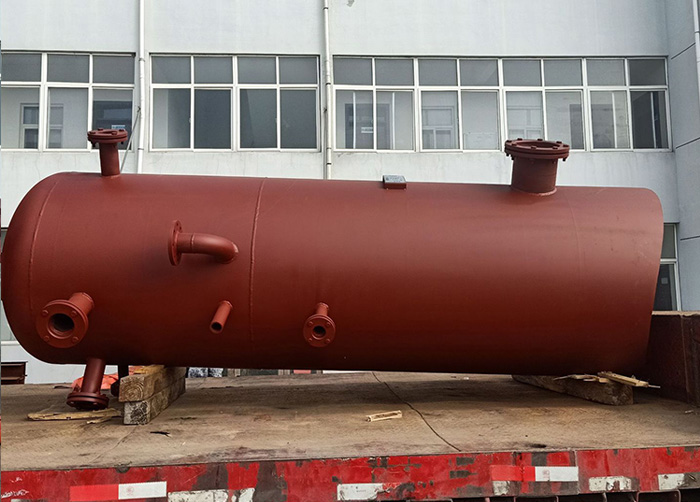

Deaerators are one of the key equipment in boilers and heating systems. Poor deaeration capacity of deaerators can lead to significant corrosion of the boiler feed water pipes, economizers, and other auxiliary equipment, resulting in economic losses that can be dozens or even hundreds of times the cost of the deaerator itself. Therefore, attention should be paid to the deaeration efficiency of deaerators. Manufacturers of deaerators remind that the deaeration effect can be improved by focusing on and enhancing the following aspects.
1. Inspect samplers, laboratory chemicals, and equipment for any issues or defects in operation and usage, and correct them promptly.
During the deaerator operation, if an excessive oxygen content in the outlet water is detected, while promptly analyzing and identifying the cause, the initial action should be to increase the dosage of amines. Additionally, efforts should be made to control the high limits of water temperature, pH, and amine content within their respective parameters, to enhance the chemical deoxygenation dosing effectiveness. Aim to adjust the indicators to the qualified range as soon as possible.
3. Monitor the deaerator's operating pressure, water temperature, and water level, strengthen the adjustment to maintain a stable water inflow, and strictly control the deaerator's operation according to its design parameters. During the deaerator's operation, ensure that the water reaches its saturation temperature under the saturation pressure, i.e., according to Henry's Law, keep the water in a boiling state at all times, making the partial pressure of gases in the water zero and the solubility zero, ensuring that gases can fully escape from the water. When the boiling point is 100°C, the dissolved oxygen content in the water is zero; if the water is only heated to 99°C (i.e., 1°C below the boiling point), the residual oxygen content can be as high as 0.1 mg/L.
4. Inspect the deaerator's operating load and strive to prevent overloading, which could lead to the deaerator exceeding its designed deaeration capacity and failing to achieve optimal results. The technical improvement involves modifying the deaerator's exhaust pipe, replacing the original 65mm diameter pipe with a 108mm diameter pipe, thereby increasing the steam exhaust volume and effectively enhancing the deaeration efficiency.
5. Inspected the internal components of the deaerator head for any damage and ensured the even distribution of the filling material to guarantee water distribution effectiveness. The water distribution nozzle at the top of the deaerator head had fallen off and was damaged, severely impacting the atomization and water distribution of the deaerator head. This prevented the water from fully mixing with steam, as the high surface tension of water did not allow gases to escape from the water in a timely manner, significantly affecting the deaeration efficiency. To address this issue, the original copper nozzle was replaced with a stainless steel one to prevent detachment and damage during operation, thereby ensuring the stable operation of the deaeration unit.
6. Increase the exhaust gas volume of the deaerator appropriately. When water is in a misty state, it is beneficial for the escape of bubbles, as the water layer through which the bubbles pass is thin. However, this is detrimental to the diffusion process of dissolved gases. Due to the significant surface tension of small water droplets, dissolved gases do not easily diffuse through the surface of these droplets. Therefore, an excessive exhaust gas volume does not necessarily further reduce oxygen content but can lead to significant heat loss.
7. Increase the water pressure on the deaerator to ensure optimal atomization effect of the deaerator head nozzle, facilitating full contact between steam and atomized water, thereby enhancing the deaeration efficiency.
8. Enhance monitoring of the returned condensate water quality, promptly communicate with upstream units upon detecting any anomalies, and immediately isolate the medium-pressure condensate to ensure the water quality entering the deaerator.