




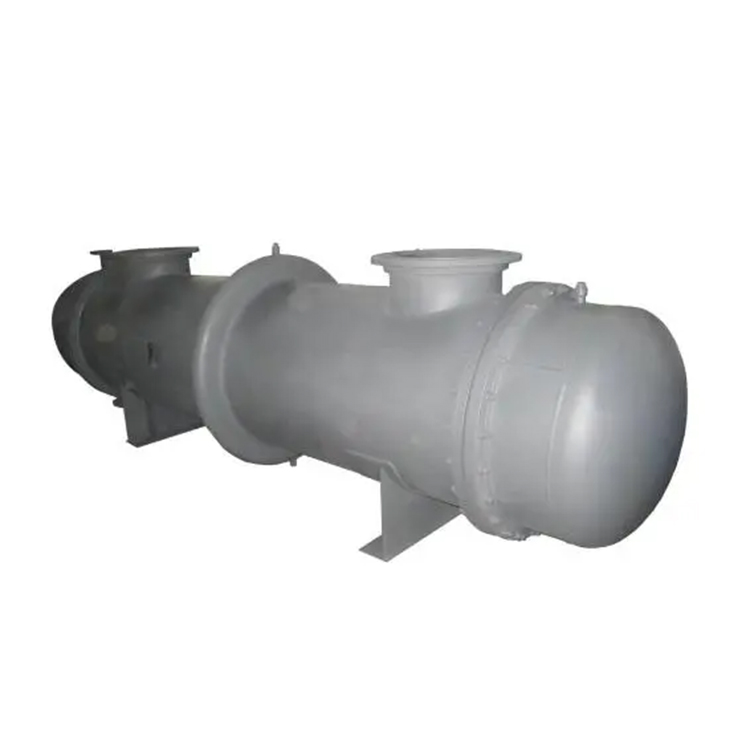

Heat Exchanger Equipment Analysis and Usage Guide
---
I. Equipment Advantages
High-efficiency heat exchange performance
- Utilizing multi-channel design (plate/pipe/air-cooled), combined with turbulent enhancement technology, the heat exchange efficiency meets the cooling needs of high-temperature fluids in the industrial field.
Closed-loop coolers utilize both spray water and air convection for dual heat dissipation, achieving the recycling of pure water and reducing water consumption.
Flexible structure and compatibility
- Supports vertical/horizontal installation: Vertical structure saves space, horizontal design has lower pressure drop, and strong shock resistance.
- Compatible with various medium temperatures (-20℃ to 200℃), meeting the demands of power, chemical, metallurgy, and more scenarios.
3. Energy-saving and environmental protection features
- Heat pipe heat exchangers transfer heat through the natural circulation of working fluid, with no additional power consumption and low carbon emissions.
- The waste heat recovery efficiency is significantly high; for instance, flue gas waste heat recovery systems can lower the exhaust gas temperature to below 100℃, thus improving energy utilization.
4. Materials & Reliability
- Available in materials such as Q345R carbon steel, 304/316L stainless steel, or titanium alloy, offering excellent corrosion resistance and a service life of over 15 years.
The floating head design eliminates thermal stress, accommodates temperature fluctuations, and reduces the risk of leakage.
---
Customization Parameters Requirements
| Parameter Category | Specific Requirements |
|---------------------|-----------------------------------------------------------------------------|
Core Performance | - Operating Pressure Range: 0.6~6.4 MPa (Separately set for tube side/shell side)
| | - Temperature Range: -20℃ (Low Temperature) to 200℃ (High Temperature), with clear difference between cold and hot mediums required |
| Structural Parameters | - Tube Arrangement: Triangular (for efficient heat transfer) / Square (for easy cleaning) |
Material Selection: Titanium pipe or 316L stainless steel for corrosive media; carbon steel for ordinary water quality.
| Compatibility Parameters | - Installation Method: Reserved maintenance channel (≥700mm lateral spacing) and thermal expansion displacement |
| | - Connection Standard: Flange interface complies with GB/T 9119, supports customized non-standard diameters |
Special Requirements | - Anti-freezing Design: Electric heating or draining devices must be installed for cold regions
- Corrosion Inhibiting Coating: High molecular compound material spray recommended for inner wall in Cl⁻ medium environment
---
Section 3: Installation and Maintenance Precautions
Installation Requirements
- Basic Treatment: Ensure level deviation is less than 3mm/m, and reserve thermal expansion displacement for sliding supports.
- Welding Standards: Pipe plate and shell welds require radiographic inspection, and the flatness of the sealing surface should be ≤0.1mm.
2. Commissioning and Operation
- For the first operation, flush the pipeline to prevent slag from blocking the flow path; increase pressure slowly at startup (≤0.1 MPa/min).
Monitor the temperature difference between import and export, check for scaling or blockage if efficiency drops more than 10%.
3. Routine Maintenance
- Periodic Inspections: Check the seal condition every 3 months, clean the pipe restraint scaling annually, and conduct pressure resistance tests every 3 years.
- Cleaning Methods: Mechanical cleaning (for removable items), chemical cleaning (material compatibility must be verified).
4. Safety Measures
- The safety valve's opening pressure must be set at 1.05 times the design value, and it should be calibrated every 6 months.
Insulate high-temperature areas to prevent burns to personnel.
---
IV. Recommended Product (Jiuzheng Power, Lianyungang)
- Model Example: JQ series tube shell heat exchangers, offering customizable design, with power range of 5~2000 t/h.
- Key Technical Features:
- Heat recovery efficiency ≥ 85%, compatible with various heat sources such as flue gas and steam.
- Supports remote monitoring with real-time feedback on operating parameters such as temperature and pressure.
- Service Support: Offer installation guidance, regular maintenance training, and quick spare parts supply. For details, please inquire.
---
For further selection support or technical documentation, refer to the "Safety Supervision Regulation for Pressure Vessel Technology" and GB 151 standard.
Heat Exchanger
