



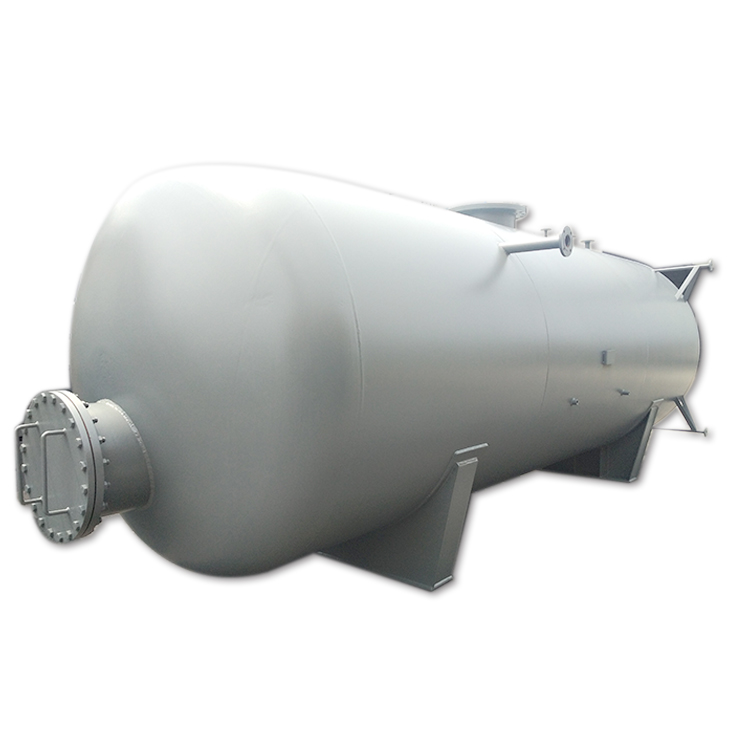
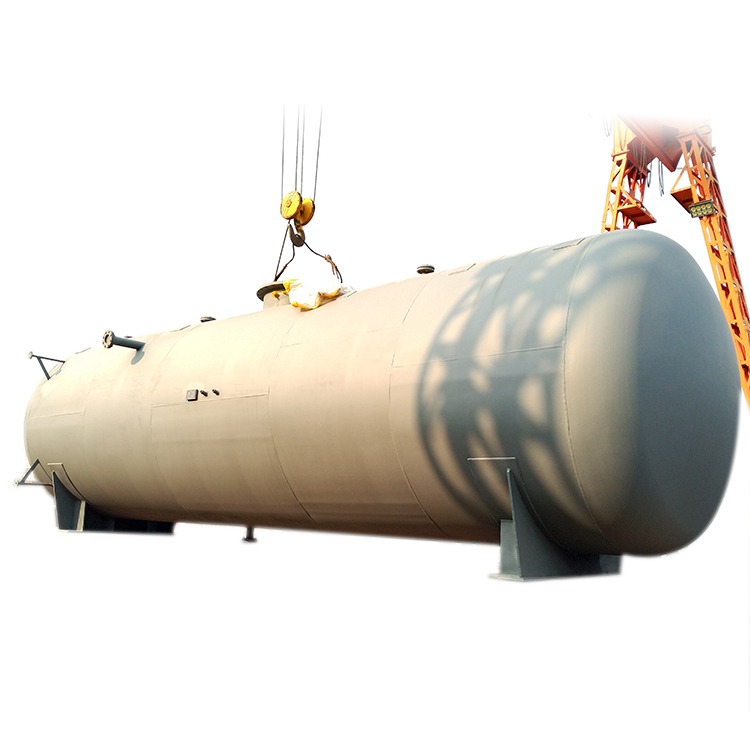

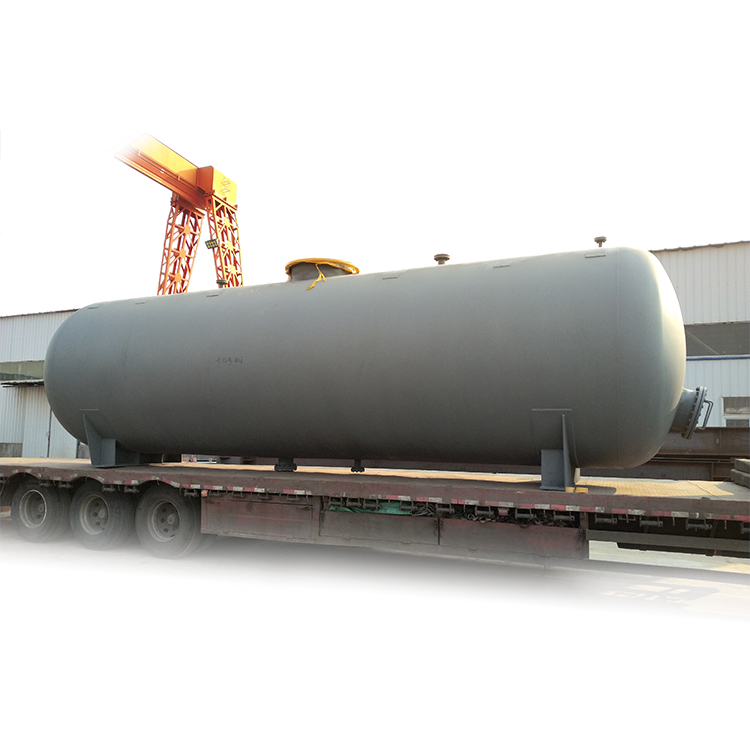
Product Details
One.Preface
Deaerator is a special type of low-pressure thermal deaerator.
In the boiler feed water treatment process, deoxygenation is a very critical step. Oxygen is the primary corrosive substance in the feed water system and boiler. Oxygen in the feed water should be removed quickly, otherwise, it will corrode the boiler feed water system and components. The corrosion will produce ferric oxide, which enters the boiler, sediment or adhere to the boiler tube walls and heating surfaces, forming an insoluble scale that leads to poor heat transfer. Moreover, corrosion can cause pitting on the inner wall of the pipes, increasing the resistance coefficient. In severe cases of pipe corrosion, even pipe accidents may occur. The national regulations stipulate that the evaporation capacity is greater than or equal to2Steam boiler with capacity of more than or equal to tons per hour and water temperature95℃All our hot water boilers are deaerated. Over the years, numerous boiler water treatments have been seeking a cost-effective deaeration method for constant temperature water. Lianyungang Jiusheng Power Auxiliary Equipment Co., Ltd. has years of experience in designing and manufacturing deaerators.JSNCYType Series Integrated Oxygen Remover(Also known as the new type of built-in oxygen scavenger, built-in spray-type oxygen scavenger)The design approach and manufacturing techniques employed offer numerous advantages compared to conventional deaerators in the industry. Currently, several domestic companies, both established and under construction, have adopted the built-in deaerator technology, and all have achieved excellent operational results.
Two.Deoxygenator working principle
The deaerator generally includes two working processes.:
1.One-time Deoxygenation: Water that has not been deoxygenated enters the deoxygenation pipeline through the inlet, and is then ejected through nozzles, forming a mist. The mist falls through the liquid-vapor mesh and is thoroughly mixed with the steam entering through the steam inlet, achieving the deoxygenation temperature. Most of the oxygen in the water is then extracted and expelled through the exhaust port, completing the one-time deoxygenation process.
2.Deaeration: The purpose of secondary deaeration is to maintain the tank's temperature consistently at the deaeration temperature to maximize the deaeration effect. This is achieved by heating the already deaerated water through the auxiliary heating port at the bottom, causing any undissolved oxygen from the primary deaeration to fully precipitate, significantly reducing the oxygen content in the water. At this point, the secondary deaeration is complete.
Three.Integral oxygen remover structure
JSNCYThe Inline Deaerator series consists of components such as a steam-water mixture heater, tank, soft water inlet pipe, secondary heating and boiling tube, thermal insulation board, anti-cavitation device, liquid level gauge, thermometer, automatic overflow tank, safety valve, and electric valve, as shown in the figure.
Four.Internal oxygen scavenger advantages
1.Steam and liquid are instantly mixed evenly, quick heating, high thermal efficiency,Energy-efficient.
2.Carbonated beverage mixing heating steam pressure below,All pressure levels above the heated liquid are suitable.,And not subject to steam pressure being higher than the liquid pressure0.05~0.1MpaRestrictions.
3.JSNCYThe type internal deaerator has minimal vibration and low noise.
4.JSNCYCompact inline deoxygenator, Low investment.
5.JSNCYType integrated oxygen removal device, large temperature rise,Available100℃Above.
6.JSNCYType built-in oxygen scavenger with simple structure, anti-scaling, maintenance-free, and long service life.
7.Industrial low-pressure steam can be utilized as a heat source to produce hot water, saving energy and protecting the environment.
8.Due to the selection of models based on user parameters or specialized design, the product offers good suitability for users, operates smoothly, and meets all user requirements.
Five.Internal Oxygen Remover Selection
Please provide the following information when placing an order:
1.Deaerator rated output
2.Water Tank Effective Volume
3.Work pressure
4.Operating Temperature
5.Inlet water temperature
