
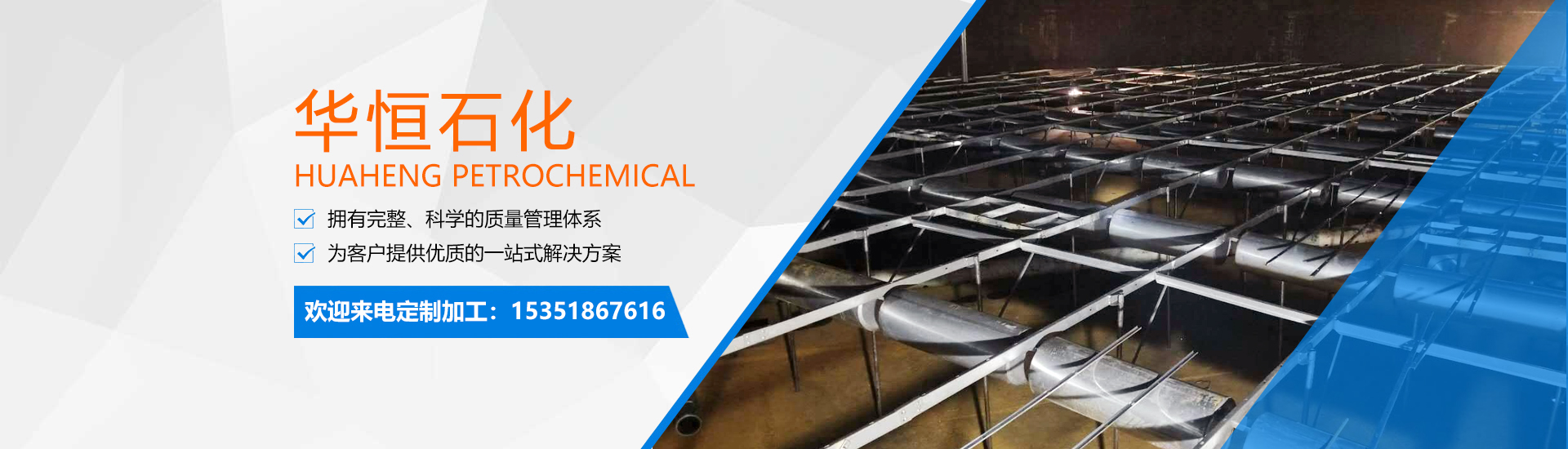

A floating cover is an energy-saving and environmentally friendly device that rises and falls with the liquid level of the storage tank due to buoyancy.
The float disk's skeletal design is in a spiderweb pattern, dividing the entire disk into several small units, and then the cover (deck) is fixed on top of the frame. This forms a honeycomb-like structure that enhances the structural strength and rigidity of the float disk, ensuring smooth operation and preventing any tilting or jamming. This significantly improves the working performance of the float disk. The buoyancy element of the float disk, the float筒, is made using seamless extrusion forming (or, upon customer request and considering cost factors, can be made using rolled sheet welding), with minimal welds and secure sealing, ensuring reliability and safety. The float筒 and structure are designed in a separate unit, allowing for easy adjustment of buoyancy size and distribution, resulting in uniform buoyancy distribution, smooth float top operation, and preventing sinking or jamming.
Floating Skimmer Assembly
For the assembled floating roof: its main components include columns, manhole devices, oil-measuring equipment, venting devices, static electricity conductivity devices, anti-rotation devices, peripheral sealing devices, buoyancy elements, frame (structural part), cover plates, fasteners, etc.
Material
The storage medium type and customer requirements determine the solution.
1. Structural Components: Primarily utilizing a combination of full aluminum alloy, full carbon steel, full stainless steel, and above.
Part 2: Sealing Components: Mainly including nitrile rubber, butyl rubber,三元乙丙橡胶,fluororubber, and polytetrafluoroethylene (Teflon). Available in two types: tongue shape and sac type (filled).
Component Introduction
1. Buoyancy Components: Steel (including stainless steel), aluminum alloy welded pipes Ø260*1.2mm, aluminum alloy extruded pipes Ø188*1.7mm, stainless steel welded pipes Ø260*0.8~1.0mm (customer agrees to non-standard production upon request).
2. Structural sections: profiles in sizes of 70*26*2, 25*8*2, 70*50*3*2, F180*40*2, φ32*2, φ28*2, etc.
3. Lid: Aluminum float disk made of 3A21H24 anti-rust aluminum plate, 1600mm*L*σ=0.5mm; stainless steel 1220 (1000)mm*L*σ=0.5mm, with customer's agreement for non-standard production at σ=0.3mm; steel plate 1000mm*L*σ=0.5mm.
4. Lid Joints: The overlapping seam is 40mm wide, with additional sealing rubber plates installed between joints. The lid is fastened with strips and rivets, with a rivet spacing of less than 80mm.
5. Anti-Turn Device: Utilizes flexible stainless steel wire rope to prevent turning, ensuring no jamming of the disk.
6. Static Dissipative Equipment: Utilize 25mm2 single-core copper cable (steel, stainless steel buoyant disk) or stainless steel wire rope (aluminum buoyant disk) in accordance with specifications.
Performance Indicators: Storage tank operating pressure: positive pressure 1961 Pa, negative pressure 490 Pa; Energy saving and consumption reduction rate ≥ 98%
Operating Temperature: Room Temperature; Ground Resistance < 10Ω; Buoyancy ≥ Twice the Weight of the Floating Plate
Installation of floating roof storage tanks requires the following conditions:
The tank must be fully constructed, with all tank tops, walls, and internal accessories properly installed. The interior wall joints must be ground smooth, free of burrs. Any anti-corrosion requirements within the tank must be completed, and the tank must undergo settlement testing.
