

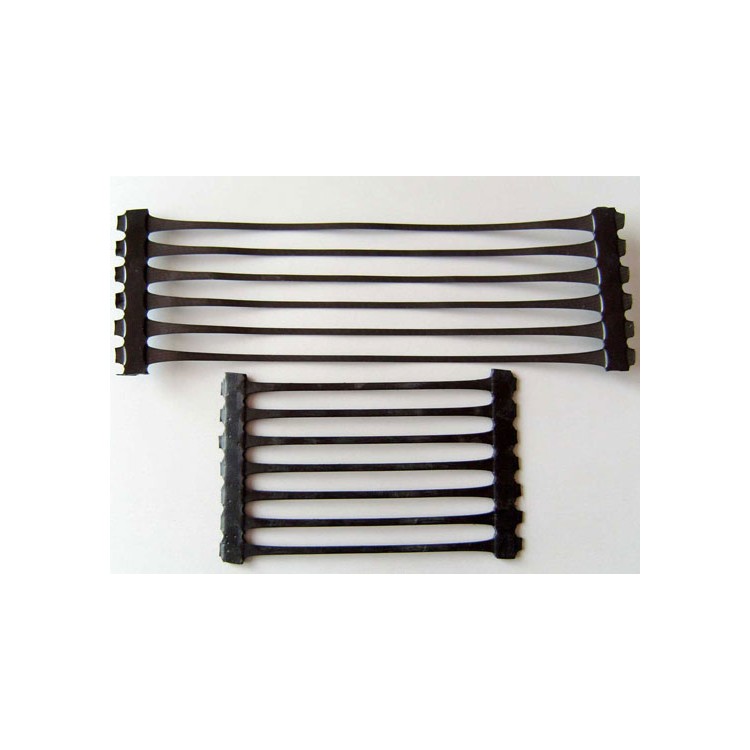
Unidirectional Stretch Geotextile Grid
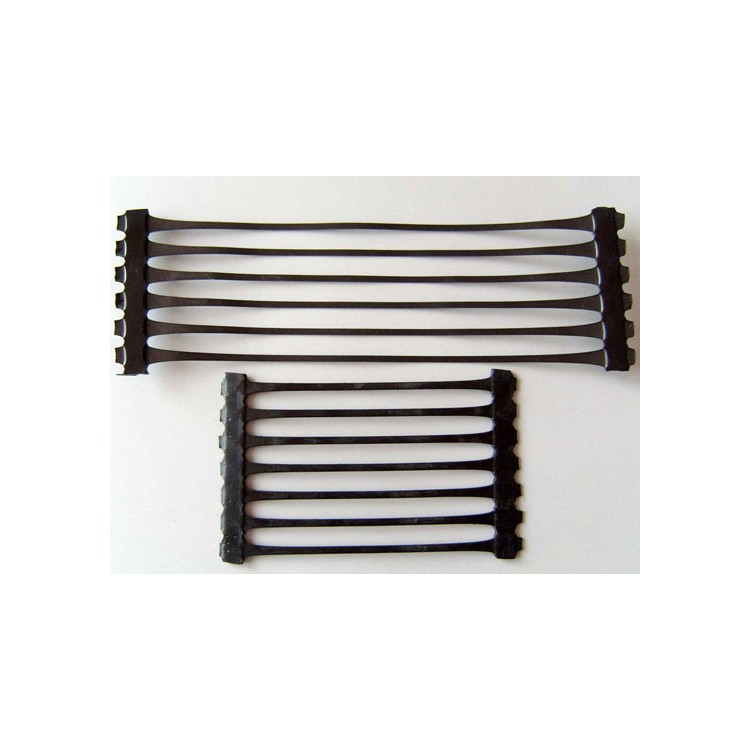
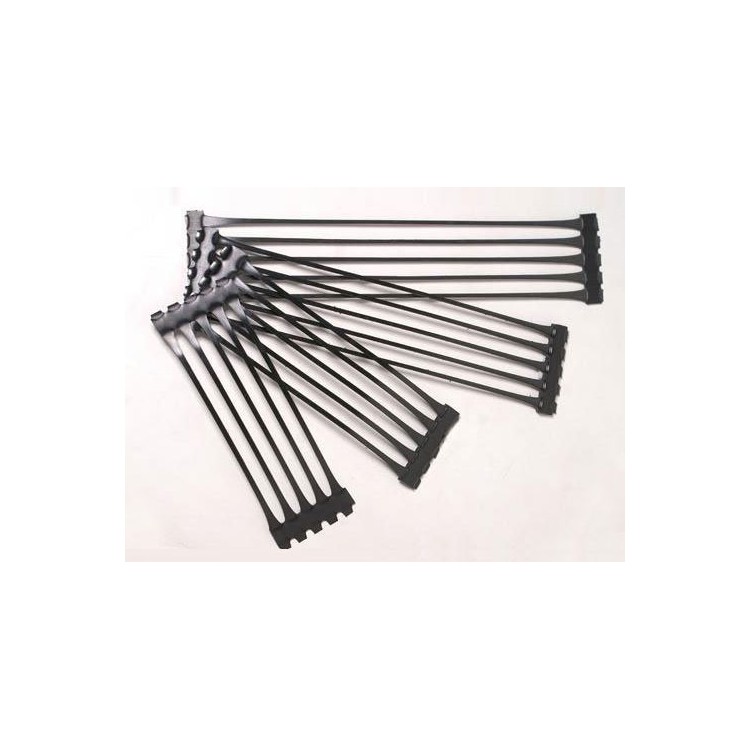
Polyethylene单向拉伸geotextile is made from high-density polyethylene (HDPE) through plasticized extrusion, punching, heating, and stretching. The stretching process reorients the originally disordered chain molecules into a linear state, enhancing the tensile strength and rigidity of the geotextile. When laid in the soil, it forms a stress transfer mechanism through the interlocking action between the geotextile's mesh and the soil mass, allowing local loads to rapidly and effectively spread over a large area of soil, thereby reducing local destructive stress and extending the service life of the project.
The outstanding advantage of polyethylene单向拉伸geogrid is its minimal tendency to deform (creep) under long-term sustained loads, with its creep resistance strength far exceeding that of other geogrid materials. This plays a crucial role in extending the service life of engineering projects.
This product is suitable for reinforcing soil-retaining walls, embankments, bridge decks, steep slopes, and geotextile cells for road, railway, and riverbank construction projects. Its function includes enhancing the load-bearing capacity of retaining walls or embankments, extending service life, reducing land occupation, shortening construction time, lowering costs, and minimizing maintenance expenses.
The geogrid with unidirectional stretching is formed by extruding and pressing high molecular polymer into a thin plate and then punching it into a regular grid pattern, followed by longitudinal stretching. This process aligns the high molecular polymer into a directional linear state, forming a uniform, high-node strength, long elliptical mesh structure. This structure boasts a high tensile strength and modulus, especially our products, which have an ultra-high early tensile strength and modulus (up to 2%-5% elongation). It provides an ideal force-bearing and diffusing连锁 system for soil. The product has a high tensile strength (>150Mpa), is adaptable to various soils, and is widely used as a reinforced material for soil reinforcement.
Application
A unidirectional tensile geogrid is a high-strength geosynthetic material. It is widely used in embankments, tunnels, docks, highways, railways, and construction fields. Its main applications include:
1. Strengthen the subgrade to effectively distribute and dissipate loads, enhancing stability and load-bearing capacity, and extending service life.
2. Can withstand greater alternating loads.
3. Prevent subgrade material loss leading to deformation and cracking of the subgrade.
4. Enhances the self-supporting capacity of backfill behind retaining walls, reduces soil pressure on the retaining wall, saves costs, extends service life, and lowers maintenance expenses.
5. Integrating shotcrete construction techniques for slope maintenance not only saves 30% to 50% of investment but also cuts the construction period by more than double.
6. Adding geogrids to the subgrade and surface of highways can reduce settlement, minimize rutting, and delay the appearance of cracks by 3 to 9 times, potentially reducing the thickness of the structural layer by up to 36%.
7. Suitable for various soil types, no need to source materials from elsewhere, saving both time and labor.
8. Simple and quick installation, significantly reducing construction costs.

