



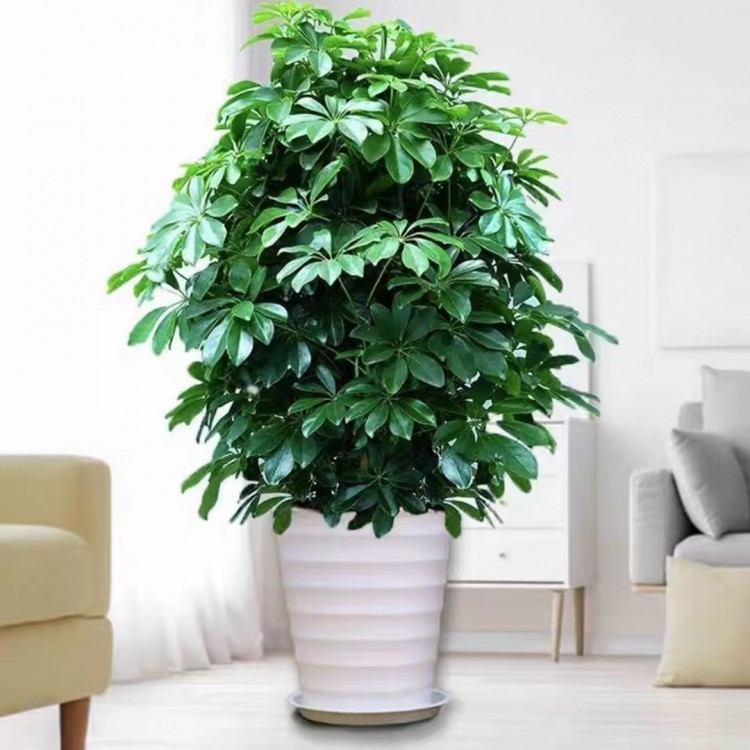

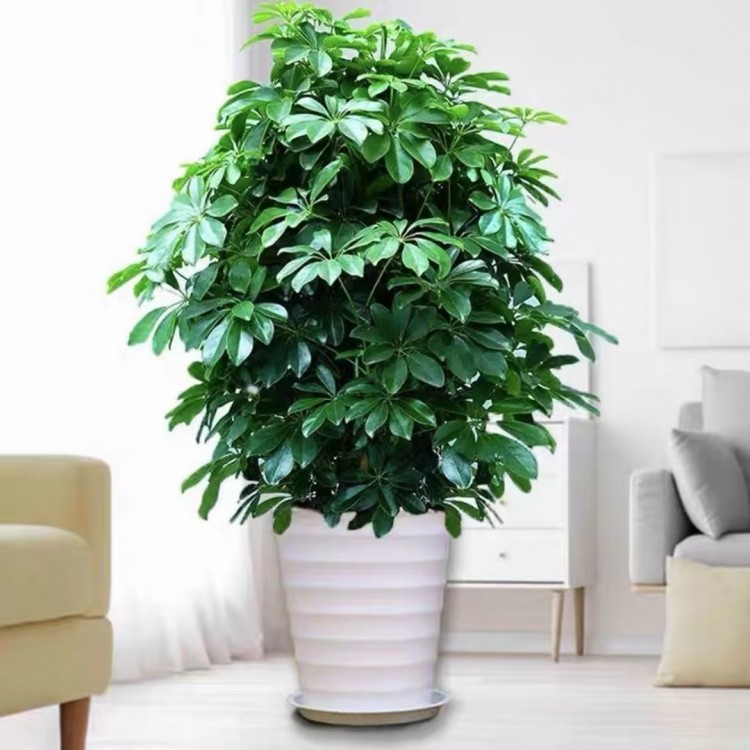
Heptapleurum heptaphyllum (L.) Y. F. Deng, an evergreen shrub of the Araliaceae family, can reach heights of 2 to 15 meters with a trunk diameter of over 30 cm. The branches are robust and develop wrinkles with age. Young branches are covered in dense star-shaped hairs that gradually fall off as the plant matures. The leaflets are elliptical or inversely elliptical, with tips that are acute or slightly obtuse, gradually becoming pointed. The inflorescence is conical, densely covered in star-shaped hairs, which later fall off, and sometimes bears a few solitary flowers, white in color and fragrant. The fruit is spherical, measuring about 1 mm in length.
Fatsia japonica is a common evergreen broadleaf forest plant found in tropical and subtropical regions, native to subtropical rainforests in Oceania, Guangdong and Fujian provinces of China, as well as South America. It is also distributed in Japan, Vietnam, and India, and is now widely cultivated globally. Fatsia japonica thrives in semi-shaded conditions and is not very cold-resistant, preferring moist, humus-rich, slightly acidic soil.
The wood of Fatsia japonica is soft and can be used for matchsticks and as material for steaming baskets; its leaves and bark are traditionally used in folk medicine for symptoms such as influenza and bruising.
Its leaves extend like a palm, evergreen throughout the year, symbolizing "attracting wealth and accumulating treasures." Suitable for large potted plants, perfect for hotel lobbies, library reading rooms, and museum exhibition halls as ornamental plants.
Blades can absorb nicotine and other harmful substances from smoky air.