

“Long ChiangProduct Introduction and Design & Production Process of Brand Grid Bridge Fitting
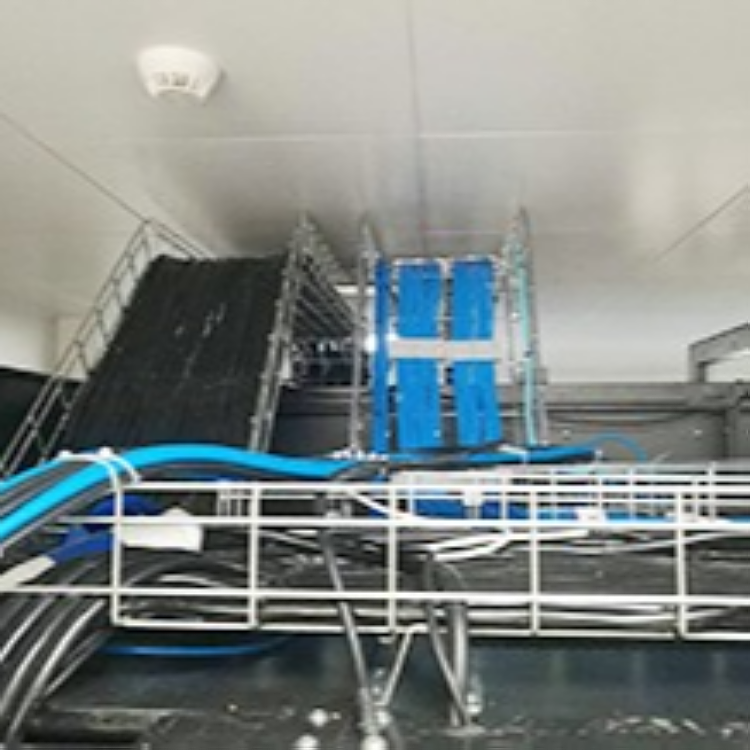
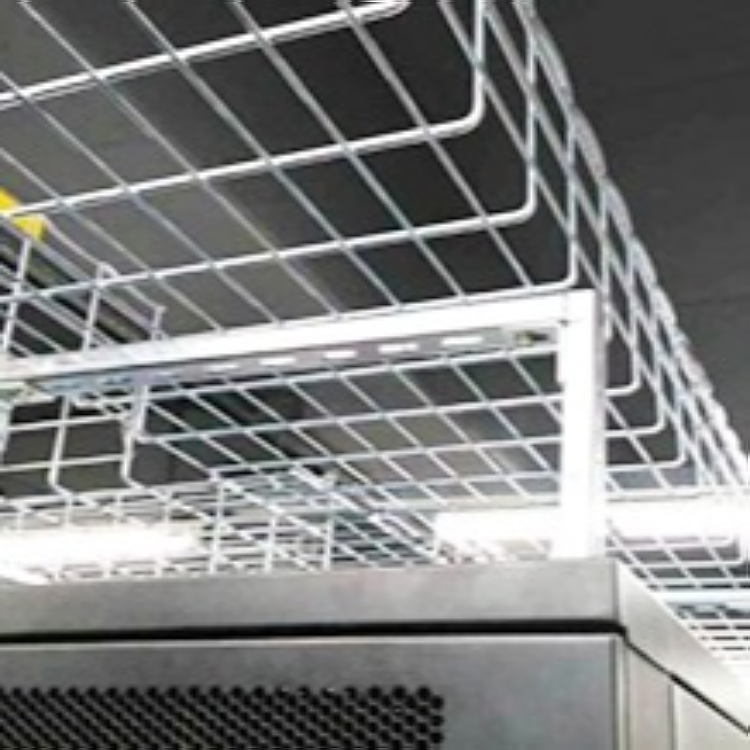
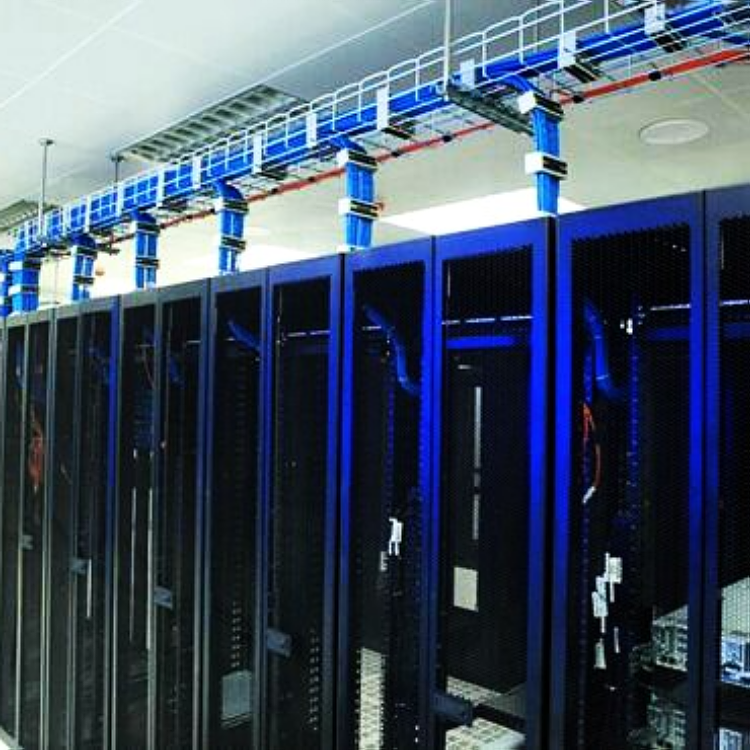
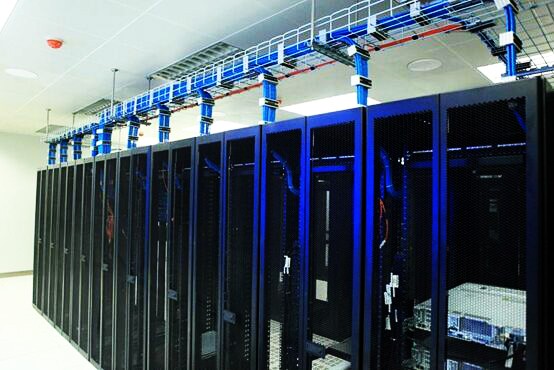
“Long ChangBrand Grid Bridge SupportAccording to"Power Installation Cable Bridge, Ladder System"IEC 61537 StandardDesign and production。Suitable for overhead installation in indoor and outdoor environments, including power cables, control cables, lighting wiring, and data cables for server rooms.
The product boasts multiple advantages::
1. New look, versatile assembly, aesthetically pleasing, innovative, eye-catching, offering a fresh perspective.
2. This product is suitable for installation in various situations, with convenient, flexible, quick, and simple wiring, maintenance, and upgrades. It meets stringent quality requirements and installation standards, greatly facilitating the process.
Customers can manage cables more easily.
3. The "easy-to-deform" structure and "quick-install components" significantly reduce the time required for bridge falsework installation and cable wiring.
4. Effectively reduces the impact of electromagnetic interference.
5. Utilizes its developed structure for more efficient and safe air circulation, preventing water and dust accumulation.
Design, production, inspection standards and requirements:
We offer a variety of material choices for our current products.:
1008,195F,Q235,301,304,3042,316,316L。
Surface treatments include: electroplated zinc, environmentally friendly zinc coating, color zinc, blue zinc, white zinc, zinc-nickel plating, hot-dipped zinc.
Powder coating, electrolytic polishing (stainless steel).
1) Metal mesh cable tray is composed of steel wires in both longitudinal and transverse directions, with the smaller steel wire diameter being:
4mmDiameter for width not exceeding150mmBridge Support
4.5mm diameter for bridge channels with a width of 200mm
5mm diameter for bridge channels with a width of 300mm
6mm diameter for bridge channels with widths of 400mm, 450mm, 500mm, and 600mm.
2) The top steel wires on both sides of the bridge架 are made of "TForm weldingEstablish a safety margin.
3) Each grid size of the bridge is 50mm x 100mm
4) Bridgeway installation methods include suspended mounting, wall-side installation, underfloor or cable trench installation. The installation spacing for large support components is2.5mAnd shall not exceed the maximum load-bearing capacity specified by the manufacturer for the cable tray.
5) The average tensile strength of all welds is 500 kg.
6) Testing
a). In accordance with European standardsCEI/61537, the load-bearing and deformation characteristics of the bridge架 must be tested, and the results must be published.
b). Must undergo independent testing to determine if the support parts are suitable forCat6 Data cables.
c). As perE30/E90Standard compliance fire resistance test.
d). Continuous electrical conductivity of connecting components must be tested using known methods and results.
Surface Treatment
i). Electroplated ZincBSEN 12329-2000Level 2) Suitable for indoor installation;
ii). Galvanized zinc coating thickness (BS 729) At60To80Within micrometers;
iii). Stainless Steel AFNOREZ CND 17.2 /AISI 316L)
Test Requirements: Refer toROHS Directive 2002/95/EC and subsequent amendments.
Testing Method: Refer toIEC62321/2ndCDV(111/95/CDV):Procedure for Determining the Content of Restricted Substances in Electronic and Electrical Products
(1) Determine cadmium content using ICP measurement
(2) Determine lead content using ICP and AAS.
(3) Determine mercury content using ICP
(4) Determine the content of hexavalent chromium using the spot test method/colorimetry.
Test Results:
Test Results of Chemical Methods (Unit:mg/kg)
Test Items | Method (see) | 1 | MDL | ROHS Limit Values |
Cadmium (Cd) | (1) | ND | 2 | 100 |
Lead (Pb) | (2) | ND | 2 | 1000 |
Mercury (Hg) | (3) | ND | 2 | 1000 |
Spot Test/Fuming Extraction Method for Hexavalent Chromium (CrVI)) | (4) | Negative | See Note (4) | # |
Test Part Appearance Description:
1、 Silver blue metal
Note:
(1) mg/kg = parts per million (ppm)
(2) ND = Not Detected
(3) MDL = Limit of Detection
(4) Spot testing method:
Negative = Hexavalent Chromium Not Detected in Coating, Positive = Hexavalent Chromium Detected in Coating
When the spot test results areNegative or uncertain, the boiling water extraction method will be used for further result verification.
Boiling Water Extraction Method
Negative = Hexavalent Chromium not detected in coating
Positive = Hexavalent Chromium detected in the coating indicates that the concentration of hexavalent chromium in the boiling water extract of the tested sample with an area of 50 cm² is equal to or greater than 0.02 mg/kg.
(5) #= Positive indicates the detection of hexavalent chromium on the tested sample.
Negative indicates no hexavalent chromium detected on the tested sample.
Reference to the higher permissible limit2002/95/EC RoHS Directive and subsequent amendments including 2005/618/EC.
Test Conclusion: Based on the tests conducted on the samples submitted, the results align with the EU standards.In compliance with the requirements of the ROHS Directive 2002/95/EC and subsequent amendments.
Hot-dipped galvanized
Inspection Criteria:JB/T10216-2000 "Cable Trays for Electric Control and Distribution"
Sequence Number | Inspection Project | Single Please provide the Chinese content to be translated. | Standard Regulation | Test Results | Single Item Determine | |
1# | 2# | |||||
1 | Coating thickness | um | ≥65 | 70 | 67 | Qualified |
2 | Adhesion | Grade | The zinc layer should not exhibit peeling, flaking, or bulging upon lever etching testing. | Compliant | Qualified | |
3 | 48-hour salt spray test | Grade | After 48 hours of salt spray testing, not less than 3 as specified in Table 6 of JB/T6743-1993. | 3 | Qualified | |
Inspection Conclusion: The sample has been inspected and all inspected items comply.Requirements specified in JB/T10216-2000 standard.
Product Load Capacity Comparison Table
Iron-made:
Specs (MM) | Carrying Capacity (KG/M) | Note | |
Standoff spacing: 1.5 meters | Standoff spacing: 2 meters | ||
30*50(100) | 10 | 7 | |
30*150 | 12 | 7.5 | |
30*200 | 16 | 10.5 | |
30*300 | 22 | 13 | |
54*50(100) | 20 | 13 | |
54*150 | 30 | 20 | |
54*200 | 39 | 30 | |
54*300 | 67 | 40 | |
54*400(500) | 105 | 65 | |
54*600 | 122 | 70 | |
105*100 | 41 | 30 | |
105*150 | 60 | 45 | |
105*200 | 80 | 55 | |
105*300(400) | 120 | 83 | |
105*500(600) | 145 | 90 | |
Stainless steel made:
Specification (MM) | Load Capacity (KG/M) | Note | |
Bracket spacing: 1.5 meters | Bracket spacing: 2 meters | ||
30*50(100) | 9 | 6 | |
30*150 | 11 | 7 | |
30*200 | 15 | 9 | |
30*300 | 21 | 14 | |
54*50(100) | 21 | 15 | |
54*150(200) | 25 | 18 | |
54*300 | 46 | 28 | |
54*400 | 70 | 45 | |
54*500(600) | 105 | 75 | |
105*100(150) | 39 | 24 | |
105*200 | 62 | 42 | |
105*300 | 75 | 55 | |
105*400 | 110 | 75 | |
105*2500(600) | 135 | 90 | |
Note:
1) The values in the table are not exact.
2) When the spacing of the bracketsAt 1.5 meters, the descent distance from the bridge's center to the origin is not more than 7.5MM when carrying the weight specified in the load table. When the bracket spacing is 2 meters, the descent distance from the bridge's center to the origin is not more than 10MM when carrying the weight specified in the load table.
3) Due to the greater toughness of stainless steel compared to iron, its bearing capacity is relatively lower.
