

Geotextile格栅 must be laid in accordance with the requirements during special construction.
Firstly, level the slope bottom, clear tree roots and sod, fill in the ditches, ensuring the flatness of the slope bottom with no local differences greater than 10CM. Stack sandbags at one end of the slope surface evenly, filling the gaps between bags with soil. The sandbag filling rate should be between 70%-80%, as the stacked sandbags serve as a soil barrier and a formwork, also reinforcing the slope face.
At the slope end, the mold is constructed using rectangular strips and T-shaped steel strips, which do not require connection. However, for ease of disassembly, wedges can be inserted between the long strips and the L-shaped steel strips. During demolding, the steel fiber is inserted into the gap between the strips and the steel plate to pry it out.
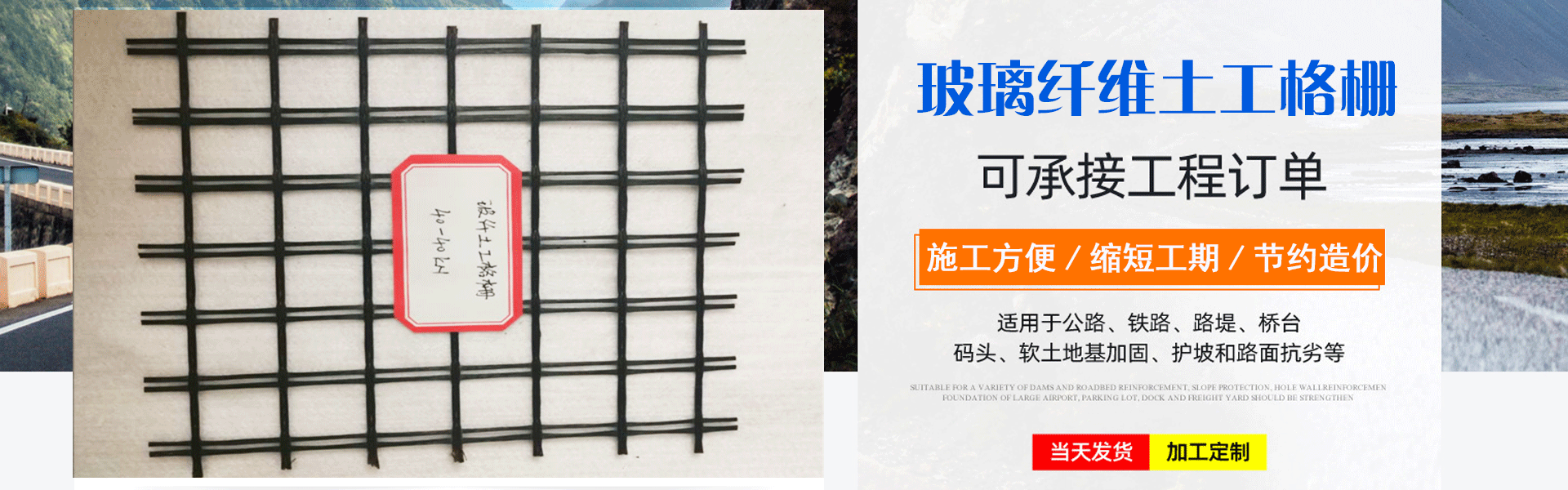
Next, fold and secure the geogrid at the slope end: The horizontal length of the folded geogrid at the slope end is 1.5-2.0 meters. As the fill height reaches 2-3 stories, fold and secure the geogrid into the fill, then continue filling, burying the folded end into the soil. Generally speaking, when the slope angle reinforced with glass fiber geogrid is less than 45 degrees, there is no need to fold and wrap the geogrid to ensure local stability of the slope surface.
News Center Co., Ltd.
