
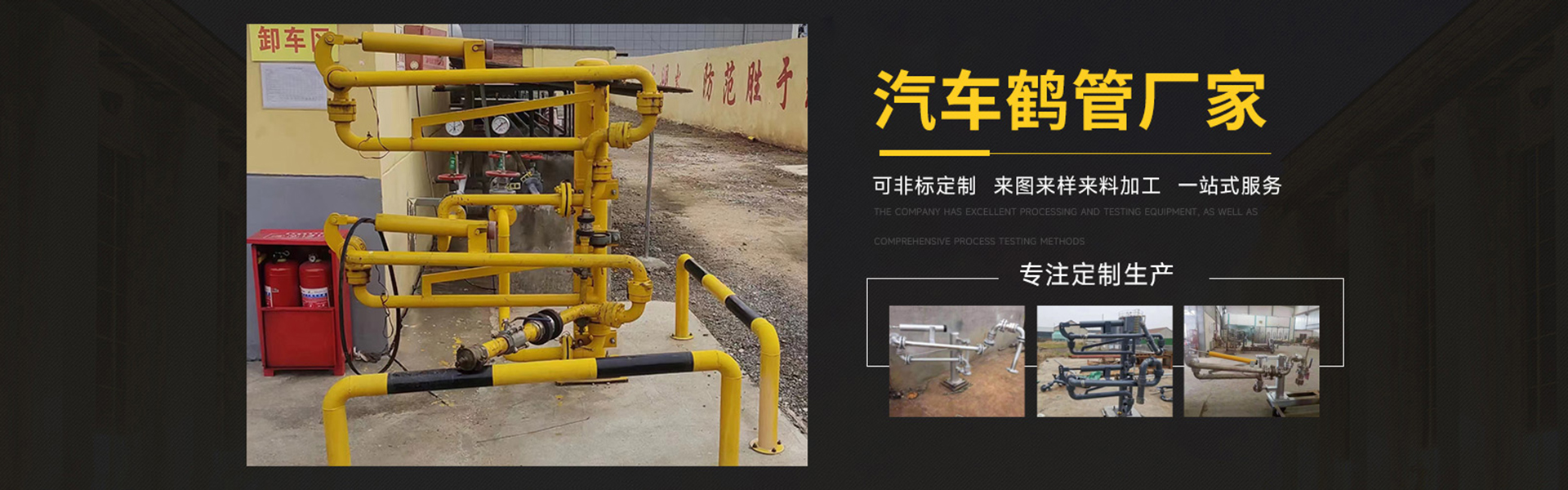
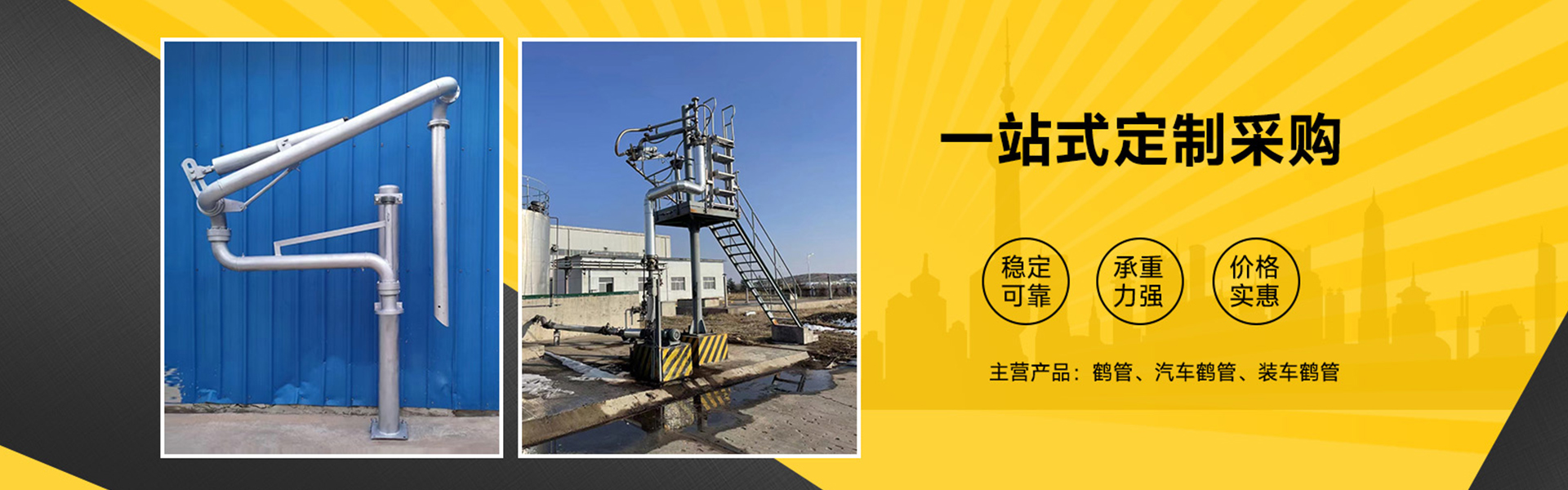
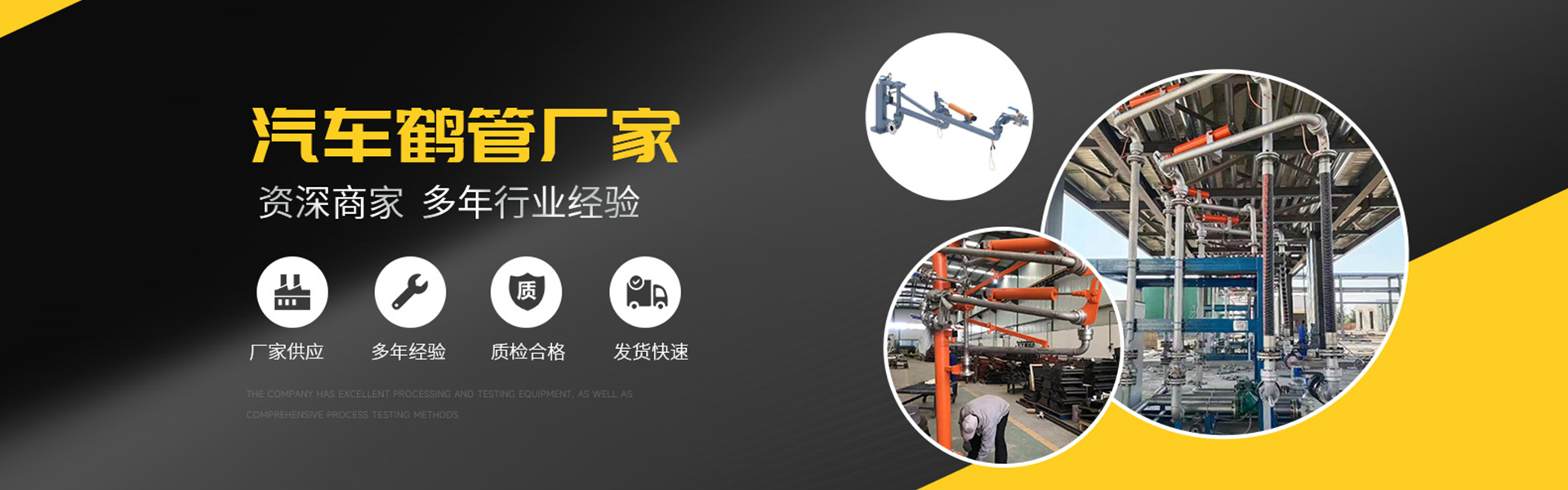


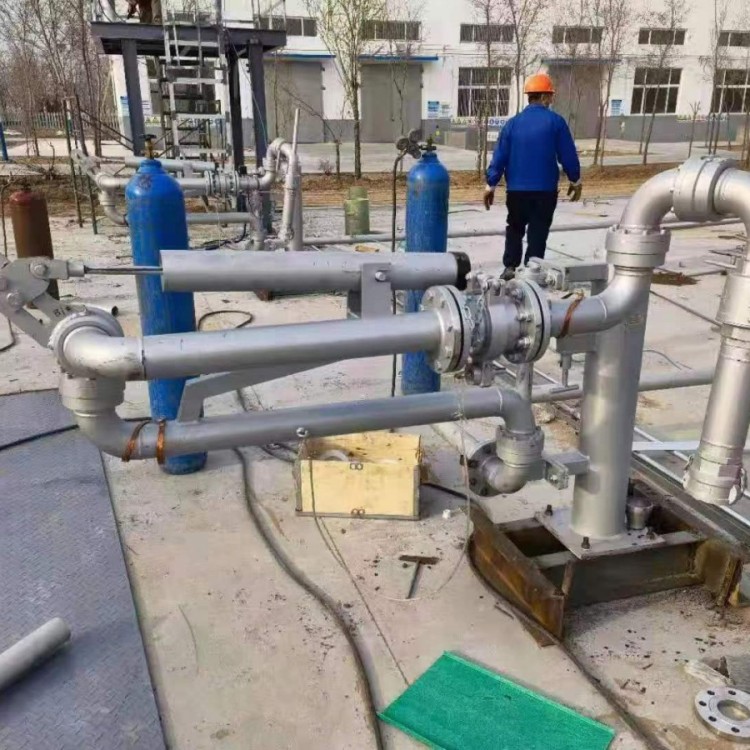
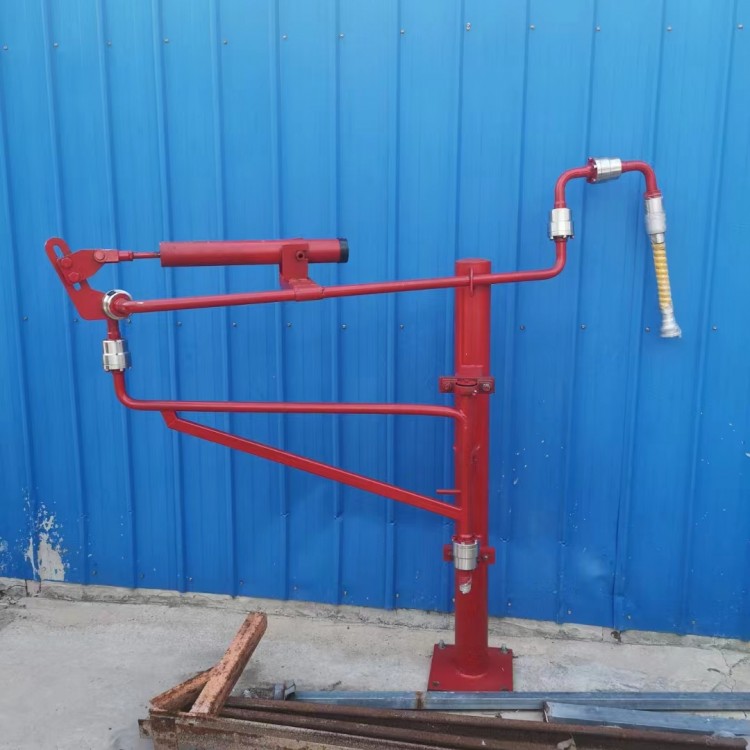
The鹤管, also known as a liquid loading and unloading arm, consists of rotating joints, inner arms, outer arms, vertical pipes (for land use), three-dimensional joints (for ship use), balancers, control systems, and other components. It is primarily used as loading and unloading equipment for liquid mediums in truck tankers, train tankers, or tank ships.
Features of the crane pipe:
Compared to the traditional flexible hose connections, the crane pipe utilizes a rigid connection method, supplemented by safety features like emergency disengagement, effectively preventing incidents such as pipe bursts and fractures, offering high reliability.
2. The swivel joints are made with superior double-roller technology, featuring easy 360-degree rotation, zero leakage, and convenient maintenance.
3. The flexible, balance-weighted spring cylinder balancer ensures easy and effortless operation of the loading and unloading arm, allowing a single person to connect pipes to tank trucks with ease and effortlessly control the loading and unloading process.
4. Customized dimensions based on customer's loading and unloading range requirements; during the process, the tank truck moves synchronously within the normal range of the tank truck's movement.
5. Pipelines are made of materials like carbon steel, stainless steel, and aluminum alloy, depending on the type of liquid medium, offering long service life.
6. The pipeline can be lined with PTFE and equipped with a heating system, capable of transporting various liquid mediums such as hydrochloric acid, asphalt, etc.
7. Utilizing an enclosed loading and unloading operation method, it can reduce the volatilization of the medium, thereby mitigating environmental pollution.

Main components and accessories of the crane pipe:
1. Pillar: Provides support, bearing the torque of the arm's extension.
2. Swivel Joint: Comprising rotating parts and sealing elements, primarily used for connecting different components of liquid loading and unloading arms, enabling relative rotation and capable of bearing loads.
3. Inner Arm: A component used for connecting the conveying pipeline and connecting with the outer arm.
4. Outer Arm: Rotates within the range of horizontal and vertical planes, primarily used as a component for adjusting the alignment of the loading and unloading arm with tank trucks and tank ships to align their working positions.
5. Balancer: A component used to balance the torque of the outer arm.
6. Downpipe: A pipe that can be connected or inserted into the opening of a tank car, tanker ship, or tank.
7. Reset and Locking Mechanism: In the event that the loading and unloading arm is not in operation, the arm is reset to the stack platform and locked in place. This is for two reasons: first, to minimize the space occupied by the arm, and second, for safety reasons, such as to prevent damage to the arm during strong winds. The outer arm of the open-style loading and unloading arm is equipped with an outer arm locking device. Once the arm is extended and ready, the outer arm is locked, thereby avoiding any unsafe factors that may arise from vibrations of the outer arm during filling, which could potentially cause collisions with the tanker's hatch.
8. Anti-static Device: Designed to dissipate static electricity that may occur during loading and unloading processes, and to prevent damage to the rotating joint caused by static electricity, ensuring the operational performance and reliability of the crane pipe.
9. Vacuum Short-Circuit Device: A device used after the fluid loading and unloading process to connect the inside and outside of the pipeline, facilitating the draining of any remaining liquid inside. It ensures no residue is left in the pipeline, reducing on-site contamination for users, and also enhances the reliability for subsequent operations of this product, especially for high-viscosity fluids, where its superiority is more pronounced.
10. Ball valves, bursting disks, and dry valves.
11. Sealing Cap: Forms a tight fit over the can mouth for sealing purposes.
Quality is our company's primary lifeline; we must consciously adhere to the principles of quality. Customers are the hope of our company; we must meet their expectations and requirements. By extensively collaborating with friends from all walks of life, let's join hands to forge ahead and create a beautiful future together.
