


Wool felt is processed from wool through felting, utilizing its shrinkage properties. Its applications are extremely versatile.
1. Wool felt boasts stable structural properties and is not prone to shedding, allowing it to be stamped into various shapes of felt pads.
2. Possesses excellent wear resistance, suitable for use as polishing material.
3. The felt structure is densely organized with small pores and is not restricted in thickness, making it an excellent filtering material.
4. Elastic and versatile, suitable as underlay material for shock absorption, sealing, padding, and elastic wire mesh.
5. Excellent heat and sound insulation properties, suitable as insulation and soundproofing materials.
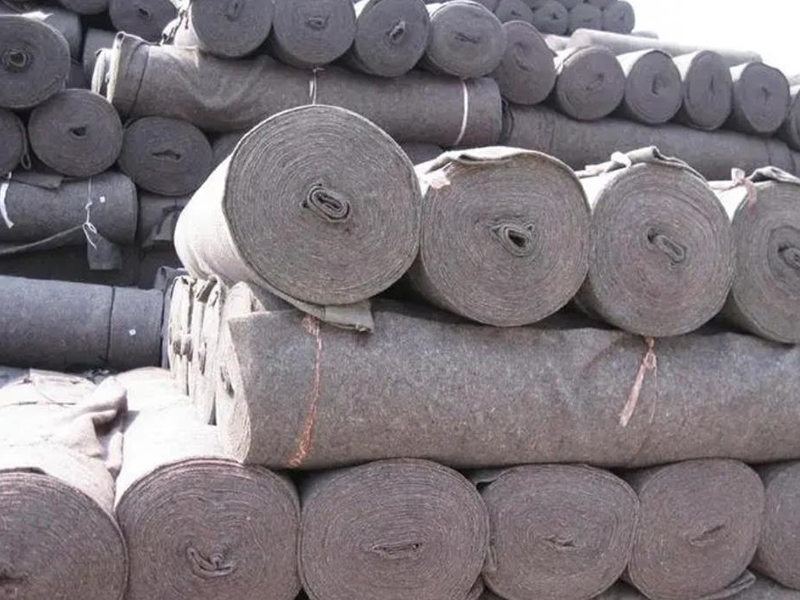
The Felting Process: Wool -- Sorting (removing skin ends from the wool) -- Opening (unrolling purchased wool) -- Cleaning (extracting impurities) -- Carbonization -- Drying or air-drying -- Combing (processed by combing machine) -- Laying Out (arranging wool in a mesh pattern) -- Molding (rolling the wool blank with a flat machine) -- Beating (adjusting the hardness of the felting blank) -- Shrinking (processing the density of the felt) -- Compacting (smoothing the felt with a compaction machine) -- Beating Again (second processing for felt density and interlocking) -- Bleaching (adjusting the color of the felt to the customer's requirement, usually around 6 hours) -- Wringing Out -- Quality Inspection -- Drying -- High-Temperature Shaping -- Mothproofing Treatment -- Felting Blocks or Felting Pads -- Felting Strips and Other Felting Products -- Quality Inspection -- Storage.
