
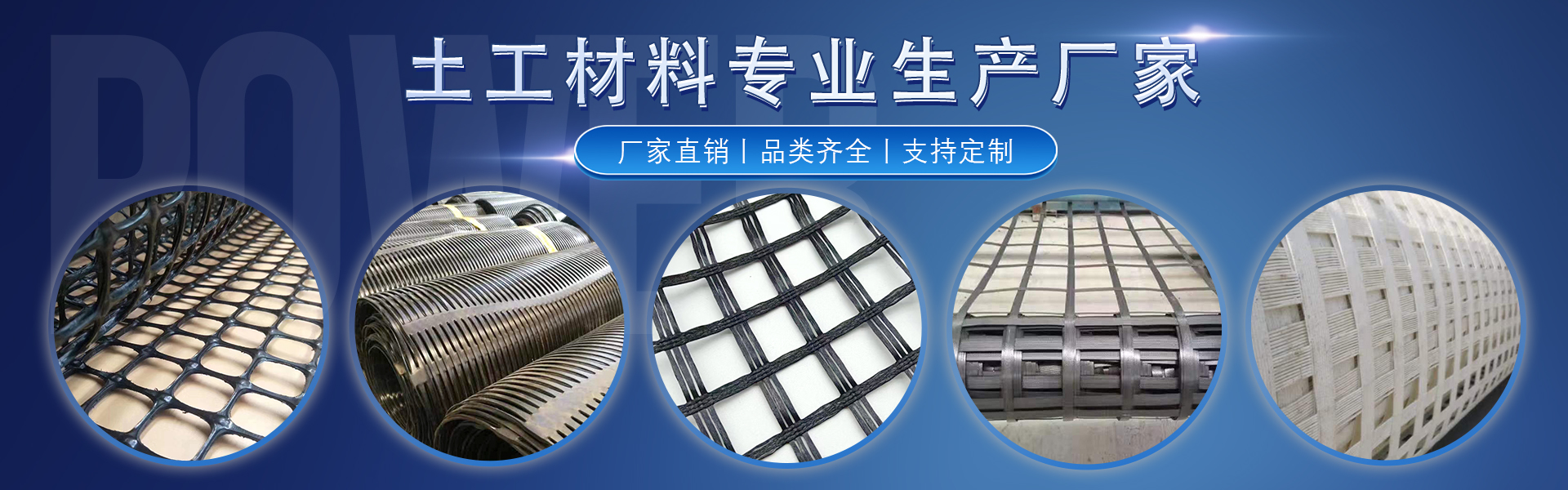


Glass Fiber Geogrid is an excellent geosynthetic material used for road reinforcement, strengthening of old roads, and加固ing subgrades and soft soil foundations. The high-strength, alkali-free glass fiber in the Glass Fiber Geogrid...
Manufactured from an advanced warp-knitting process, this semi-rigid product features a mesh base material, coated for smoothness, offering high tensile strength in both warp and weft directions, along with low elongation.
Our product boasts high strength and excellent properties such as high-temperature resistance, low-temperature tolerance, anti-aging, and corrosion resistance. It is widely used for reinforcing asphalt and cement road surfaces, as well as subgrades, and for the reinforcement of railway subgrades and embankments.
Engineering projects including slope, airport runway, and sand control and desertification prevention.
The main component of glass fiber is silicon dioxide, an inorganic material with stable physical and chemical properties. It boasts high strength, high modulus, excellent wear resistance, and superior cold resistance, with no long-term creep: good thermal stability. The reticular structure enhances the interlocking and restriction of aggregates, thereby improving the load-bearing capacity of asphalt mixtures. Due to the special modified asphalt coating on its surface, it possesses two...
Enhanced composite properties have improved the wear resistance and shear strength of the geogrid.
Main Applications of Geotextile Glass Fiber Grid
1. Rejuvenate old asphalt concrete surfaces, reinforce the asphalt overlay, and prevent diseases.
2. Concrete road surface renovations lead to composite paving, resulting in reflective cracking due to plate contraction.
3. Road expansion project to prevent cracks caused by the combination of old and new sections and uneven settlement.
4. Reinforcement treatment for soft soil foundation, facilitating water drainage and consolidation of soft soil, effective settlement, uniform stress distribution, and enhancing the overall strength of the subgrade.
5. The newly constructed road's semi-rigid base has developed shrinkage cracks; reinforcing has been implemented to prevent the reflection of base cracks causing pavement cracks.
