

Thrust Flow AeratorThe principle of our technology involves accelerating water through a mechanical device, followed by a thorough mixing with gas to dissolve it into the water. During the turbulent flow, the water body is subjected to shearing forces, creating a large number of tiny bubbles that enhance the efficiency of oxygen transfer. Additionally, by stirring the water body, organic waste and sediment are suspended to the water surface, promoting biological degradation and improving water quality.
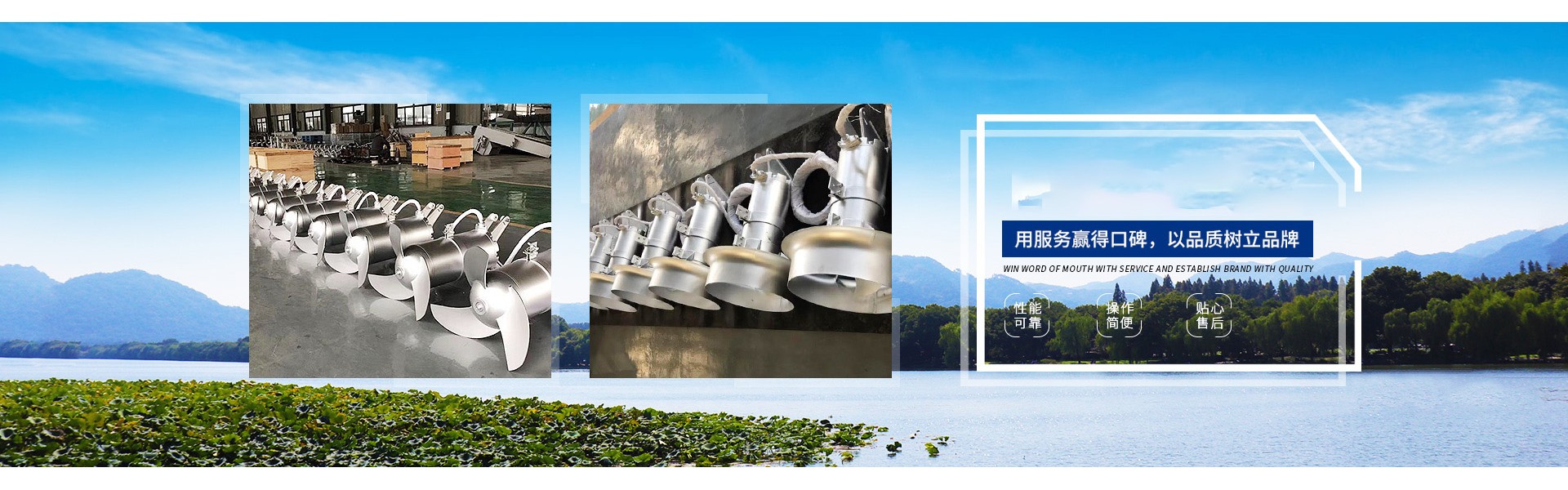
The Thrust Flow Aerator is a device that simultaneously achieves aeration of water and mixing of the water flow. Its structure has some unique features compared to traditional aeration equipment:
The design utilizes a thrust-style approach, generating a multitude of bubbles and water flow through rotating blades. This effectively vaporizes and stirs the water, making it easier for oxygen to dissolve, thereby enhancing oxygen transfer efficiency.
2. Features high efficiency, capable of achieving water aeration and mixing in a short period of time, enhancing oxygen transfer efficiency, and reducing energy consumption.
3. The structure is relatively simple, consisting mainly of the impeller, motor, and bracket, making installation and maintenance quite convenient.
4. High stability during operation, capable of continuous long-term operation, with minimal likelihood of failure, and extended equipment lifespan.
5. Suitable for various types of water bodies, it can flexibly adjust the generation of bubbles and water flow to meet different water body requirements.
Thrust Flow AeratorUsage Notice Details:
1. Regularly clean off surface dust and ensure good ventilation to prevent dust from entering the machine's interior and affecting its performance.
2. Regularly inspect the motor's operational status to ensure smooth operation, maintain cleanliness, and promptly replace any damaged parts.
Ensure stable power voltage to avoid damage caused by frequent fluctuations.
4. Avoid prolonged continuous work or overloading, and regularly check the working temperature to prevent overheating.
5. Regular maintenance and care include cleaning filters, inspecting fan blades and bearings for proper operation, lubricating components, and promptly replacing wear parts.
6. Select the appropriate usage method and working environment based on type and specification to avoid damage due to improper operation.
Ensure a dry and well-ventilated work environment to prevent moisture-related malfunctions.
Avoid severe vibrations during work to prevent affecting the stability and durability of the machine.
9. Regular inspections help identify and address potential issues promptly, extending the product's lifespan.

