

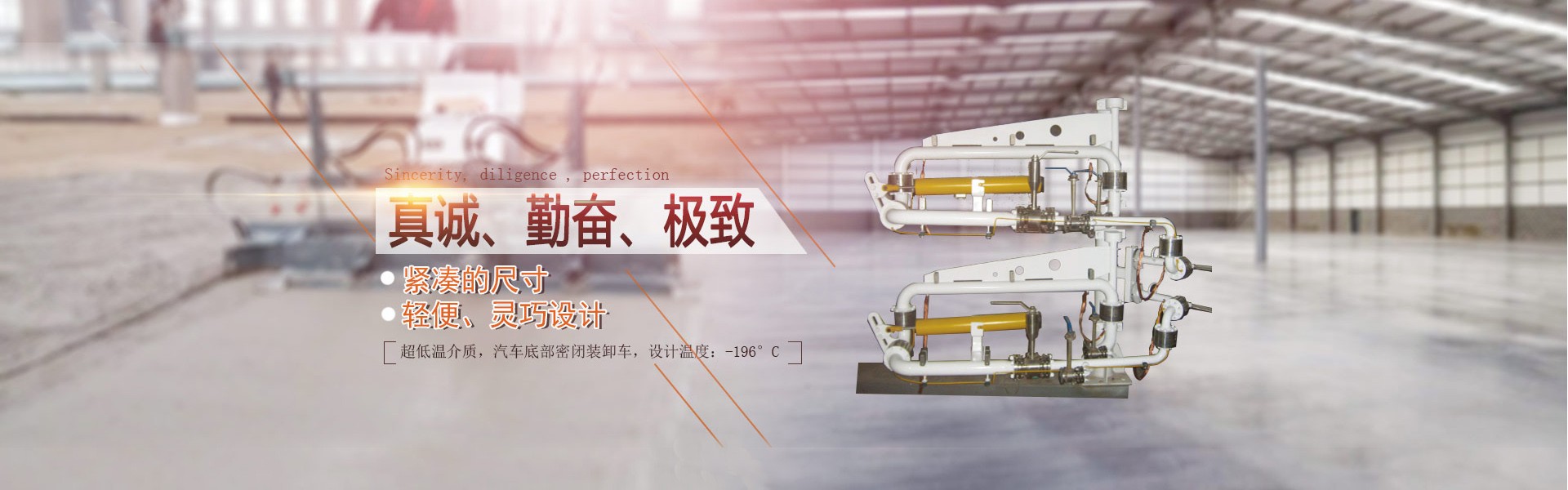


Fluid handling arms, also known as crane pipes, are specialized equipment used for loading and unloading liquid media in truck tanker, train tanker, or tanker ships. The fluid handling arm is mainly composed of rotating joints, inner arms, outer arms, drop pipes (mainly for land use), three-dimensional joints (mainly for marine use), balancers, and control systems. The arm body is made up of telescopic and rotating arms, which are used to connect the conveying pipeline and loading/unloading points; the load arm supports the arm body and carries the fluid in the conveying pipeline; the rotating mechanism allows the arm body to rotate horizontally to find an appropriate loading/unloading point position.
I. Working Principle
The working principle of the fluid handling boom is based on fluid mechanics and mechanical transmission principles, transferring fluids from one location to another through the telescopic and rotational movement of the boom body.
Arm Positioning: The arm rotates horizontally through a rotational mechanism to locate the appropriate loading and unloading point.
Adjustable Telescoping: The telescopic boom adjusts according to specific loading and unloading distance requirements to achieve an appropriate length, ensuring effective connection between the loading arm and the tanker or barge.
Connective Pipeline: Securely and reliably connect the conveying pipeline to the arm body through flanges and other methods.
Fluid Transfer: Fluid enters the arm body through pipelines from the loading and unloading point, and is then transported to the target location via the伸缩 and rotational movements of the arm body.
Fluid Control: During fluid transmission, valves and flowmeters are used to regulate and control the on/off, flow rate, and velocity of the fluid.
Disconnection and Re-positioning: After fluid transmission is complete, close the valve, remove the flange connections and other connecting parts, then rotate the arm body back to the initial position for re-positioning.
Land-based fluid loading and unloading arm
II. Advantages and Features
High Flexibility: The fluid handling boom can extend and rotate in both horizontal and vertical directions, accommodating varying positions and height differences at different loading and unloading points.
Safety and Reliability: The structural integrity and reliable connections of the fluid handling boom can withstand significant loads and pressures. Equipped with safety locking devices and leak detection systems, it ensures the safety of the loading and unloading process.
Operation Simplified: The operation of the fluid handling arm is relatively straightforward, requiring only the control of the arm's movement and fluid switch via a control console or remote controller, reducing the complexity of manual operation.
Efficiency Boost: The fluid handling boom can quickly connect to storage tanks or transport vehicles at various positions and angles, significantly reducing loading and unloading times and enhancing operational efficiency.
Marine Fluid Handling Arm
III. Important Notes
Safety Operations: Operators must undergo professional training, be familiar with the working principles and operation procedures of the equipment, and strictly adhere to safety operation protocols.
Equipment Maintenance: Regular maintenance and care for the fluid handling boom, including cleaning, lubrication, and securing loose parts, to ensure proper operation and extend its service life.
Environmental Protection: When using fluid handling arms for liquid loading and unloading, it is essential to prioritize environmental protection and prevent liquid leaks from contaminating the environment.
In summary, the fluid handling arm is an efficient, safe, and reliable fluid transmission equipment with a wide range of applications across various industries. As technology continues to advance and the scope of applications expands, the fluid handling arm will play an even greater role.