

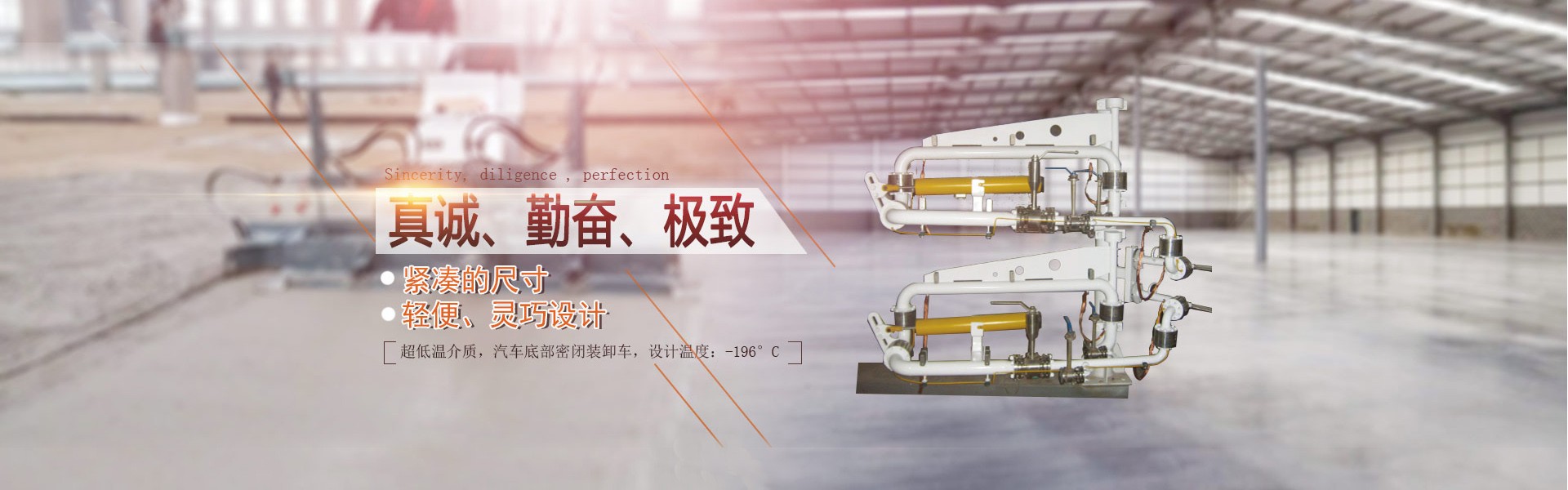


The unloading crane pipe is an equipment used for transferring liquid or gaseous mediums from storage facilities to tank trucks and other transportation vehicles. It is widely used in the petrochemical and chemical industries. Below is a detailed introduction to the unloading crane pipe:
Structural Composition
The basic structure of the unloading crane boom is similar to that of the loading crane boom, typically consisting of columns, rotating joints, inner arms, outer arms, drop pipes, and balancing systems. The columns support the entire boom; the rotating joints allow the boom to rotate flexibly, achieving various angles of alignment; the inner and outer arms are the main connecting parts of the boom, capable of movement in both horizontal and vertical directions; the drop pipes are used for insertion into the hopper car for loading and unloading operations; the balancing system is used to balance the weight of the boom, making operations easier and more efficient.
During unloading, by operating the swing joint and balancing system of the crane arm, the vertical pipe of the crane arm is accurately inserted into the unloading opening of the tanker. Subsequently, the relevant valves are opened, and under the action of pressure or gravity, the liquid medium stored in the equipment flows through the crane arm into the tanker, completing the unloading operation.
Features
High Safety Standards: Utilizing a rigid connection method, equipped with safety devices such as breakaway valves, effectively prevents accidents like leaks and breaks during the unloading process.
Excellent Sealing: Sealing materials typically use oil-resistant nitrile rubber, fluororubber, etc., to prevent medium volatilization and leakage, thereby reducing environmental pollution.
User-friendly Operation: The balancing system allows the crane boom to be balanced within a certain range with ease, enabling a single person to operate it effortlessly, thus enhancing unloading efficiency.
Installation and Usage Precautions
Installation Points: The connection between the pier and crane pipe should be equipped with a corresponding standard flange, with the flange height above the rail surface typically ranging from 3.7 to 4.0 meters. During assembly, install in the order from the base turntable to the vertical aluminum tube, from bottom to top. Finally, install the balancer and adjust the balancing force.
Handling Instructions: Apply even force during operation to avoid hitting the crane boom; after unloading, push the crane boom back to the pier and secure it, then elevate the oil transfer arm to approximately 60° to relax the balancer; also, regularly maintain and service the crane boom by checking the sealing performance of the rotating joints and promptly applying lubricating oil.