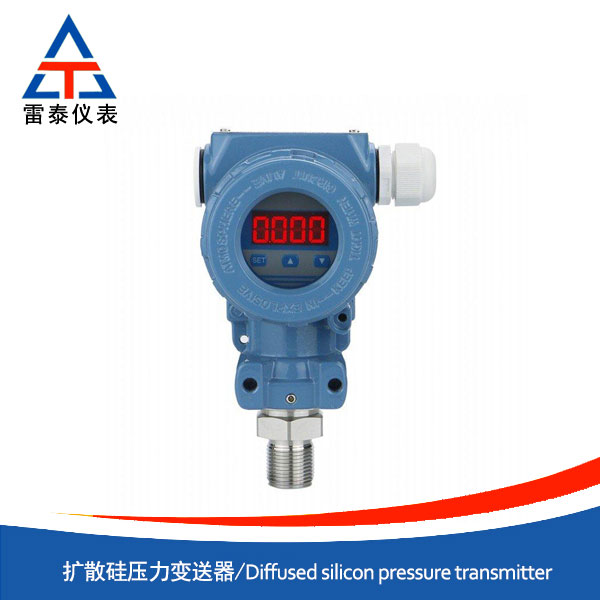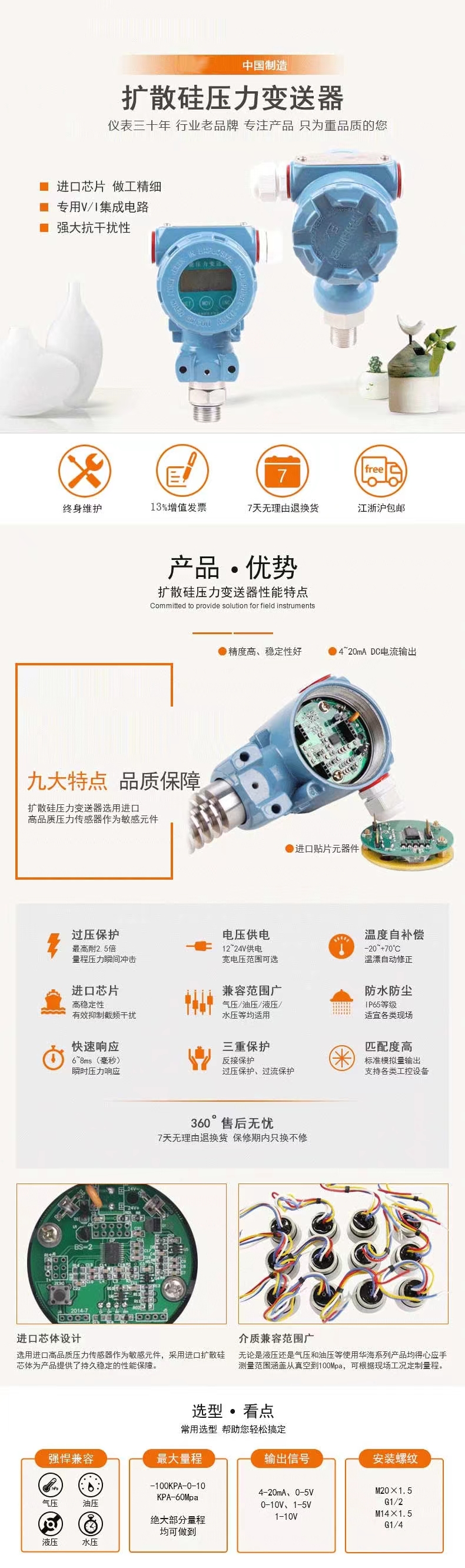



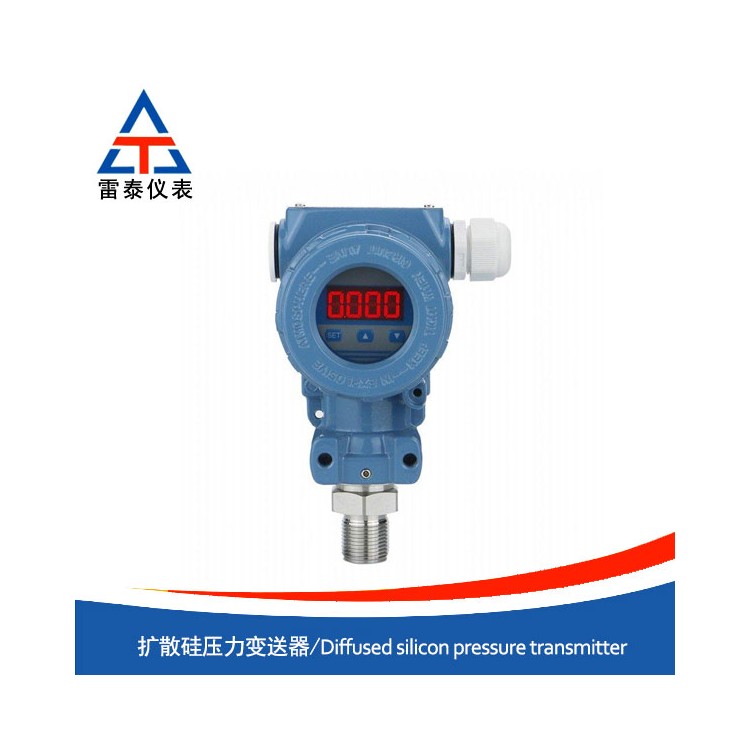
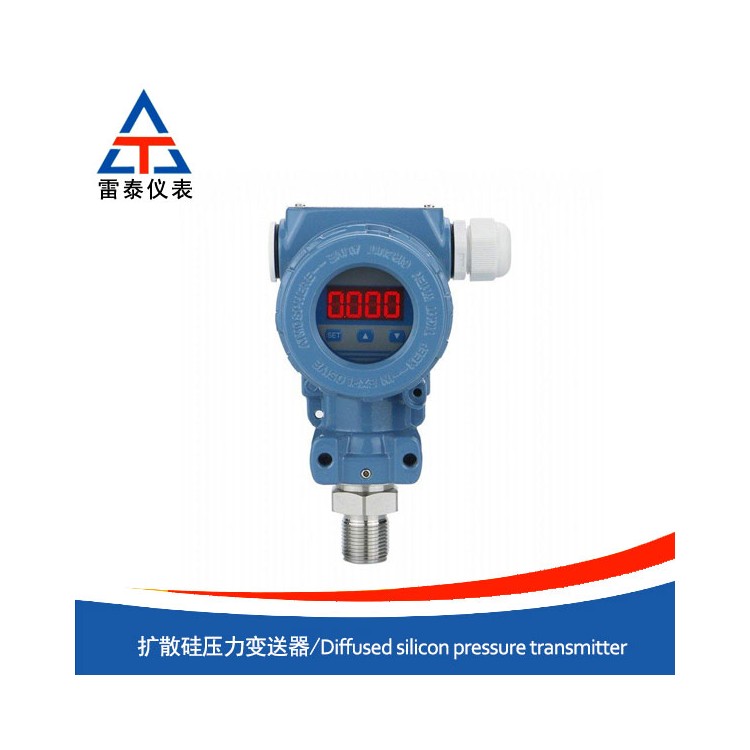
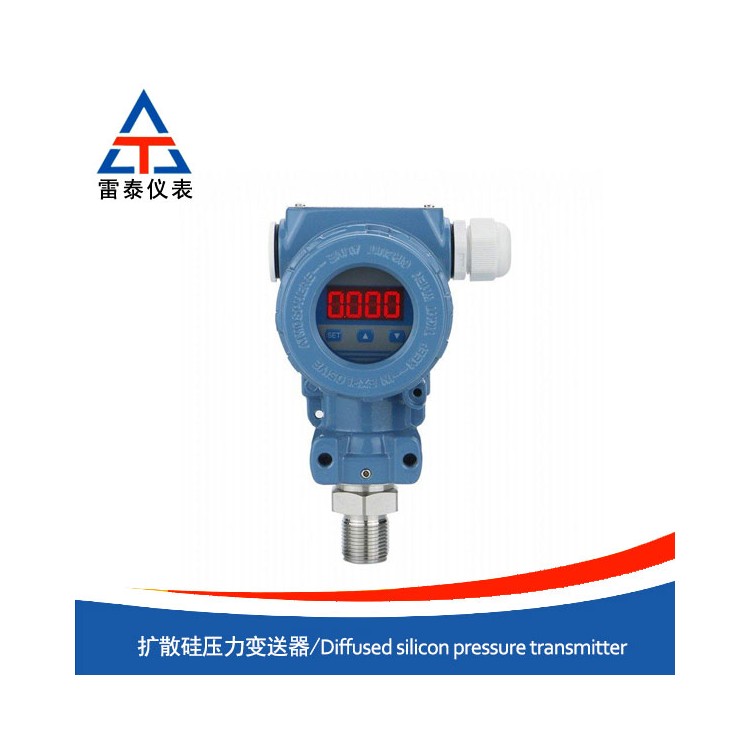
The Diffused Silicon Pressure Transmitter utilizes imported sensors with internationally advanced technology, complemented by high-precision electronic components, and is assembled through a stringent manufacturing process. Compared to conventional pressure transmitters in use, it has two significant technical differences: one is the use of emerging high-precision ceramic materials for the measuring element; the other is the absence of any intermediary liquid within the measuring element, making it a completely solid structure.
Diffused Silicon Pressure Transmitters offer reliable operation, stable performance, easy installation and use, compact size, lightweight, and high performance-to-price ratio. They are widely applicable in various positive and negative pressure measurements. Utilizing imported diffused silicon or ceramic cores as pressure detection elements, the sensor signals are converted into a unified output signal of 0-10mA or 4-20mA by a high-performance electronic amplifier. They can replace traditional remote transmitters, Hall elements, and differential transmitters, and possess the performance of DDZ-Ⅱ and DDZ-Ⅲ type transmitters. They can be paired with various types of moving coil indicators, digital transmitters, and electronic potentiometers, as well as with various automatic control systems or computer systems.
Operation Principle of Diffused Silicon Pressure Transmitter
The pressure of the medium being tested is directly applied to the sensor's diaphragm, causing a micro-displacement in the diaphragm that is proportional to the medium pressure. This changes the resistance value of the sensor, which is then detected by an electronic circuit and converted to an output signal that corresponds to the pressure.