


What types of laser interferometers are there?
Editor will share with you the types of laser interferometers. Check it out!
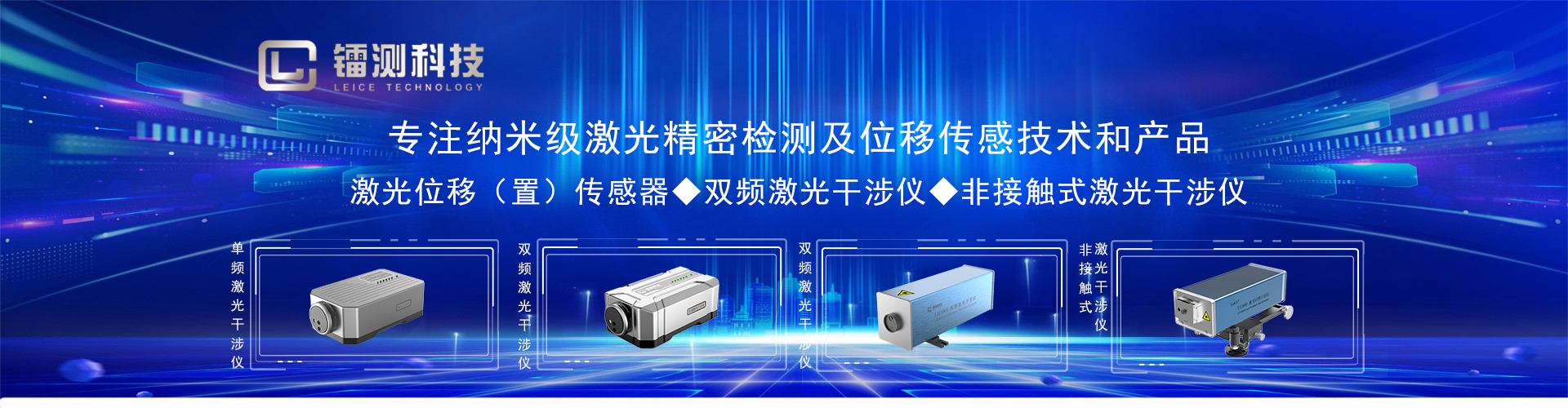
Single-frequency Laser Interferometer
By laser-emitted beams, after being expanded and collimated, are split into two channels by a spectrometer, one with a fixed reflector and the other with a movable reflector, to form interference fringes of the spectrometer. As the movable reflector moves, the intensity variations of the interference fringes are converted into electrical pulse signals by photoelectric conversion elements at the receiving end and electronic circuits, then shaped and amplified, input to the movable reflector to calculate the total pulse count. The total pulse count (N) is then calculated by an electronic computer, determining the displacement L of the movable mirror. When using a single-frequency laser interferometer, if the atmospheric environment is stable, various air turbulence will cause changes in direct current voltage, affecting the measurement results.
Dual-frequency Laser Interferometer
A dual-frequency laser interferometer is an heterodyne interferometric measurement system based on a single-frequency laser interferometer.
By adding approximately 0.03 Tesla of axial magnetic field to the helium-neon laser, the laser is influenced by the Zeeman splitting effect and frequency dragging effect, producing polarized light of different frequencies. Using a quarter-wave plate, the light is converted into two mutually perpendicular polarized beams, which are then split by a spectroscope into two. The entire polarizing filter is then used as a reference beam, with frequencies f1 to f2. With a polarizing spectroscope, the other line is split into two channels: one becomes a beam containing only f1, and the other only f2. As the movable mirror moves, the beam containing f2 is reflected by the movable mirror, becoming a beam containing f2δf. This is an additional frequency generated by the Doppler effect during the movement of the movable mirror, where positive and negative numbers represent the direction of movement (The Doppler effect was proposed by the Austrian C.J. Doppler).
This beam is reflected only from a fixed mirror and, after passing through a polarizer 2, forms a measurement beam of f1-(f2±δf). Through individual photoelectric conversion elements, amplifiers, and shapers, the beam and the aforementioned reference beam are reduced to enter the subtractor, with the output being only ±δf. By utilizing a computer to perform an equivalent transformation on the reversible counter (multiplying by 1/2 the laser wavelength), the displacement of the movable reflecting mirror can be obtained. Dual-frequency laser interferometers typically use frequency changes to measure displacement, with this displacement information manifesting on the frequency difference between f1 and f2. It is insensitive to DC level changes caused by intensity variations, thus exhibiting strong anti-interference capabilities. They are commonly used to verify the coordinate accuracy of long machines, coordinate measuring machines, lithography machines, machining centers, and other verification machines. They can also be used as measurement systems for long machines and high-precision coordinate measuring machines. Additionally, they can measure high precision, straightness, flatness, and small angles through accessories.
