


Principle and Application of Laser Interferometer
The laser interferometer, which carries light waves, boasts high measurement accuracy, rapid measurement speed, wide measurement range, and high resolution. Its light wave wavelength can be directly calibrated to meters and traced back to standards. Consequently, it is widely used in the quality control and calibration, scientific research and development, and high-end equipment manufacturing for precision instruments such as CNC machine tools, PCB drilling machines, coordinate measuring machines, and displacement sensors.
Measurement Principle.
The laser interferometer emits a laser beam. After entering the linear interferometer, it splits into two beams that enter the mirrors, then reflect back to the beam splitter, and returns to the laser interferometer. When the light difference remains constant, the laser interferometer can find a stable signal between constructive and destructive interference. When the light difference changes, calculate these changes and measure the difference between the two optical paths.
Under high-voltage connections between the anode and cathode, a mixed gas is produced, generating a laser beam. By amplifying the laser's intensity, some light is transmitted to the output laser. Within these parameters, the accuracy of the laser's stable frequency is controlled by a heater, with the laser tube length maintained at 0.05ppm. Once the output is stabilized, the laser can be accurately predicted. Currently, most modern displacement interferometers use helium laser tubes, with output wavelengths of 633 nanometers.
The parameters such as frequency, power, stability, reliability, beam quality, and lifespan of lasers are directly related to their performance. Among them, the laser frequency is a fundamental parameter for laser interferometry, with its precision and stability ensuring the measurement accuracy of the interferometer.
Developing laser intervention technology.
Since 1960, Meiman has successfully developed the ruby laser, marking the beginning of a new era of rapid development in optical technology. Since then, laser interferometers have been widely used in fields such as length, angle, microstructure, rotational speed, and spectrum, combining with microelectronics and computer technology to form modern interferometers.
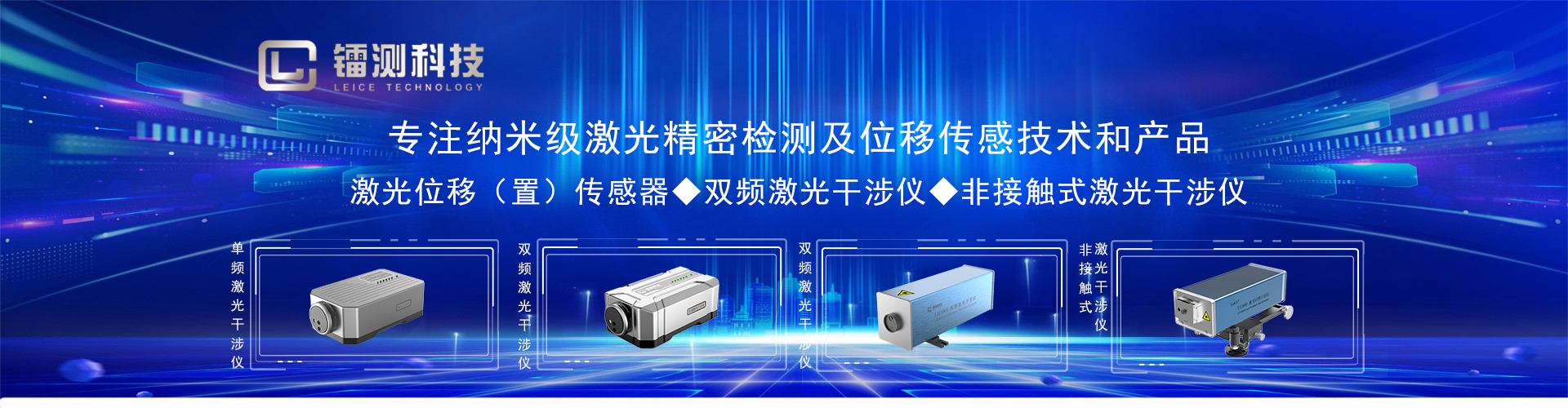
Due to the superior time correlation of lasers, various laser intervention technologies have been developed since their inception: single-frequency laser intervention and dual-frequency laser intervention.
Thank you for taking the time to read the article shared by our laser interferometer editor. If you need more information about laser interferometers and laser educational instruments, please feel free to contact us. Raytest is here to serve you 24/7!
