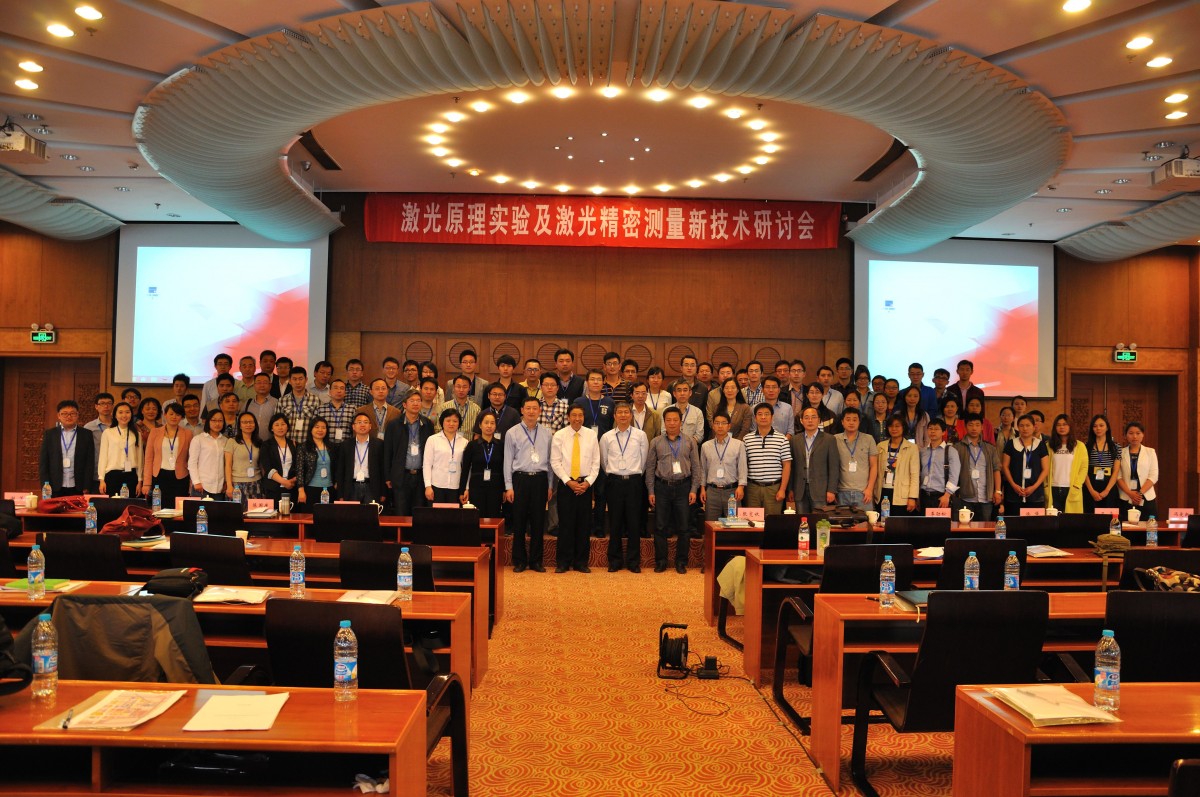



May 7, 2015, hosted by the National Key Laboratory of Precision Testing Technology and Instruments at Tsinghua University, BeijingRayTest TechnologyThe "Laser Principles Experiment and New Technology of Laser Precision Measurement" seminar, organized by our company, was successfully held.
FromNanchang University of Aeronautics and AstronauticsMore than 30 universities and research institutions, including Peking University, Nankai University, Harbin Institute of Technology, National University of Defense Technology, China Institute of Metrology, Tsinghua Zijing Innovation Research Institute, Beijing De Ming Precision Machinery Co., Ltd., and Beijing Goudao Innovation Investment Co., Ltd., were represented by approximately 100 individuals who attended the meeting.
This symposium aims to systematically introduce the scientific research conducted by Professor Zhang Shulan's research group on the generation and phenomena of orthogonal polarized lasers, as well as their applications in precise measurements and the industrial prospects of related instruments.
At the meeting, Professor Zhang Shuexian delivered a report titled "Experimental Principles of Lasers and New Techniques for Precision Laser Measurement – Let the Orthogonal Polarization of Lasers Shine Brightly from the Shadows." The report reviewed his and his research team's three-decade journey of research and achievements, summarized the physical characteristics of cavity tuning in orthogonal polarization lasers and the general laws of laser mode competition, and introduced the engineering application research of the orthogonal polarization principle of lasers.
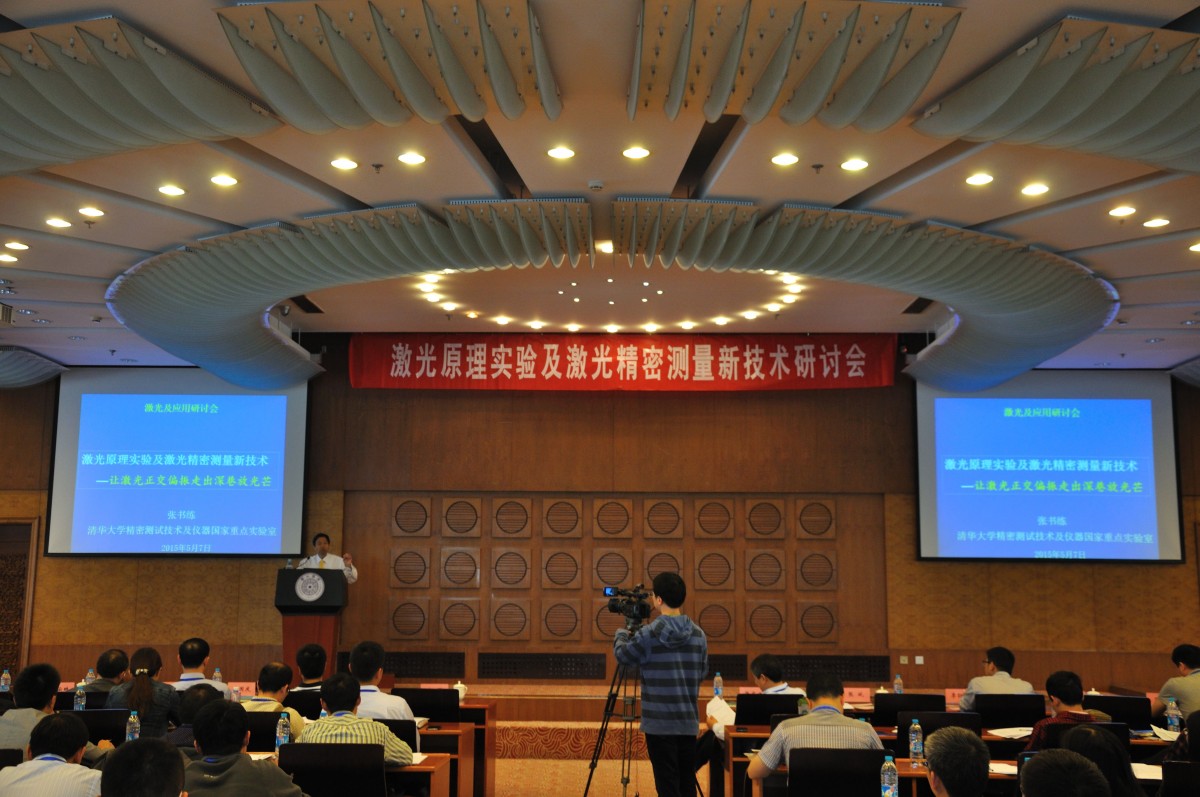
Other members of the research team presented reports on "The Principle and Application of Solid-state Laser Feedback Interferometer," "Three Experimental Systems of Laser Principles," "Birefringence-Sagnac Dual Frequency Laser Interferometer," and the "Future of the Research Group," introducing related scientific research achievements and application prospects.
Attendees showed great interest and lively discussions, particularly questioning the polarization characteristics of common lasers and the competition between frequencies. They also offered suggestions and opinions on the performance and applications of the instruments showcased on-site.