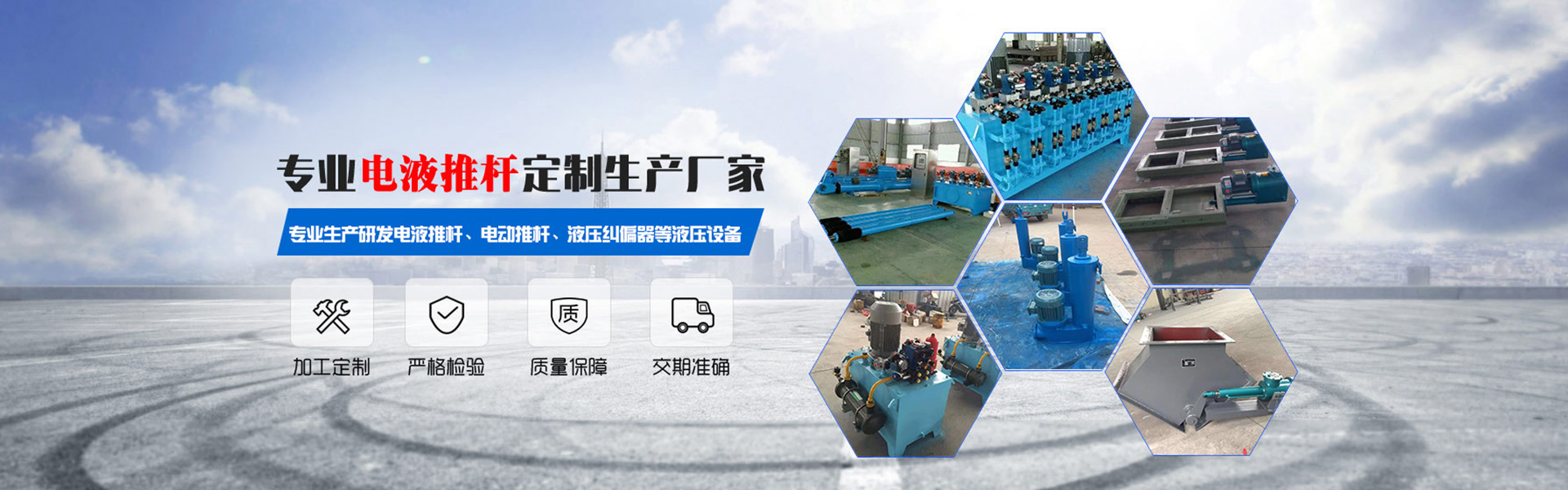

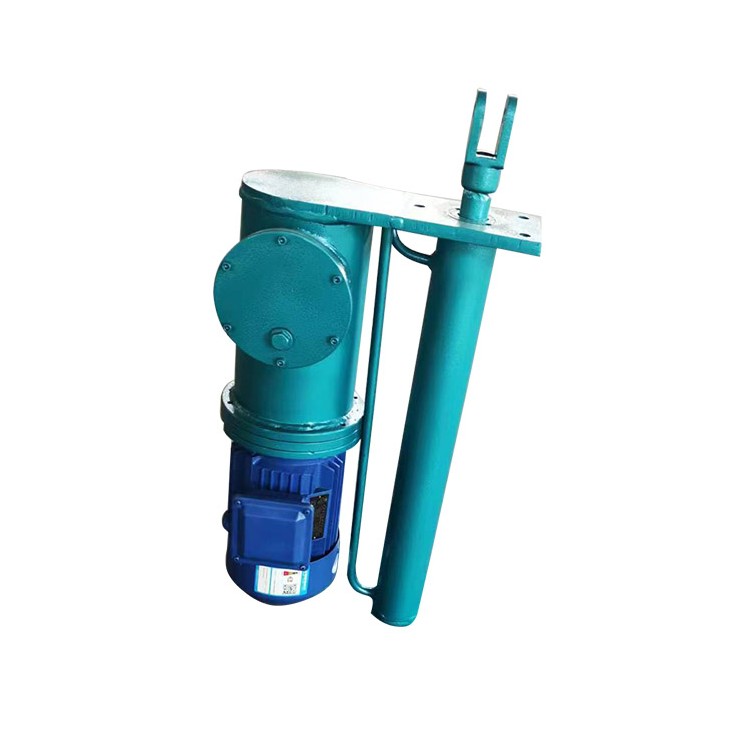
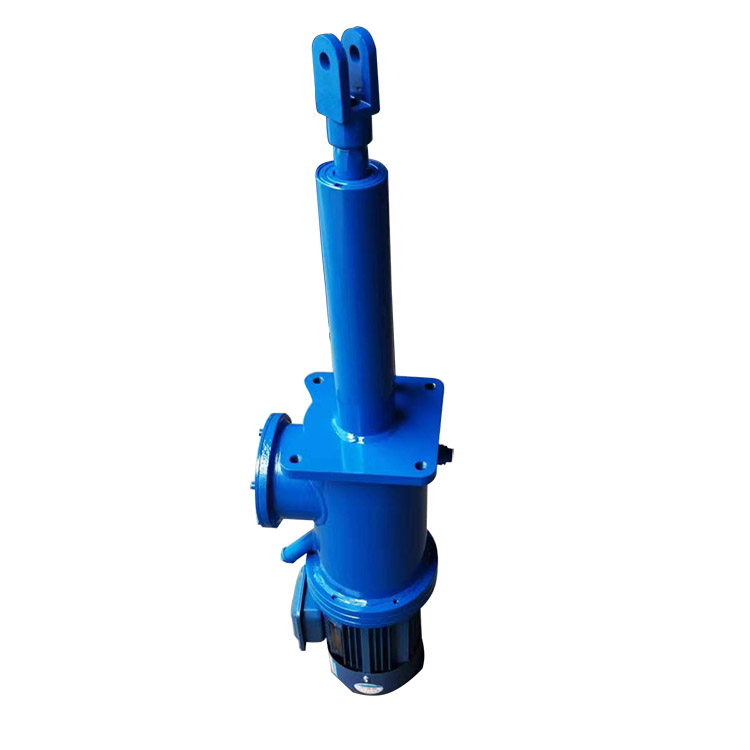
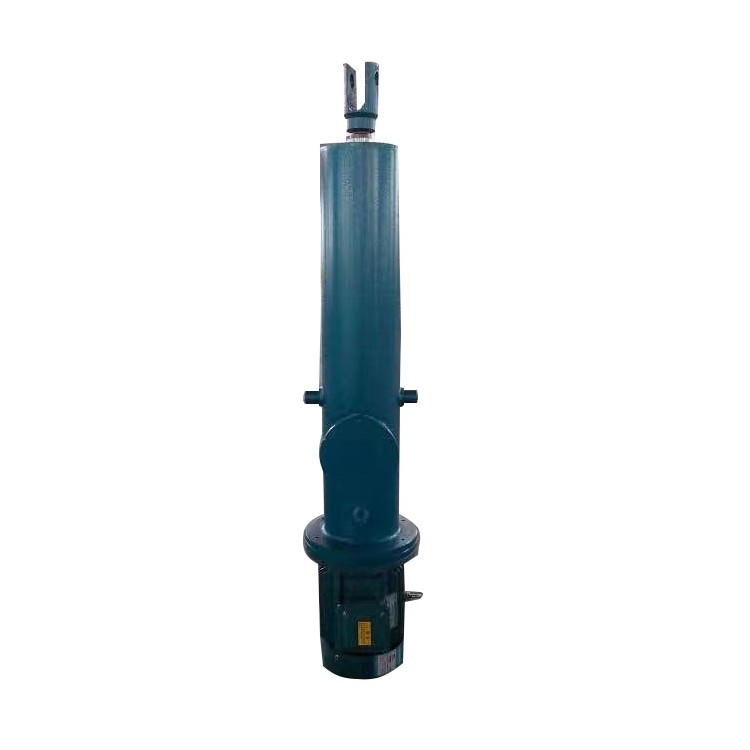
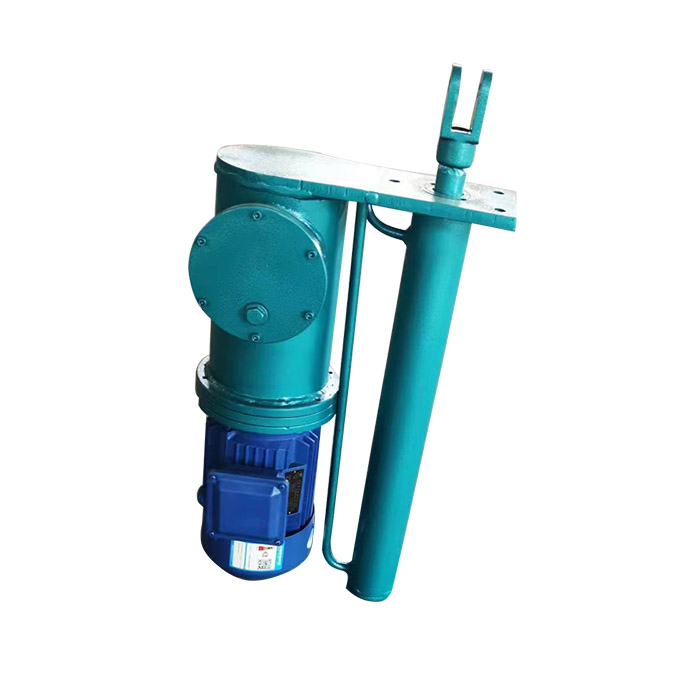
The DYT, DYTB series electro-hydraulic push rods are suitable for reciprocating linear (or reciprocating rotational) motion and can be used in applications for lifting, lowering, or clamping workpieces. They are also ideal for long-distance and high-altitude hazardous areas and can be networked with computers for centralized (programmed) control. Now widely used in industries such as metallurgy, mining, coal, electricity, machinery, grain, cement, chemicals, water conservancy, and transportation, they are an indispensable general power source.
Principles and Functions:
1. Operating Principle: The electro-hydraulic push rod is powered by an electric motor. Through the motor's forward (or reverse) rotation, hydraulic oil is pressurized and output by a bidirectional gear pump, then delivered through an integrated oil path to the working cylinder, achieving reciprocating movement of the piston rod.
2. Overload Automatic Protection Function: During the operation of the electro-hydraulic actuator, if the external force on the piston rod exceeds the rated output force or the piston reaches the end position, the motor continues to rotate. At this point, the oil pressure in the circuit increases to the set pressure, and the overflow valve quickly and accurately releases excess pressure, thereby achieving overload automatic protection. Although the motor is rotating, it will never be damaged.
3. Locking Function: The oil circuit module of the electro-hydraulic push rod is equipped with a pressure self-locking mechanism. Once the motor stops rotating, the piston rod immediately stops at a fixed position, with the pressure oil maintaining a pressure retention state.
4. Speed can be infinitely adjusted within the designated speed range, as per customer requirements.
5. Can be adjusted infinitely to push or pull force within the designated output power range, as per customer requirements.
6. The travel can be infinitely adjusted within the designated travel range according to customer requirements.
Comparison with Similar Products
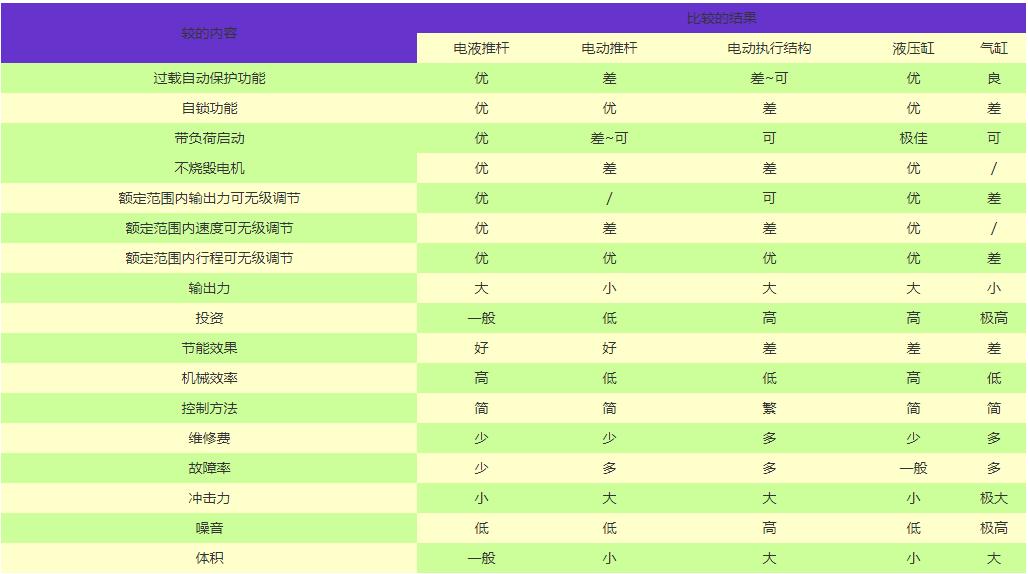
Hydraulic and electric push rods, compared to electric actuators, hydraulic cylinders, and pneumatic cylinders, offer the following advantages:
1. Boasts reliable overload automatic protection, allowing the motor to continue operating normally even when overloaded or at the end of its stroke, without damaging other components. Electric actuators and electric actuators simply cannot compare.
2. Electro-hydraulic push rods can be started under load, whereas it is difficult for electric push rods and electric actuators to do so.
3. The same electro-hydraulic push rod can be infinitely adjustable within its rated pushing and pulling force range, thus offering a wide driving force range, which is not achievable with electric push rods or cylinders.
4. Under the same thrust and speed, the hydraulic push rod consumes half the electrical energy of an electric push rod and an electric actuator.
5. The electro-hydraulic push rod uses full hydraulic transmission, offering sensitive operation, smooth running, and effectively reducing external impact forces. It provides precise stroke control, which is not achievable with cylinders, electric push rods, or electric actuators.
6. The electro-hydraulic push rod features an integrated, fully enclosed mechanical, electrical, and hydraulic structure. The working oil circuit circulates within a pressure-free, sealed steel cylinder, offering a compact design, oil-tightness, and ease of installation and maintenance. It resists dust and water in harsh environments and prevents internal corrosion, ensuring a longer lifespan compared to cylinders, electric push rods, and electric actuators.
7. Low investment required. Air cylinders need to be built with expensive air compressor stations, where air pressure pipelines are prone to leakage, resulting in unstable pressure and high noise levels; hydraulic cylinders require a hydraulic station, whereas electro-hydraulic actuators only need to be connected to power to be operational.
8. Easy to maintain. In special cases, the electro-hydraulic actuator only requires replacement, whereas the hydraulic cylinder needs to be carefully diagnosed for the cause of the fault first before undergoing meticulous repair, which can disrupt the normal operation of the entire work.
Comparison Chart: Electro-hydraulic Push Rod vs. Electric Push Rod, Electric Actuator, Hydraulic Cylinder, Pneumatic Cylinder